AI is reshaping discovery, manufacturing, and supply chain routing. Manufacturers are investing in capacity and resilience.

AI is reshaping discovery, manufacturing, and supply chain routing. Manufacturers are investing in capacity and resilience.

FDA advisers vote to allow pharmacy compounding of unapproved peptides BPC-157, KPV, TB-500, MOTs-C despite thin safety data and industry ties.

Campbell Bunce, chief scientific officer at Abzena, provides an update on the momentum in antibody-oligonucleotide conjugates development and the operational pressures shaping CDMO/CRO strategy for the rest of 2026.

Brent Wilhelm of Cencora talks about real-time demand data, last-mile carrier risk, and a $1 billion investment in cold chain pharma resilience.

Megha Sinha, Kolter AI, discusses how pharma's AI bottleneck shifted from technology to readiness as execution across 60 markets stays manual.

The FDA approval of Jideytro (zidesamtinib) for previously treated ROS1-positive NSCLC has implications for drug developers.

Campbell Bunce, chief scientific officer at Abzena, revisited his 2026 industry predictions on the direction of the biologics and bioconjugate market and gives an update on ADCs.

Neuland's Saharsh Davuluri checks in on Chinese out-licensing, peptide capacity, and CDMO agility six months after his December 2025 predictions.

Susan J. Schniepp, distinguished fellow with Nelson Labs, and Siegfried Schmitt, PhD, vice president, Technical, at Parexel, explain a company’s regulatory affairs department is subject to inspections by regulators and should, therefore, be prepared.

Brent Wilhelm, Cencora, comments on cold chain pharma growth, a $1B supply chain investment, and a 2027 hub built to curb drug shortages.

Neuland's Saharsh Davuluri revisits his December predictions for 2026, reporting steady progress on India manufacturing and AI adoption at midyear.

Megha Sinha, Kolter AI, talks on how orchestrator roles surged in pharma AI, but teams need computed plans, not titles, to close the skills gap.

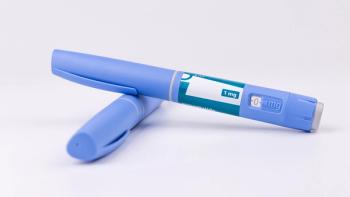
Novo Nordisk’s complaint contends that Lilly's campaigns leave out information about the most effective injectable doses of Wegovy (semaglutide) and Ozempic (semaglutide) currently on the market.

BMS is scaling AI drug discovery with new NVIDIA infrastructure, cutting research timelines via faster, more efficient computing power.

The use of artificial intelligence is facing harder questions of governance and data quality, and regulators in the United States and the European Union are streamlining pathways to market.

Brent Wilhelm, Cencora, talks on last-mile drug delivery risks, carrier network visibility, weather disruptions, and how AI could improve routing.

Checking in at 2026's midyear mark, LGM Pharma's Mike Stenberg revisits his 2025 predictions on inspections, onshoring, GLP-1 delivery, and AI adoption.

Megha Sinha, Kolter AI, discusses how digital twins run pharma supply chains but miss the regulatory execution needed to launch changes across markets.

Brent Wilhelm, Cencora, discusses why pharma supply chains still run on historical demand data and how AI could close the real-time visibility gap.

The future of compliant AI is not better content generation. It is better control over what happens next.

FDA finalizes bioequivalence guidance for topical corticosteroids and new meeting rules for OTC monograph drug sponsors, replacing a 1995 standard.

Manish Garg takes a midyear look back at his 2026 predictions: AI's shift from speed to strategy, supply chain resilience, and why NDC-12 is the next DSCSA moment.

Jeffrey C. Mocny, PhD, of Abzena, and Anna McMahon, MS, of Cellares, discuss how biopharmaceutical risk-based standards accelerate innovation and speed-to-market by leveraging data for better patient outcomes and safety.

Richard Jaenisch surveys pharma's biggest recent AI deals with Chris Cole in part one of a two-part breakdown of the major moves.

FDA proposes a hub-and-spoke manufacturing registration rule and approves three drugs for multiple myeloma, IgA nephropathy, and bladder cancer.

EMA and EISMEA have formalized their cooperation through a work program aimed at helping small biopharma and medtech innovators engage with EU regulatory requirements earlier in development, potentially reducing late-stage manufacturing and quality problems for complex modalities.

Epista's Henrik Johanning revisits his 2026 predictions on QRM, Annex 1, AI governance, and regulatory convergence: What's tracking, what isn't.

Force-displacement monitoring and LVDT verification may solve the cartridge press-fit challenge for greater than 99.5% yield.

CRB Group Fellow James Golden explains why solvent-driven hazardous-material infrastructure can become a major cost driver in oligonucleotide manufacturing facilities.

The future factory will be defined by how well automation tools work together with people, processes, and quality systems to make pharmaceutical manufacturing faster, smarter, more transparent, and more reliable.