
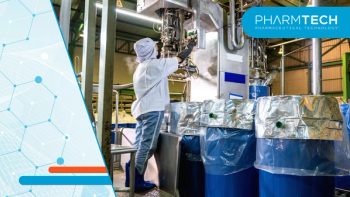
Gloveless isolators don’t end interventions. Learn to assess intervention dependency in robotic aseptic filling and when glove ports are justified.
Gloveless isolators don’t end interventions. Learn to assess intervention dependency in robotic aseptic filling and when glove ports are justified.
Terry Katz, CEO and co-founder of ForgeStop Technology Corporation, explains how the company’s product is worth the investment by protecting products and patients.
The FDA has shelved its National Priority Voucher pilot, leaving sponsors that built CMC and launch-readiness plans around 1- to 2-month reviews facing uncertain timelines.

Regulators will test pharma companies against their own internal AI policies. Jaenisch, Muraru, and Pandey explain how to build defensible, inspection-ready AI practices.
Terry Katz, CEO and co-founder of ForgeStop Technology Corporation, explains how its connected technology can enhance anticounterfeiting and how data are handled within the product.
Celtic Renewables won the CPHI Award for Sustainable Pharma Excellence for its green chemicals used in pharmaceutical manufacturing. Bettina Brierley, chief commercial officer, talks about the adoption, capacity, and pricing of biosolvents.
Terry Katz, CEO and cofounder of ForgeStop Technology Corporation, explains the company’s CPHI Award-winning connected product technology and how it helps to combat drug counterfeiting.

FDA approved pimicotinib for TGCT based on a 56% response rate; its Project Orbis review signals tighter global launch planning for manufacturers.
Bettina Brierley, chief commercial officer at Celtic Renewables, discusses commercialization of biosolvents for pharmaceutical manufacturing.

From AI validation to microstructure imaging, AAPS PharmSci 360 speakers pushed toward faster drug development backed by stronger evidence. Here are PharmTech's biggest takeaways.

The FDA approves asundexian, the first factor XIa inhibitor, cutting stroke risk 26% and setting a regulatory benchmark for factor XI drug developers.

Panelists on the PharmTech AI Pulse Check weigh a December AI playbook, EMA/MHRA moves, PCCP accountability gaps, and MCP-ready regulatory guidance.

France’s 2030 Health Initiative is driving growth in biotechnology, health innovation, biomanufacturing, and digital health.
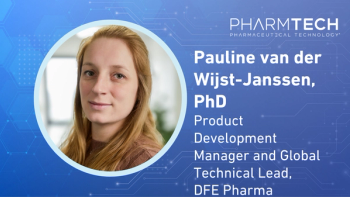
CPHI Award winner, Pauline van der Wijst-Janssen, PhD, product development manager and global technical lead at DFE Pharma, explains excipient variability and excipients’ role in continuous manufacturing.
Pauline van der Wijst-Janssen, PhD, of DFE Pharma, won the CPHI Pharma Award for Future Leader. In this interview with PharmTech, she provides advice for scientists looking to advance to leadership roles.

Coverage from AAPS PharmSci 360 and CPHI Milan featured discussion about impurities, devices, and supply resilience. This week also included topics such as AI accountability, oral peptides, and new licensing deals.
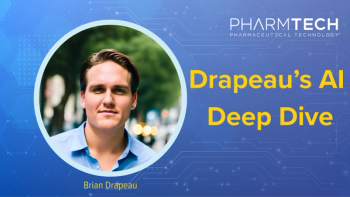
No operator touches a CAR-T batch before demonstrating proficiency. Generative AI users should meet the same standard, and a higher one, because an AI error does not stay inside one batch.

argenx will acquire Unnatural Products for up to $1.15B, bringing oral macrocyclic peptides and new formulation challenges to its antibody portfolio.

Onshoring pharmaceutical manufacturing can be made more practical by collaborating with CDMOs that have gray space, supported by strong relationships with used equipment dealers and OEMs.
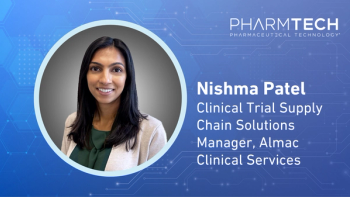
Almac Clinical Services’ clinical supply strategy won the 2026 CPHI Award for Supply Chain Excellence. Nishma Patel, supply chain solutions manager, explains how her team managed the study’s strict −80 °C handling requirement, quality release, and site readiness, and how the Almac Adapt approach can apply beyond this program.

The PharmTech AI Pulse Check panel discusses why MHRA and FDA oversight of pharma AI continues past go-live, and who validates the regulators' own AI.

The FDA grants accelerated approval to subcutaneous amivantamab for head and neck cancer, extending the IV-to-subcutaneous shift in biologics formulation.

USP data show fewer US drug shortages but longer ones, averaging 5+ years. Drug shortages are an incentive problem, not a manufacturing mystery.

Boehringer, AbbVie, ASKA, and Evommune license ADC, IBD, thyroid eye disease, and degrader assets, raising tech transfer demands for manufacturers.
Almac Clinical Services’ clinical supply strategy won the 2026 CPHI Award for Supply Chain Excellence. Nishma Patel, supply chain solutions manager, explains the benefits and challenges of the company’s just-in-time manufacturing solution.
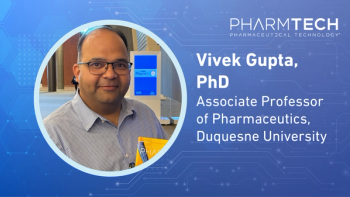
Vivek Gupta of Duquesne University explains at AAPS PharmSci 360 why device decisions can't wait and why excipient makers must test beyond drug molecules.
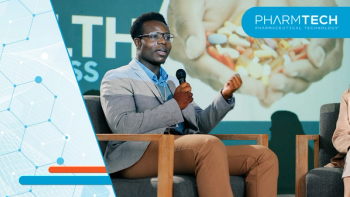
Industry subject matter experts spoke about the challenges of turning complex molecules into medicines patients can reliably use.

The pharmaceutical supply chain is a complex system with high stakes. USP provides insights on how it is helping industry navigate global disruptions and procurement issues.

Jaenisch, Muraru, and Pandey discuss how regulators will audit pharma against its own AI policies and ways QA and regulatory teams can build defensible, inspection-ready AI practices.
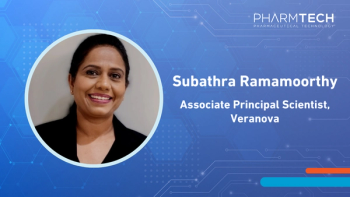
Impurity deficiencies in submissions are remarkably consistent. Subathra Ramamoorthy, Veranova, explains how to catch them before agency filing.