


Thermo Fisher Scientific has expanded its state-of-the-art R&D facility in Hyderabad, India.
Accurately targeted immunotherapies through reliable neoantigen recognition enable personalized medicine development.
Activation and expansion are essential for success in both autologous and allogeneic therapies.
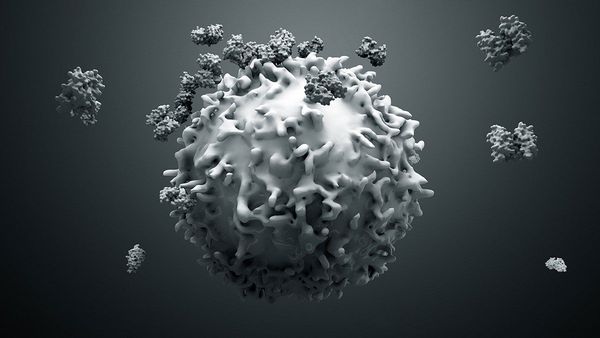
Continuous manufacturing and a quality-by-design development approach are a natural fit.

Thermo Fisher Scientific has expanded its state-of-the-art R&D facility in Hyderabad, India.
GeoVax has received a patent for its malaria vaccine from the US Patent and Trademark Office.
Johnson & Johnson has launched its next Satellite Center for Global Health Discovery at Holistic Drug Discovery and Development Centre, University of Cape Town.
The European Investment Bank has provided €15 million to fund coronavirus research at IRBM.
Otsuka Pharmaceutical and Osaka University have entered an exclusive license agreement on a new anti-tumor antibody.
In this episode of the Drug Solutions Podcast, Meg Rivers, senior editor, interviews Joy Aho, senior product manager at Be The Match BioTherapies, about sourcing autologous and allogeneic cell therapies.
AmoyDX has entered a Master Collaboration Agreement with AstraZeneca for multiple companion diagnostics programs in China, EU, and Japan.
ReiThera and Exothera are collaborating to develop a large-scale, low-cost-per-dose manufacturing process to deliver novel vaccines to low and middle-income countries.
Opus enters a strategic collaboration with Resilience for AAV-based gene therapy development and manufacturing for inherited retinal diseases.
Ymmunobio AG has signed a patent purchase agreement with LeukoCom GmbH to expand its development of cancer therapies.
IAVI and Moderna have announced a new collaboration to employ mRNA technology to meet the challenge of a range of global health issues.
Evonetix’s thermally controlled DNA synthesis technology is designed to enable highly parallel DNA synthesis in a benchtop platform.
NIH has announced four new grant awards to fund new tuberculosis research advancement centers.
ATMPS Ltd has been granted a patent from the United States Patent and Trademark Office for the use of its Hataali blockchain technology used in personalized medicines.
Standardization is needed in CAR-T cell therapy development due to its inherent complexity.
Sterling Pharma Solutions has unveiled a £1 million expansion project to increase its capabilities and laboratories capacity at its Deeside, UK site.
Lonza has joined IPAC-RS, providing benefits to Lonza’s inhalation- related businesses due to IPAC-RS’ global voice of the orally inhaled and nasal drug products industry.
In this episode of the Drug Solutions Podcast, Jennifer Markarian, manufacturing reporter, talks about continuous manufacturing of oral solid-dosage drugs with Lawrence De Belder, executive consultant at Pharmatech Associates, a USP company.

An early formulation strategy for tablets that is simple and scalable is recommended to ensure fewer downstream problems.

The author introduces a practical approach to determining the best estimate of probability for passing multiple stage dissolution tests.

Although not easy to do, it is essential because excipients can affect drug-product safety and efficacy.

Experts discuss what data to consider when selecting a high-potential drug candidate and how AI can be harnessed in medicinal chemistry drug discovery.
3D cell cultures could provide key avenues to unlocking critical information.
Advances in pharmaceutical neuroscience present an opportunity for pharmaceutical companies to stay ahead of the curve.
Under the two-year task order, ATCC will continue to support the DCEG MEAS program in receiving, processing, storing, analyzing, and distributing clinical specimens from different cancer types.