
How dry powder techniques can overcome limitations in biologics development and delivery to broaden routes of administration and global accessibility.
How dry powder techniques can overcome limitations in biologics development and delivery to broaden routes of administration and global accessibility.

The author discusses some new applications of TPGS in the pharmaceutical field that should see this versatile excipient retain its place in the drug formulators toolbox.

One company reaches beyond traditionally-conceived male contraceptives with Vasalgel, a reversible hydrogel injectable.
Emerging new technologies and disruptive manufacturing concepts are providing new opportunities for pharmaceutical companies.
Sponsors should explore key considerations ahead of choosing a new outsourcing partner.
An expert from Aptamer Group reveals the potential of Optimers (a type of aptamer) in the realm of drug delivery, including its targeting capabilities, scalability, and key differences between Optimers and antibody-drug conjugates.

External expertise is beneficial in helping companies select the right tools at the right stages of development to ensure success.

This article introduces a control chart technique using F statistic for continued process verification of oral solid dosage forms.

There are many benefits of employing a reformulation strategy, but companies must also overcome a variety of challenges too.

Using an orthogonal approach to lipid nanoparticle analysis can increase the odds of project success.
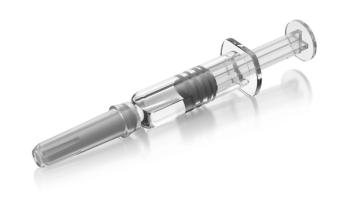
Some of the greatest advancements in drug delivery are related to disposable delivery devices, vaccine adjuvants, and wearable pumps, according to Nicholas W. Warne of Pfizer.

Whether biologic manufacturers decide to outsource or develop products internally, the quality of a CDMO partnership is critical to success, especially for cell and gene therapy products.
Experts from Umoja Biopharma dive into cell therapy development in this episode of the Drug Solutions Podcast, including the greatest advancements in cell therapy to date, areas for improvement, the biggest trends in cell therapy development, and retention as a pain point.
The White House hopes to expand US modern biotech manufacturing and reduce reliance on foreign sources of bioindustrial materials.
WHO has awarded prequalification to GSK’s Mosquirix, an approved malaria vaccine.
It is argued that orthogonal quantitative methods can be used to establish primary working standards. An example details how to calculate the expanded measurement uncertainty (U) for the certified assay value by considering two orthogonal assay methods.

API permeation into the skin modulates the efficacy of topical treatments.

It is possible to overcome some of the limitations of traditional dosage forms by employing alternative drug delivery formulation strategies.
It is important to understand regulatory requirements and study challenges to develop and validate the appropriate methods for a bioanalytical study program at the clinical stage.
Moderna is suing Pfizer and BioNTech for allegedly infringing on patents the company filed from 2010 to 2016.
The European Commission (EC) has approved Celltrion Healthcare's Vegzelma (CT-P16), a biosimilar to bevacizumab referencing Avastin.

Industry is adapting to the increasing complexity and poor solubility and bioavailability of molecules in the pipeline.
The purpose of this article was to demonstrate the application of a new thermogelling matrix in the healing of wounds.

Further advances in construct design and manufacturing scalability are still needed.

The option of using prefilled syringes for vaccinations is not (yet) available for all types of vaccines. Stakeholders are working to expand that option while also pursuing other non-traditional routes of administration.