



The use of various documents and guides by the International Pharmaceutical Excipients Council can facilitate the flow of information among excipient manufacturers, distributors, and users.

The use of various documents and guides by the International Pharmaceutical Excipients Council can facilitate the flow of information among excipient manufacturers, distributors, and users.
PTSM: Pharmaceutical Technology Sourcing and Management
As contract API manufacturers, fine-chemical producers, and pharmaceutical companies prepare to attend Informex in Anaheim this month, the state of the industry shows improving conditions in certain sectors.

Siegfried Schmitt, a principal consultant with PAREXEL, discusses how the EU's Falsified Medicines Directive will affect US API production.
Researchers use inorganic catalysts as an alternative to biocatalysts in the selective conversion of sugars to produce chiral building blocks.

Process chemists employ a variety of approaches to improve yield, purity, and stereoselectivity.
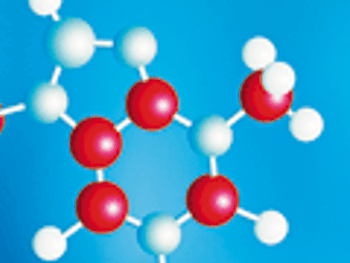
As 2012 comes to a close, Pfizer leads among Big Pharma companies for FDA approvals of new molecular entities and biologics.

The promise of antibody drug conjugates is creating a network of partners among large pharma companies and specialized players.
Developing analytical methods and performing related testing is crucial for ensuring the quality of a pharmaceutical product.

Recent research on elucidating the structure and sequence of proteins involves examining the effect of microgravity on protein crystallization and a computational model for protein elucidation.

The authors examine the use of various grades of direct-compression mannitol in direct-compression tableting process to evaluate the content uniformity of micronized APIs and excipients in a solid-dosage formulation.

Particle-engineering technologies, such as crystal design for crystallization and producting cocrystals, particle-size reduction, and amorphous solid dispersions, help to optimize delivery of a drug.

The long-awaited patent cliff that has loomed in the pharmaceutical industry for years has arrived in earnest in 2012, with more than $40 billion in 2011 brand sales facing loss of exclusivity.
Bristol-Myers Squibb has initiated a voluntary recall of 10 lots of BiCNU (carmustine for injection) previously manufactured by Ben Venue Laboratories, a former, third-party contract manufacturer for the company, to the user level.

A review of taints and odors in the pharmaceutical and consumer healthcare industries.

Industry and academia advance novel approaches for achieving enanioselectivity.
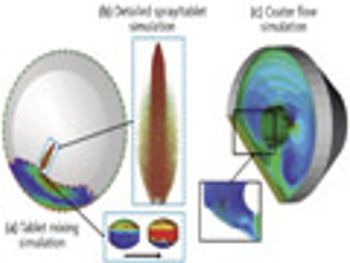
The authors investigate the tablet-coating process using a combination of different simulation techniques.

Pfizer has two manufacturing facilities in Germany for high-potency manufacturing, respectively in Freiburg and Illertissen. Pharmaceutical Technology's Executive Editor Patricia Van Arnum visited the facilities and spoke to the company about the design and operation of these facilities.
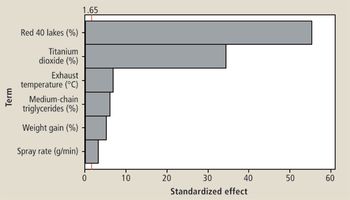
The authors describe a QbD study that was performed to optimize a coating system.
The authors explain chemical transformations that are achievable through certain biocatalytic routes.
Policymakers must balance fundamental issues involving access to medicines and pricing.
An industry roundtable representing Metrics, Cambrex, Carbogen Amcis, Euticals, Ferro Pfanstiehl, and SAFC.
The author discusses the key provisions of GDUFA as they relate to the pharmaceutical supply chain, including parity of inspections between domestic and foreign sites for both finished dosage forms and APIs of generic drugs.

The author discusses strategies for preventing cargo theft.

Approaches to scaling up API syntheses center on ways to optimize process conditions and operability.
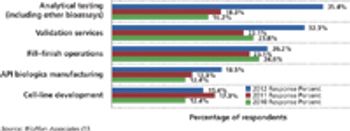
Budgets for biopharmaceutical activities are gaining in select functional areas except outsourcing.