




Manufacturing
Latest News
Advertisement
Review of SUT Adoption in Biopharma Manufacturing
The evolution of therapeutic modalities drives the adoption of single-use technologies.

Why Are Pharmaceutical Companies Reluctant to Adopt Cloud Technologies?
Despite its understandable hesitancy, the pharma industry is facing a need for more widespread adoption of cloud-based solutions.

Automating the Future of Fill/Finish
Given the criticality of fill/finish processes, it is clear that automation is the next technological step.

Latest Videos









Advertisement
More News
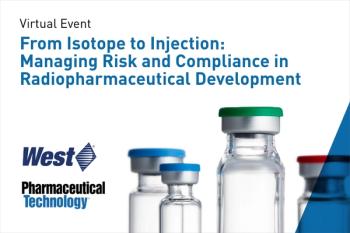
Webinar Date/Time: Wed, Nov 12, 2025 11:00 AM EST

The new label for prefilled syringes, in conjunction with innovations from SCHOTT Pharma, enables integrated tamper-evidence and digital tracking across the supply chain.

At the Cell and Gene Meeting on the Mesa, a panel discussion was held on advanced therapy production and how it demands modular platforms, automation, and data governance to drastically improve patient access and affordability.

The growing demand for liquid medicines is increasingly driven by the unique needs of several distinct patient groups, improving compliance in these demographics through flexible, palatable dosing options.

This article takes a look at the developing use of AI in pharmaceutical development and manufacturing.

Webinar Date/Time: 10/24/25 at 9am EDT

Sept. 30 marked 61 days since July 31, one day past the timeframe President Donald Trump had set forth for companies to lower prescription drug prices in the United States.
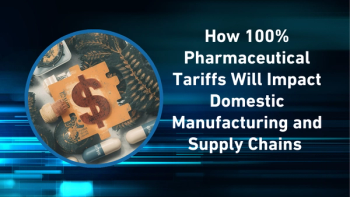
The 100% tariff on imported drugs will pressure pharma companies to build manufacturing sites in the US or face significant costs.

In this episode of the Ask the Expert video series, Susan J. Schniepp, Regulatory Compliance Associates, and Siegfried Schmitt, PhD, Parexel, answer questions on the use of real-world evidence for both small-molecule and large-molecule drug development. In addition, they tackle a question on supply chain security problems that arise during transportation of pharmaceutical goods.

Alvin Jogasuria, ProBio; Matthew Lunning, University of Nebraska Medical Center; and Carl Schoellhammer, DeciBio, go behind the headlines to discuss the need for doing more with less.

The dispute shines a light on the vulnerability of long-established drugs to renewed safety scrutiny: Even when causal evidence is lacking, observational findings can influence policy and public perception.

While plastics have revolutionized pharmaceutical packaging, that evolution within the industry has come at a cost.
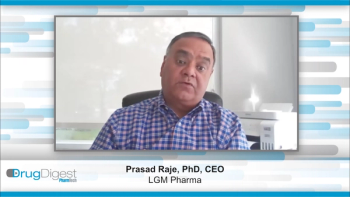
In this exclusive Drug Digest video, Steve Barr from SK pharmteco and Prasad Raje from LGM Pharma explore how supply chain pressures, sustainability, and AI adoption are reshaping small molecule development and excipient use in pharma.

Pharmaceutical Technology® spoke with Todd Sprouse, associate director, Analytical Services, and Erik Feldmann, PhD, principal technical advisor, Client Solutions & Proposals, both with Cambrex, to find out more about the challenging situation.

Bram Baert, global head of Regulatory Affairs at Lonza CHI, gives his perspective on the impact of the EC’s decision on the use of TiO2 in drug products.

Merck’s Sanat Chattopadhyay called for stronger leadership, data-driven oversight, and shared accountability to raise pharmaceutical quality standards.

AI can offer a strategic blueprint for GxP compliance, risk mitigation, and human-led operational excellence.

Bothe data integrity and quality of data are critical for drug discovery, manufacturing efficiency, regulatory compliance, and patient safety.

More than 700 out of 1000 senior executives surveyed believe that next-gen supply chains should be among the top tech priorities for life sciences organizations.

Digital solutions help pharmaceutical manufacturers navigate the complex supply chain.

Unichem Pharmaceuticals has issued a voluntary recall of Cyclobenzaprine Hydrochloride Tablets USP 10 mg after the incorrect label was placed on the wrong product.

The authors examine common FDA 483 findings and outline strategies to address and prevent regulatory non-compliance.

Continued process verification ensures pharmaceutical manufacturing stays in control through data analysis, trend detection, and lifecycle monitoring.

The authors propose a streamlined, efficient approach to determining specification equivalence that starts with a paper-based assessment of the methods and progresses to a data assessment for the methods under evaluation.

This comprehensive overview of contemporary formulation strategies covers the drug product lifecycle from end to end, illustrating best practices for various formulation types seen through a CRDMO’s lens while also covering problem solving, the role of digital tools, and geopolitical changes.
Advertisement
Advertisement
Trending on Pharmaceutical Technology
1
FDA Grants Priority Review For Pfizer’s Marstacimab for Hemophilia A or B
2
Drug Digest: Outsourcing Partnerships Fuel Global Biopharma Discovery and Scale-Up
3
PharmTech Weekly Roundup - February 6, 2026
4
Women in STEM: Early Phase Drug Development
5