


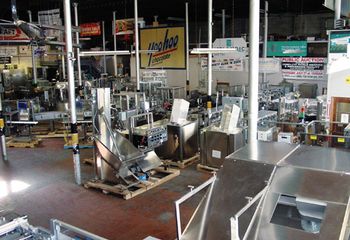
Used packaging equipment can be a cost-saving, time-saving alternative to new machines.
The evolution of therapeutic modalities drives the adoption of single-use technologies.
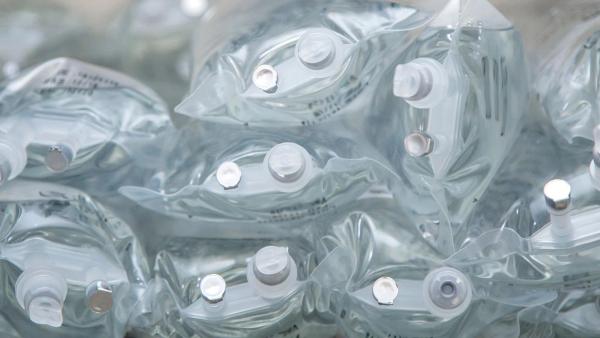
Despite its understandable hesitancy, the pharma industry is facing a need for more widespread adoption of cloud-based solutions.

Given the criticality of fill/finish processes, it is clear that automation is the next technological step.
Used packaging equipment can be a cost-saving, time-saving alternative to new machines.

Stuart Needleman, president of active-ingredient development and manufacturing at Aptuit, discusses industry trends and challenges.
The author reviews key considerations for formulating powders for use in inhalers. This article is part of a special Drug Delivery issue.

Pharmaceutical Technology Europe
Product integrity issues in the global pharma market are a hot topic at the moment and many companies are reviewing and increasing their quality control procedures.
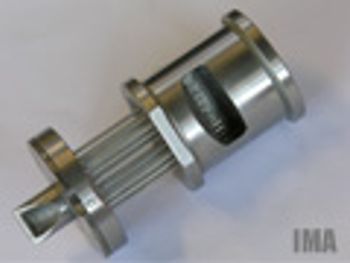
The authors describe an alternative approach to compressing and coating minitablets for use in a sustained-release, solid oral-dosage form. This article is part of a special Drug Delivery issue.
The author outlines how to choose carriers and capsule shells according to dosage requirements and intended use. This article is part of a special Drug Delivery issue.

Pharmaceutical Technology Europe
Robots are becoming faster, cheaper and smaller. In pharmaceutical packaging applications, robots are often used at the end of the process — either in the primary packing of product into small packs, or further downstream product packing into cartons and subsequent palletising.
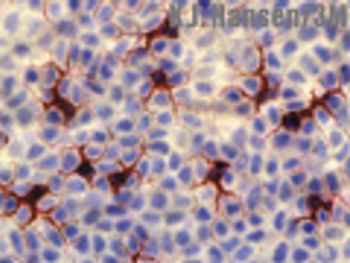
The author reviews advances in technology that may soon allow transdermal delivery of two of the fastest growing drug classes on the pharmaceutical market. This article is part of a special Drug Delivery issue.
Pharmaceutical Technology Europe
Leading European experts from the pharmaceutical packaging industry explain how they are coping with industry trends.
Pharmaceutical Technology Europe
Discussing the key challenges that face cell-based bioprocess manufacturers today, how these challenges might be addressed and the innovations that could facilitate the process in the future.

Pharmaceutical Technology Europe
Although there are no regulatory requirements or established pharmacopoeial techniques for the dissolution testing of inhaled drugs, such testing can potentially open up the opportunity to tailor formulation properties.

Pharmaceutical Technology Europe
This article examines the difficulties in designing lyophilisation processes that can be faithfully scaled up to production volumes and suggests the most effective ways in which this can be achieved.
Pharmaceutical Technology Europe
Generally, the pharma industry isn't doing enough to reduce the environmental impact of its packaging materials, but there are various historic reasons for this.
ePT--the Electronic Newsletter of Pharmaceutical Technology
PPD and Bend Research Form Collaboration; Ricerca Makes Senior Appointment; And More.
ePT--the Electronic Newsletter of Pharmaceutical Technology
The US Food and Drug Administration issued a draft guidance last week on the Qualification Process for Drug Development Tools.
ePT--the Electronic Newsletter of Pharmaceutical Technology
Genzyme has outlined why it believes sanofi-aventis's tender offer of $69 per share "dramatically undervalues the company" and why a price of $89 per share would be more reflective of the company's true value.
ePT--the Electronic Newsletter of Pharmaceutical Technology
Puerto Rico's Governor Luis Fortuno unveiled a fiscal reform package in Puerto Rico this week as part of economic development and budget-deficit reduction plan for the commonwealth.
ePT--the Electronic Newsletter of Pharmaceutical Technology
A European pilot initiative will test the impact of consultations with a number of stakeholders such as patient representatives and payers on early-stage drug development.
ePT--the Electronic Newsletter of Pharmaceutical Technology
Pfizer Forms Pact with Biocon; Baxter Makes Appointments; And More.
ePT--the Electronic Newsletter of Pharmaceutical Technology
During Oct. 5-12, 2010, more than 40 countries cooperated in an international week of action to combat the online sale of counterfeit and illegal drugs and to raise awareness of their associated health risks.
ePT--the Electronic Newsletter of Pharmaceutical Technology
The European Generic medicines Association (EGA) has made a number of recommendations on how to ensure the quality of medicines in the globalized supply chain; in particular, the EGA spoke about API quality and quality supervision, and how these can be improved by transparent communication between authorities and industry.
ePT--the Electronic Newsletter of Pharmaceutical Technology
GlaxoSmithKline (GSK) has provided further details concerning its new unit dedicated to rare diseases, which was launched in February.
Equipment and Processing Report
Jeffrey Hartry, director of quality systems and information at Cangene (Winnipeg, Canada), talks about his company?s conversion from a paper-based to an electronic training-management system.
Equipment and Processing Report
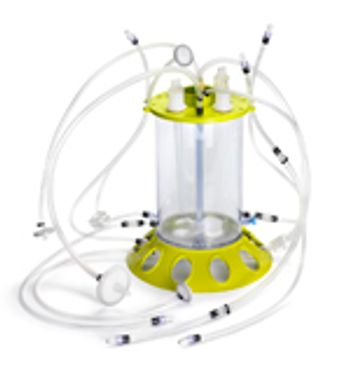
PharmTech's monthly newsletter, Equipment and Processing Report, reviews the Editor's Picks for the October 2010 edition from EMD Millipore and Sartorius.
Equipment and Processing Report
An expert-panel-written book has surprising shortcomings.