

PTSM: Pharmaceutical Technology Sourcing and Management
The recent struggles of Cardinal Health's and Patheon's contract dose manufacturing businesses offer a lesson on good business practices.

Contract service providers must step up their game to stay competitive in increasingly complex bio/pharma market.

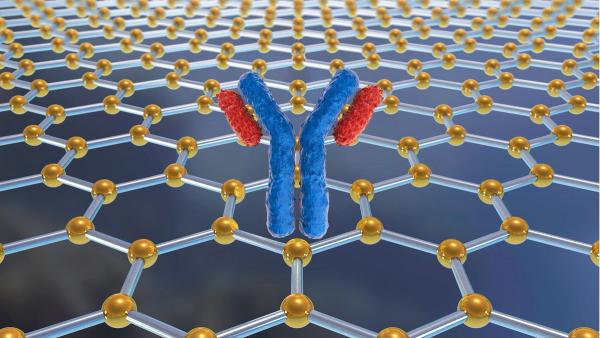
A look at the newest innovations offers a deeper understanding of affinity ligands and their role in the future of downstream processing.
PTSM: Pharmaceutical Technology Sourcing and Management
The recent struggles of Cardinal Health's and Patheon's contract dose manufacturing businesses offer a lesson on good business practices.
ePT--the Electronic Newsletter of Pharmaceutical Technology
Cardinal Health (www.cardinal.com) agreed to sell its contract services unit, Pharmaceutical Technologies and Services (PTS), to The Blackstone Group (New York, NY, www.blackstone.com) for roughly $3.3 billion in cash.
The recent struggles of Cardinal Health's and Patheon's contract dose manufacturing businesses offer a lesson on good business practices.
The evolving contract research organization–sponsor relationship has initiated a state of transition for contract analytical laboratories.
The recent struggles of Cardinal Health's and Patheon's contract dose manufacturing businesses offer a lesson on good business practices.
Pharmaceutical Technology Europe
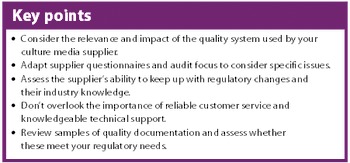
The concept of quality should not only apply to the manufacture of the media - it should also continue throughout the product's lifetime of usage.
ePT--the Electronic Newsletter of Pharmaceutical Technology
Astellas Pharma Inc. (Tokyo) will sell three European plants to the Temmler Group (Marburg, Germany), a pharmaceutical company and contract manufacturer. The move is part of Astellas's plan to reduce the number its production sites.
ePT--the Electronic Newsletter of Pharmaceutical Technology
Basel, Switzerland (Dec. 5)-Lonza Group Ltd. and Singapore?s Bio*One Capital have formed a joint venture, Lonza Biologics Tuas, to build a large-scale mammalian cell-culture facility in Singapore for as much as $350 million.
ePT--the Electronic Newsletter of Pharmaceutical Technology
Princeton, NJ (Nov. 30)-Rockwood Holdings, Inc. agreed to sell its Group Novasep subsidiary for EUR 425 million ($567 million) to a consortium of buyers consisting of Glide Buyout Partners BV, Banexi Capital, and Group Novasep management.
ePT--the Electronic Newsletter of Pharmaceutical Technology
Dublin, OH (Nov. 30)-Cardinal Health has announced plans to divest its Pharmaceutical Technologies and Services (PTS) segment, "a business that manufactures or packages 100 billion doses of medication every year for pharmaceutical and biotech firms, employs approximately 10,000 at more than 30 facilities worldwide and generates $1.8 billion in revenue," according to a company statement.
The integrated services model is the "next big thing" in CMC and early development services.
The integrated services model is the "next big thing" in CMC and early development services.
Pharmaceutical Technology Europe
Why do the biotech ventures mange to have such promising drug candidates while pharmaceutical R&D is facing a drug deficit?
ePT--the Electronic Newsletter of Pharmaceutical Technology
Liverpool, UK (Oct. 20)-Novartis Vaccines and Diagnostics Limited is recovering two lots totaling 500,000 doses of its ?Fluvirin? influenza virus vaccine after reports that the product had been received from distributor Cardinal Health Care in either a frozen state or below the required storage temperature range of 35?46 degrees F.
ePT--the Electronic Newsletter of Pharmaceutical Technology
San Antonio, TX (Nov. 1)?Market growth in the pharmaceutical outsourcing industry is strong, but slowing, according to Jim Miller, president of PharmSource Information Services, Inc. and publisher of Bio/Pharmaceutical Outsourcing Report.
ePT--the Electronic Newsletter of Pharmaceutical Technology
Wilmington, NC (Oct. 26)?AAIPharma Inc. has completed its acquisition of contract research organization Cvitkovic & Associes Consultants S.A.
ePT--the Electronic Newsletter of Pharmaceutical Technology
San Antonio, TX (Nov. 1)-The opening session of the ?Pharmaceutical Technologies? track at the 2006 Annual Meeting of the American Association of Pharmaceutical Scientists in San Antonio, Texas was standing room only as R. Christian Moreton, PhD, vice-president of pharmaceutical science at Idenix Pharmaceuticals, and Richard O. Mannion of Purdue Pharma discussed ?Product Development Using a Virtual Company Model.?

Mid-size regional players have little chance for success in an industry increasingly dominated by large global players.
Mid-size regional players have little chance for success in an industry increasingly dominated by large global players.

PTSM: Pharmaceutical Technology Sourcing and Management
More CMOs look to proprietary delivery technologies to enhance profitability.
ePT--the Electronic Newsletter of Pharmaceutical Technology
CPhI Worldwide, Paris (Oct. 3)-Exhibitors at CPhI Worldwide reported expansions, enhancements in technology, and new projects last week in Paris.

Whether you advance your technology from concept to commercialization or use a third party for parts or all of this work, the ability to do technology transfer flawlessly is essential to successful, efficient pharmaceutical production.

More CMOs look to proprietary delivery technologies to enhance profitability.

More CMOs look to proprietary delivery technologies to enhance profitability.
The overall market size of the Southeast Asia region totals $7 billion, with a projected compound annual growth rate of about 13% through 2010.