






Quality Systems
Latest News
Advertisement
Latest Videos






Shorts
0:29
Why We Have Drug Shortages and How to Fix Them
18 days ago
by
Ronald T. Piervincenzi(+2 more)
0:53
Can Organoids Replace Animal Testing?
19 days ago
by
Richard Jaenisch(+2 more)
0:39
Building Resilience in the Global Supply Chain
20 days ago
by
Ronald T. Piervincenzi(+2 more)
0:18
Is Your Company Risk-averse or Risk-tolerant
24 days ago
by
Susan J. Schniepp(+1 more)
0:23
Why You Should Consider Pre-approval Submissions
25 days ago
by
Siegfried Schmitt(+1 more)
0:20
Why You Need New Experts for AI Validation
25 days ago
by
Aleksandra Zuraw(+1 more)
0:20
Why Scanning Slides Isn't Enough
25 days ago
by
Aleksandra Zuraw(+1 more)
0:20
Navigating the New EU Pharma Regulations
a month ago
by
Susan Haigney
0:18
Major Shift in Biotech Manufacturing
a month ago
by
Susan Haigney
0:24
Reducing R&D Experiments by Orders of Magnitude with AI
a month ago
by
Alfred Rumondor, PhD(+1 more)
Advertisement
More News

This article explains the 4 shifts enabling faster, lower-risk, commercially successful biologics technology transfer.
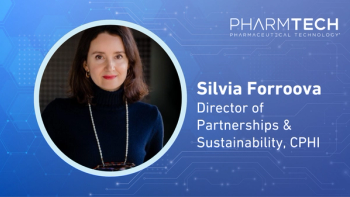
Silvia Forroova, director of Partnerships & Sustainability at CPHI, and founder of the CPHI Sustainability Collective, provides a preview of the new Sustainability Summit at CPHI Milan 2026.

The FDA approves zilganersen, the first disease-modifying Alexander disease therapy, offering rare disease developers a trial design and RNA delivery model.
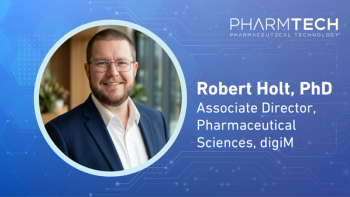
Robert Holt, PhD, associate director, Pharmaceutical Science, digiM Solution, discusses microstructure intelligence in more detail in part 2 of this preview of the company’s keynote presentation at AAPS PharmSci 360.

The finalists for the 2026 CPHI Pharma Awards span 15 categories including API development, digital transformation, manufacturing, supply chain, sustainability, and leadership, with winners revealed October 6 at CPHI Milan.
In August 2026, Heidi Overton was nominated for FDA commission, and a wave of oncology and neuro drugs were approved.

Nitrosamine control is about understanding why nitrosamines form, where they may form, and how to prevent their formation.
Four FDA approvals in the areas of HIV, diabetes, autoimmune disease, and COVID-19 vaccines came in a flurry in late August 2026.

This week’s PharmTech.com content covered AI agent authority, hold-time and nitrosamine risk frameworks, biologics formulation, 3D bioprinting, and major oncology and dealmaking news.
In part 2 of his overview on hold times in biopharmaceuticals, Robert Dream details the regulations that govern hold times and how to mitigate risks that can occur during hold times.

Agentic AI changes the question from what a model can produce to what a system is allowed to decide.

FDA approves Rasonque (daraxonrasib), the first broad RAS-targeted therapy for metastatic pancreatic cancer, validating RAS(ON) inhibition for future drug development.

FDA priority review of Jemperli for biomarker-defined rectal cancer signals capacity, supply chain, and global filing shifts for manufacturers.
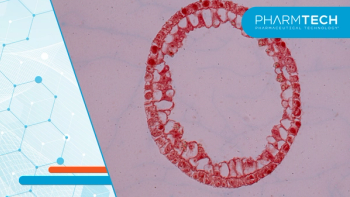
REGENXBIO's RGX-121 faces an FDA clinical hold after asymptomatic spine MRI findings, highlighting long-term imaging surveillance for CNS gene therapies.
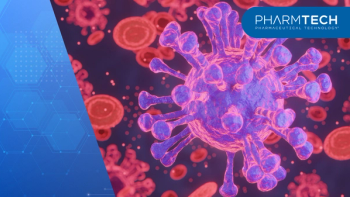
The FDA grants accelerated approval to Ultragenyx's Genglycos, the first gene therapy for GSDIa, raising manufacturing and post-market monitoring questions.
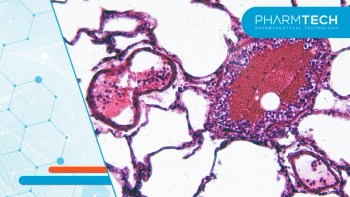
The FDA approves first therapy shown to reduce new bone lesions and flare-ups in fibrodysplasia ossificans progressiva (FOP), based on a 63-patient trial using CT-scan efficacy endpoints.

In this episode of Ask the Expert, Susan J. Schniepp, distinguished fellow with Nelson Labs, and Siegfried Schmitt, PhD, vice president, Technical, with Parexel, clear up some of the confusion about what does and does not need to be complied with regarding standards set by international pharmacopeias.

The Trump administration nominates Heidi Overton for FDA commissioner amid leadership instability, raising questions for drug developers on review timelines and oversight.
FDA grants Priority Review to Teva's ecopipam new drug application, backed by phase 3 data. Ecopipam is a first-in-class D1 receptor therapy for pediatric Tourette syndrome.

Postmarketing governance must be evidenced across the full life cycle—design, validation, and live monitoring—not documented once and assumed to hold.
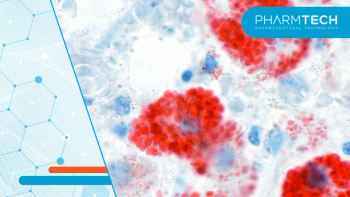
LEO Pharma acquires dersimelagon from Tanabe Pharma for up to $435M, adding a late-stage oral rare dermatology asset under FDA review.

This episode of PharmTech Explained discusses how China's biotech surge is reshaping US drug licensing, manufacturing control, and FDA data trust, the key shifts pharma professionals must track.
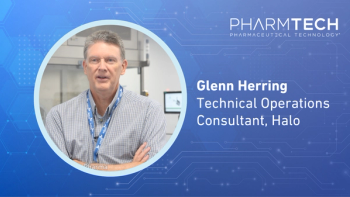
Glenn Herring, Halo Pharma, discusses its new sterile fill-finish platform: Groninger/SKAN tech, GMP design, and 2026 qualification timeline.
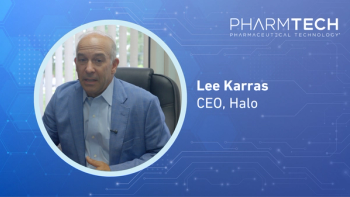
Lee Karras, CEO, Halo discusses the company's new sterile fill-finish platform, Apotex partnership, and injectable onshoring strategy.

EMA’s draft GMP Annex 22 sidelines LLMs in critical manufacturing, fueling a push for risk-based guardrails and human accountability.
Advertisement
Advertisement
Trending on Pharmaceutical Technology
1
Formulation Strategies for Next-Generation Multiagonists
2
First-in-Human Trial Speed: Why FDA Trails China
3
MASH and Cardiomyopathy Targets: Why AstraZeneca Chose insitro’s AI
4
PharmTech AI Pulse Check: Why Pharma Should Weigh In on FDA's Generative AI Paper
5