
FDA granted priority review for Pfizer’s Marstacimab, a weekly subcutaneous anti-TFPI to treat pediatric and inhibitor hemophilia.
FDA granted priority review for Pfizer’s Marstacimab, a weekly subcutaneous anti-TFPI to treat pediatric and inhibitor hemophilia.
This week, we look at a cross-industry shift toward integrated automation, domestic resilience, and a critical focus on the human talent pipeline.

Marcio Temtem, vice president, Strategic Business Management, Hovione, addresses molecule complexity, speed, and regionalization via integrated manufacturing.
Oncologist Dr. Maria de Miguel, MD, PhD, MBA, Director, Clinical Research for START Rioja, spoke with PharmTech about the importance of STEM education in early phase drug development.
Strategic outsourcing utilizes external expertise to accelerate the biopharma pipeline, integrating specialized workflows that drive efficiency from discovery through early clinical trials.

In part two of this four-part series regarding rare diseases, the author examines how economic and structural forces are driving an access gap.

ACG’s Shirwal site is the first pharmaceutical packaging site in the WEF Lighthouse Network, using digital tools to cut defects and boost sustainability.

PharmTech spoke with Elisabeth Gardiner, chief scientific officer at Tevard Biosciences, about how hands-on, early exposure to STEM fields can demystify complex concepts.

Cellares is partnering with Stanford Medicine to automate gene-edited stem cell therapy for HIV and more than 19 rare diseases.
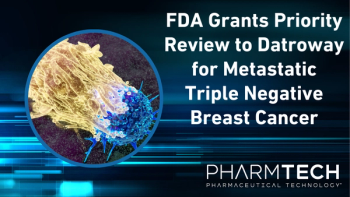
FDA has granted priority review to AstraZeneca's Datroway for the first-line treatment of metastatic TNBC treatment.

Walid Kamoun, PhD, and Alex Philippidis discuss AI’s Power to Lower Costs while Elucidating Tumor Progression, NVIDIA and Eli Lily’s Deal, and Revolution Medicine’s lack of a Deal.

PharmTech spoke with Dr. Stacy Lindborg, president and CEO of IMUNON, about her experience at IMUNON, which is developing a novel DNA-based approach to treat ovarian cancer.

The companies’ “Change the Target. Change What’s Possible” targets the potential of Factor XIa inhibition in the development of treatments for thromboembolic disease.
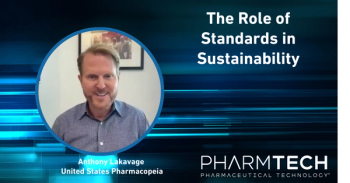
Anthony Lakavage, executive vice president and head of Global External Affairs at USP, talks about how sustainability efforts are more than just protecting the environment and how pharmaceopeias are participating in the endeavor.
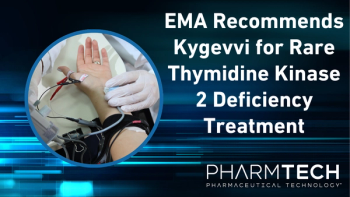
EMA recommends Kygevvi for rare thymidine kinase 2 deficiency. It is the first authorized treatment for this disease.

The EMA recommends a GLP-1 for MASH, a couple rare disease medications, and a flu vaccine among six new medicine and nine extension recommendations.

EMA recommends Rezurock (belumosudil) for chronic graft-versus-host disease, with the drug. Meetings unmet needs via conditional authorization.

The PreCheck Pilot Program is designed to strengthen the US pharmaceutical supply chain by increasing regulatory predictability and streamlining the assessment of new domestic manufacturing sites.
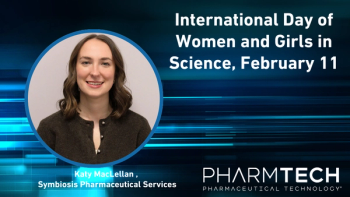
PharmTech spoke with Katy MacLellan, Technical Team leader, Symbiosis Pharmaceutical Services Ltd., about the women in the pharmaceutical industry that inspire her.

This week's coverage discusses the M&A report, $50B+ investments, automated cell therapy, vaccine approvals, and risks from the US leaving the WHO.
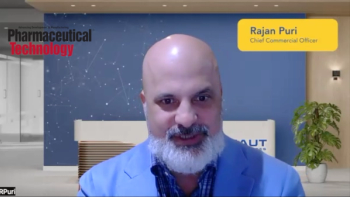
In a 2026 industry outlook interview, Raj Puri explains balancing speed with the financial and regulatory risks of accelerated drug launches via alignment.

M&A report claims that pharma is now targeting vertical integration and manufacturing control in radiopharma, GLP-1s, and ADCs to secure the supply chain.

Eli Lilly will invest $3.5 billion in a Pennsylvania facility for injectable weight-loss medicines, creating 850 new jobs and starting by 2031.

Vetter's €1.5 billion expansion adds German commercial and Illinois clinical sites to support global sterile injectable drug supply.
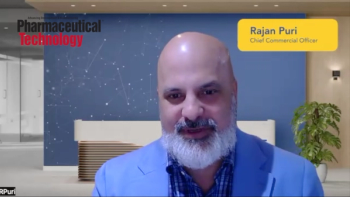
In a 2026 industry outlook interview, Raj Puri discusses how the tariffs hinder US pharma investment but drive demand for geographically segregated supply chains.
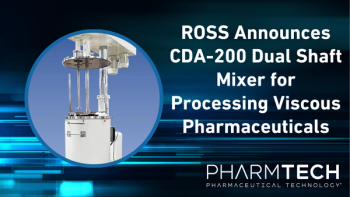
The ROSS CDA-200 optimizes viscous pharmaceutical batches via independent agitation, vacuum, and thermal control.

Cellares raises $257M to scale its automated manufacturing model and validate a move toward becoming an integrated development and manufacturing organization, or IDMO.

Repertoire’s T cell receptor-epitope discovery platform will be used to develop tolerizing therapy development candidates with Eli Lilly and Company.

Halo Pharma becomes a standalone drug product CDMO after the sale of Noramco’s API assets, adding sterile services by H2 2026.
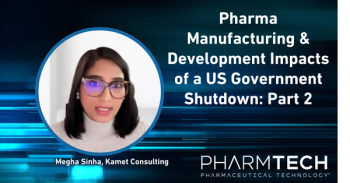
With a potential US government shutdown looming, Megha Sinha, Kamet Consulting, says to treat FDA disruptions as predictable risks by protecting milestones and early readiness.