
FDA approves Moderna's mFlusiva, the first mRNA flu vaccine, testing the platform's manufacturing case amid federal funding cuts.
FDA approves Moderna's mFlusiva, the first mRNA flu vaccine, testing the platform's manufacturing case amid federal funding cuts.
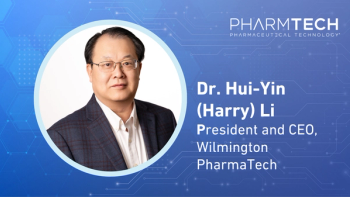
PharmTech spoke with Dr. Hui-Yin (Harry) Li, president and CEO of Wilmington PharmaTech, about steps that should be taken to build a productive relationship between sponsor and contract organizations.
OSTP's July 2026 report to Trump diagnoses U.S. science slowdown and pushes deregulation, new funding models, reshoring, and AI-driven "Genesis Mission."

Pathos AI's $2.09 billion license for Alphamab's TNBC drug JSKN016 signals rising cross-border oncology deals and manufacturing coordination demands.

Pharma's 2026 predictions revisited: AI tools have arrived, but organizational readiness, data governance, and regulatory gaps now limit real-world impact.
Modernizing infrastructures, record drug approvals, and harmonization were all positive regulatory advancements in July 2026.
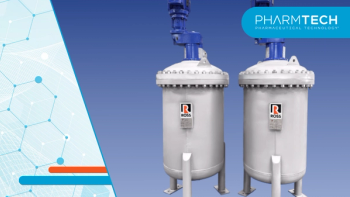
New 250-gallon retention mixers rated to 200 psi help pharma manufacturers maintain product uniformity and cut transfer risk.
Content on PharmTech.com this week showed that while AI is being utilized in drug discovery, manufacturing execution still lags behind. However, manufacturers are rethinking where and how they build capacity, transfer technology, and monitor quality in real time.

Across development, manufacturing, quality, and outsourcing, the pharma industry is being asked to scale complexity without sacrificing control.
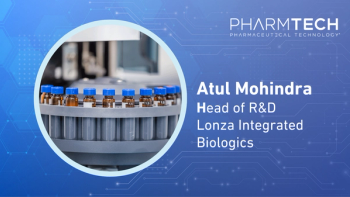
Atul Mohindra, head of R&D at Lonza Integrated Biologics, spoke with PharmTech about some of the recent advancements in analytical techniques for biopharmaceutical development and manufacturing.
This episode of Pharma Fundamentals provides an introduction to hold times in biopharmaceutical manufacturing and how they differ from hold times in small-molecule drug manufacturing.
In part 2 of this 2-part interview, Jason Bock, founder and CEO of CTMC provides input on how the FDA's proposed manufacturing registration rule may impact personalized therapies.
FDA revises draft guidance for 17 generic peptide products, including semaglutide and tirzepatide, updating testing standards ahead of a September comment deadline.
GSK invests £400M ($455 million) in a new Cambridge Biomedical Campus R&D hub, closing Stevenage by 2029 and expanding Ware's manufacturing scale-up capacity.
Jason Bock, founder and CEO of CTMC, provides his perspective on the FDA’s proposed rule to streamline registration for single distributed manufacturing establishments, and what the change may mean for personalized medicines.

In part 2 of this 2-part discussion, our panelists explain how to maintain technical oversight without micromanaging and how one can align tech transfer and regulatory strategies to avoid commercial supply gaps.

Pharma manufacturing and development experts reassess their 2026 predictions for the industry and look ahead to the second half of the year.

European biotechs are utilizing AI to identify novel immunoinflammatory targets in respiratory diseases.

In part 1 of this 2-part discussion, our panelists explain how to structure a tech transfer package, handle gaps in process understanding, and qualify analytical methods.
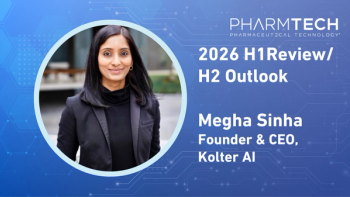
Megha Sinha, Kolter AI explains how Pharma has automated drug discovery and manufacturing AI, but not regulatory execution.

AI is reshaping discovery, manufacturing, and supply chain routing. Manufacturers are investing in capacity and resilience.

FDA advisers vote to allow pharmacy compounding of unapproved peptides BPC-157, KPV, TB-500, MOTs-C despite thin safety data and industry ties.
Campbell Bunce, chief scientific officer at Abzena, provides an update on the momentum in antibody-oligonucleotide conjugates development and the operational pressures shaping CDMO/CRO strategy for the rest of 2026.
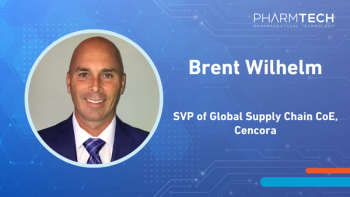
Brent Wilhelm of Cencora talks about real-time demand data, last-mile carrier risk, and a $1 billion investment in cold chain pharma resilience.
Megha Sinha, Kolter AI, discusses how pharma's AI bottleneck shifted from technology to readiness as execution across 60 markets stays manual.
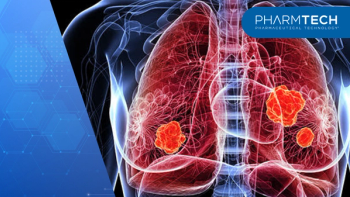
The FDA approval of Jideytro (zidesamtinib) for previously treated ROS1-positive NSCLC has implications for drug developers.
Campbell Bunce, chief scientific officer at Abzena, revisited his 2026 industry predictions on the direction of the biologics and bioconjugate market and gives an update on ADCs.

Neuland's Saharsh Davuluri checks in on Chinese out-licensing, peptide capacity, and CDMO agility six months after his December 2025 predictions.

Susan J. Schniepp, distinguished fellow with Nelson Labs, and Siegfried Schmitt, PhD, vice president, Technical, at Parexel, explain a company’s regulatory affairs department is subject to inspections by regulators and should, therefore, be prepared.
Brent Wilhelm, Cencora, comments on cold chain pharma growth, a $1B supply chain investment, and a 2027 hub built to curb drug shortages.