

This week on PharmTech, Merck diversified its pipeline, USP emphasizes supply chain security, AI systems are examined, and speakers preview their presentations at CPHI Milan and AAPS PharmSci 360.
This week on PharmTech, Merck diversified its pipeline, USP emphasizes supply chain security, AI systems are examined, and speakers preview their presentations at CPHI Milan and AAPS PharmSci 360.
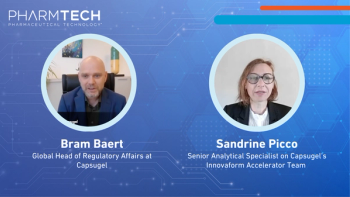
Capsugel's Bram Baert and Sandrine Picco argue that chasing zero nitrite in pharmaceutical excipients is often impractical and costly. They recommend setting scientifically justified, risk-based limits and consistently staying below them.
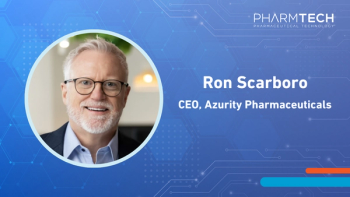
Ron Scarboro, Azurity Pharmaceuticals, claims drug reformulation that removes patient barriers must preserve efficacy, urging early cross-functional team alignment.

PharmTech AI Pulse Check episode 2 covers AI data governance, API-gated journals, watermarking limits, and why attribution beats detection in GxP.
The FDA opened an expedited IND pilot, tightened scrutiny of foreign trial data, and finalized a rule recognizing non-animal testing methods. In Europe, the EMA advanced pharmaceutical legislation reform, restricted 2 legacy products, and opened an injectable-iron safety review.
Ron Scarboro, Azurity Pharmaceuticals, explains why real-world usability belongs at product definition and how post-launch feedback should guide drug formulation.
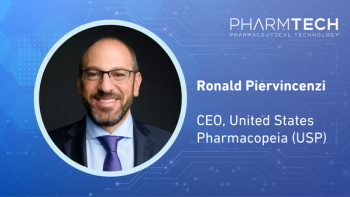
Ronald Piervincenzi, USP, explains why drug supply resilience needs a system approach, from procurement benchmarks to regulatory capacity building.
Episode 1, Part 3 of PharmTech AI Pulse Check covers why INTerpath-001's AI isn't ChatGPT and names pharma manufacturing's biggest AI governance gaps.
Richard Jaenisch weighs how FDA's new NAM rule could reshape preclinical testing and what CMC teams should do now, on Manufacturing Intelligence.
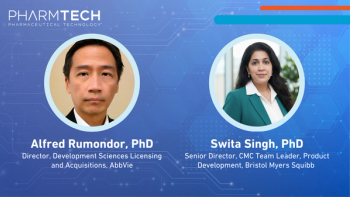
In a preview of their panel discussion at AAPS PharmSci 360 2026, Alfred Rumondor, PhD, AbbVie, and Swita Singh, PhD, Bristol Myers Squibb, discuss the implementation of risk-based approaches for CMC.
Ronald Piervincenzi, USP, urges drugmakers and purchasers to act on supply chain resilience to curb drug shortages and shape better policy.

Content on PharmTech.com this week ranged from fundamentals on the use of digital pathology in drug development, discussions on the use of AI in pharma, and regulatory actions impacting the industry.
Ronald Piervincenzi, USP, explains why manufacturers should act now and how benchmarking could reward reliable generic drug suppliers.
Florin Muraru, Gourav Pandey, and Richard Jaenisch explain where human sign-off belongs as multi-agent AI and document-parsing models reach GxP.
In this episode of Ask the Expert, Siegfried Schmitt, PhD, vice president, Technical at Parexel, and Susan J. Schniepp, distinguished fellow at Nelson Labs, discuss how companies should approach post-approval changes to their CMC regulatory filings.
In this episode of Pharma Fundamentals, Dr. Aleksandra Zuraw, senior veterinary pathologist at Charles River, provides an introduction to the use of digital pathology in drug development.
Jaenisch, Muraru, and Pandey debate whether AI "slop" is infiltrating pharma SOPs and deviation reports and who should catch it first.

This week, the FDA opened applications for its Expedited IND Pilot, quality experts presented at the PDA/FDA Joint Regulatory Conference, and Hovione expanded its spray drying capacity.
PharmTech AI Pulse Check debuts: pharma experts tackle GxP 'slop,' multi-agent validation risk, OCR document mining, personalized mRNA cancer therapy.

PharmTech spoke with Tara Dougal, event director for pharma at Informa Markets, about trends impacting the pharmaceutical industry and how CPHI Milan is addressing these areas this year.
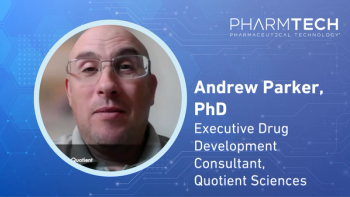
Andrew Parker, PhD, executive drug development consultant, Quotient Sciences, explains how AI is integrated into pharmaceutical development.
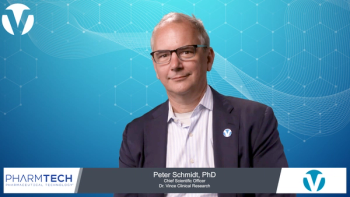
Sponsored
Peter Schmidt, PhD, breaks down a major shift in FDA thinking that's changing how sponsors plan their earliest trials.
Andrew Parker, PhD, executive drug development consultant, Quotient Sciences, explains that developing a molecule requires a holistic view of its chemical, physical, and biological properties.

On PharmTech.com this week, coverage of upcoming events continued, experts continued to discuss the use of AI in pharma, and validation in oral solid dosage product production was emphasized.
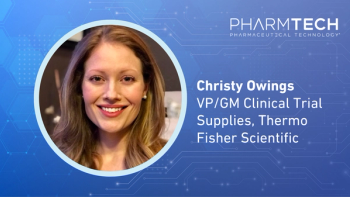
Christy Owings, Thermo Fisher, on why early supply chain partnership and site visits prevent costly eCOA and clinical trial delays.
Christy Owings, Thermo Fisher, on how AI complements clinical supply chain expertise, streamlines site logistics, and tracks shifting biotech markets.
Christy Owings, Thermo Fisher, speaks on why importer of record strategy and vetted local partners are key to reliable clinical trial supply chains.
In a preview of their panel discussion at AAPS PharmSci 360 2026, Alfred Rumondor, PhD, AbbVie, and Swita Singh, PhD, Bristol Myers Squibb, discuss navigating CMC requirements for new modalities and AI’s involvement in CMC.
Christy Owings, Thermo Fisher, discusses how customs delays and import complexity risk clinical trial supply chains in Latin America.

This week saw predictive modeling, microstructure intelligence, a CAR T-cell safety pause, and major licensing deals reshape pharma manufacturing.