

Susan J. Schniepp, distinguished fellow at Nelson Labs, and Siegfried Schmitt, PhD, vice president, Technical at Parexel, discuss how companies can investigate patient complaints involving prefilled syringes and combination products.
Susan J. Schniepp, distinguished fellow at Nelson Labs, and Siegfried Schmitt, PhD, vice president, Technical at Parexel, discuss how companies can investigate patient complaints involving prefilled syringes and combination products.
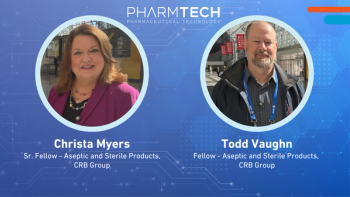
At INTERPHEX 2026, Todd Vaughn and Christa Myers of CRB Group discuss rising automation in aseptic manufacturing and growing regulatory focus on sterility.
Sponsored
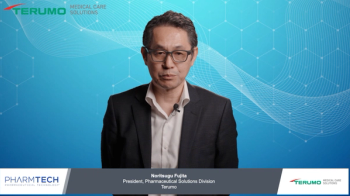
The CDMO landscape is shifting toward long-term strategic partnerships as drug modalities grow more complex and supply chain pressures mount. Noritsugu Fujita, Division President of Pharmaceutical Solutions Division at Terumo, explains how an integrated, single-source model for parenteral drug development aims to streamline the path to a patient-ready product.
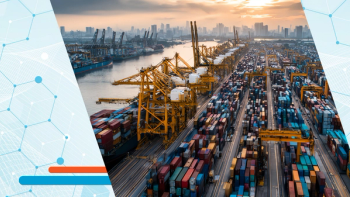
Drug shortages are rising. Learn what's breaking the pharmaceutical supply chain, and what industry leaders are doing to fix it.
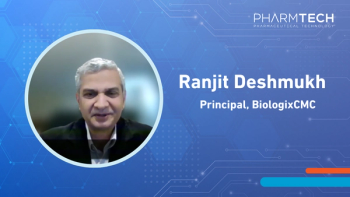
Ranjit Deshmukh, Principal, BiologixCMC, discusses how contract manufacturers can optimize their processes and plan for the future by optimizing facility design.
This week, PharmTech discussed the use of AI in real-time monitoring, a strategic collaboration in radiopharmaceutical development, and navigating regulatory hurdles.
In this clip from episode 1 of Manufacturing Intelligence, Richard Jaenisch of Open Biopharma discusses uses of AI for deviations and investigations in pharma.
In part 1 of a multi-part series, David Schoneker, president, Black Diamond Regulatory Consulting, explains the difference between a new excipient and a novel excipient and what goes into developing a new excipient.
Sponsored
Peter Belden, Tjoapack, discusses how the rise of specialized medicines for smaller patient populations is necessitating more flexible, redundant packaging capacity to manage complex global distribution requirements.

Andrew Chang and Steven Falcone, Novo Nordisk, share how real-time digital monitoring, smart sensors, and a globally connected manufacturing network are shaping pharma's QMS future.
Sponsored
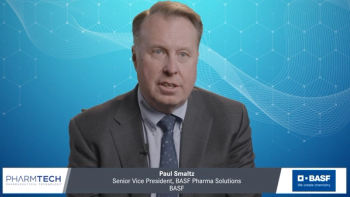
Paul Smaltz, Senior Vice President of BASF Pharma Solutions, explains how the company acts as a strategic partner to the pharmaceutical industry by integrating AI-driven formulation tools, sustainability initiatives, and specialized biopharmaceutical solutions to overcome modern manufacturing challenges.
Sponsored
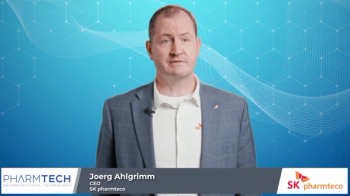
Joerg Ahlgrimm, CEO of SK pharmteco, outlines the company's strategic expansion into cell and gene therapy. He also details their commitment to global operational excellence and a culture of employee purpose.
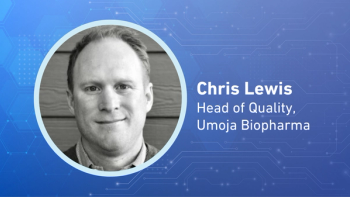
Christopher Lewis, Umoja Biopharma, explores how AI is revolutionizing pharma training, predicting process issues, and unlocking the value of existing data.
In this clip from episode 1 of Manufacturing Intelligence, Richard Jaenisch of Open Biopharma discusses step 1 in adopting AI in pharma manufacturing.
Sponsored
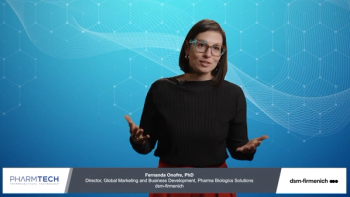
Fernanda Onofre, PhD, explains how the dsm-firmenich ModulaSENSE® Bitter platform and the functional application of vitamins as excipients are revolutionizing drug palatability and performance.
Andrew Chang and Steven Falcone, Novo Nordisk, explain how FDA-EU GMP mutual recognition and a robust internal signal process drive global regulatory compliance.
Richard Jaenisch and Christopher Cole discuss AI in pharma manufacturing, covering learning steps, output evaluation, hallucinations, and FDA/EMA guiding principles.
This week, PharmTech discussed proactive, data-driven contamination control, solving manufacturing hurdles, and the market entry of complex generics and biosimilars.
Christopher Lewis, Umoja Biopharma, explores how AI can streamline compliance, cut investigation time, and free skilled workers for higher-value tasks
Susan Schniepp, Regulatory Compliance Associates Inc., explains how AI and digital twins speed up pharma batch release and detect data integrity issues with human oversight.
Susan Schniepp, Regulatory Compliance Associates Inc., discusses digital twins and AI in pharma, focusing on data integrity, human-in-the-loop roles, and evolving machine learning risks.
Sponsored
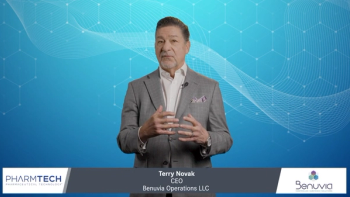
Terry Novak, CEO of Benuvia, explores how pharmaceutical and biotech companies can mitigate development risks and accelerate speed-to-market by prioritizing technical alignment, robust project management, and early-stage collaboration with the right CDMO partner.
Susan Schniepp, Regulatory Compliance Associates Inc., explains how flexibility, right-sized SOPs, and transparency keep compliance simple.
Susan Schniepp, Regulatory Compliance Associates Inc., discusses siloed pharma data being a hidden risk, with AI as a possible key to connecting quality systems and seeing the full manufacturing picture.
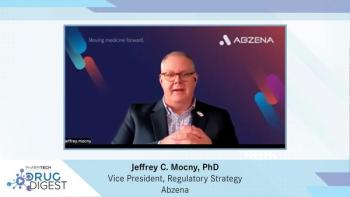
In this Drug Digest episode, Abzena’s vice president of Regulatory Strategy, Jeff Mocny, and Cellares’ director of Regulatory Affairs, Anna McMahon, examine how evolving regulatory and quality expectations are reshaping biopharmaceutical development and manufacturing.
The industry is seeing a shift toward integrated process intelligence and new regulatory pathways.
Susan Schniepp, Regulatory Compliance Associates Inc., says poor quality in pharma manufacturing is costly but catching defects early can saves millions.
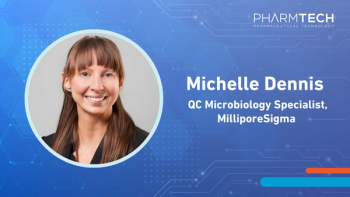
Michelle Dennis at MilliporeSigma explores how biofluorescent particle counting and RFID traceability are transforming real-time environmental monitoring.
This week, three core themes have emerged: the digital transformation of quality systems through AI and hybrid cloud architectures; the pursuit of supply chain resilience via onshoring and advanced mapping; and a regulatory push toward real-time data and flexible approval pathways.
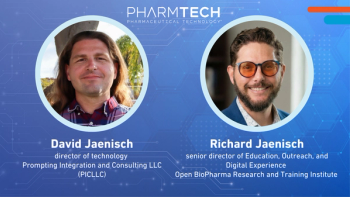
Richard Jaenisch explains how digitally interactive SOPs and Human-AI Training Parallelization help build, measure, and continuously improve AI-era workforce skills.