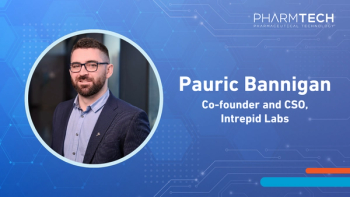
Pauric Bannigan, Intrepid Labs' explains where AI speeds formulation decisions, why data is the bottleneck, and how active learning trains models with far less data.
The new initiative aims to apply traceable AI and science to expand care worldwide by translating discovery into tools that accelerate drug development.
On October 27, 2026, Humanitas Global Health announced its launch at the American Association of Pharmaceutical Scientists’ (AAPS) PharmSci 360 event, which is being held in New Orleans from October 25-28. Humanitas Global Health’s goal is to connect science, artificial intelligence (AI) and clinical implantation to improve drug discovery and development with solutions created through experimental testing, real-world evidence, and collaboration with clinical and health-system partners. Humanitas is also announcing a commercial licensing agreement with Louisiana State University (LSU) to use its DeepDrug technology.
“Humanitas was founded on a simple conviction: scientific progress should translate into less suffering and better care,” said Chris Galliano, founder and chief executive officer of Humanitas Global Health, in a press release.1 “Our launch and the LSU license agreement bring together the science, technology, and commitment needed to move promising discoveries toward practical use. Humanitas is focused not just on what artificial intelligence can predict, but on how those predictions can be tested, trusted, and used to help people. There is no better place than to introduce Humanitas than at the 2026 PharmSci 360 congress.”
Humanitas’ licensing agreement with LSU allows for the commercialization of DeepDrug technologies to develop pharmaceuticals and ensure drug safety. The DeepDrug technology was developed by a team at LSU led by Professor Supratik Mukhopadhyay. It creates connection between AI, molecular design, and predictive modeling to support drug discovery to evaluate potential new medicines.
“As someone who spent years in drug development, I know that a medicine is only as good as our ability to use it safely," said James Dalton, PhD, chancellor, Louisiana State University, in the press release.1 “This license puts LSU research to work for patients and shows exactly why our goal of becoming a top 50 research university matters: more discoveries like this one, reaching the people who need them.”
Humanitas uses explainable AI and ethical intelligence to identify and prioritize drug candidates. Predictions are linked to physicochemical properties and pharmacologic and toxicologic mechanisms that are tested experimentally to make laboratory and preclinical development more focused.
The company is using another platform, InteractIQ, to improve drug safety. The auditable AI platform features ethical intelligence to evaluate patient medication regimens. The goal is to prevent adverse events caused by drug-drug interactions. The platform is being retrospectively validated using real-world electronic health data from LCMC Health.
“Drug discovery and prescription safety are often treated as separate challenges, but both depend on understanding how medicines work and where they can cause harm," Galliano added in the press release.1 “Our goal is to connect those insights through explainable, auditable tools, earn confidence through rigorous validation, and enable a new paradigm of Aldriven pharmacovigilance.”
A
Humanitas will also be attending the Louisiana Biotechnology Innovation Award ceremony, where LSU is being honored along with the DeepDrug team.