
PTSM: Pharmaceutical Technology Sourcing and Management
The company announced its new ISQ EC Single Quadrupole mass spectrometer and the new range of Thermo Scientific MAbPac RP 1-mm columns.
PTSM: Pharmaceutical Technology Sourcing and Management
The company announced its new ISQ EC Single Quadrupole mass spectrometer and the new range of Thermo Scientific MAbPac RP 1-mm columns.
The company was granted patent rights to the use of CRISPR in a genomic integration method for eukaryotic cells.
PTSM: Pharmaceutical Technology Sourcing and Management
The company added new products to its InfinityLab LC Series which will be showcased at HPLC 2017 in Prague.
The company has voluntarily recalled Clindamycin Injection USP ADD-Vantage Vials to the hospital/retail level because of a lack of sterility assurance.
The company is voluntarily recalling all unexpired lots of nitroglycerin products produced at its Houston location for potency issues.
The agency’s management board discussed plans for the relocation of EMA at its June 2017 meeting.
The company recalled a variety of products due to the potential of microbial contamination.
SK Biotek plans to operate the Swords, Ireland API manufacturing facility as a contract development and manufacturing site.
Basilea Pharmaceutica International Ltd. entered into a distribution and license agreement with Pfizer and Avir Pharma Inc. to distribute Basilea’s antifungal treatments.
The companies announced an agreement where Dorizoe will work with Baxter to develop more than 20 generic injectable products.
Selexis will be integrated with KBI Biopharma, which was acquired by JSR Life Sciences in 2015.
A recent meeting emphasized the need for more guidance and flexibility from regulators, as well as harmonization, standards and equipment interoperability.
A consent decree of permanent injunction was entered between the United States and the two companies due to unapproved, mislabeled, and adulterated drugs.
The company has extended its voluntarily recall of one lot of paliperidone extended-release tablets to the consumer level due to dissolution test failure.
Sartorius Stedim Biotech combined the company’s ambr 15 bioreactor system with the Nova BioProfile FLEX2 cell culture analyzer for laboratory experiments.
The agency sent a warning letter to A-S Medication Solutions LLC after it found the company didn’t comply with drug listing file requirements.
PTSM: Pharmaceutical Technology Sourcing and Management
The companies are partnering to provide new fill/finish facilities and solutions for biopharmaceutical products.
PTSM: Pharmaceutical Technology Sourcing and Management
The company added a 40,000-ft2 purpose-built R&D center at 17112 Armstrong Ave, Irvine, CA.
FDA Commissioner Scott Gottlieb announced the July meeting as part of his commitment to address opioid abuse.
FDA sent a warning letter to drug compounder DCA, Inc. dba Beacon Prescriptions for failing to ensure sanitary conditions.
PTSM: Pharmaceutical Technology Sourcing and Management
Aptar now manufactures its child-resistant pump, designed to meet US CPC requirements, at its facility in Congers, New York.
Equipment and Processing Report
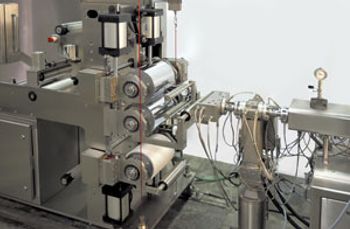
At an industry seminar hosted by Leistritz Extrusion, experts explained the use of extrusion equipment to mix polymeric excipients with APIs for solubility enhancement and for multifunctional and specialty dosage forms, including implants.
The companies are collaborating to interface the Waters Acquity QDa Mass Detector with the IonSense DART ionization source.
The company is voluntarily recalling one lot of Eliquis after a patient discovered that a bottle labeled as Eliquis 5 mg was found to contain Eliquis 2.5 mg tablets.
The company said it expects to transaction to close on June 16, 2017.
The three regulatory agencies have agreed to data requirements for development of new antibiotics.
The landmark decision determined that biosimilar makers can notify manufacturers before receiving FDA approval.
In its June meeting, the agency’s Pharmacovigilance Risk Assessment Committee discussed medicine safety reviews.
Proceeds from the sale will be used to repay the company’s term loan debt under its Senior Secured Credit Facility.
Germany-based Grünenthal will gain rights to market and sell Zomig (zolmitriptan) outside of Japan.