
The authors introduce the idea of asymmetrical tolerance intervals as an aid in fully assessing product performance relative to product or process requirements.
There is a great need for sensitive, precise, and easily accessible analytical detection techniques for protein sequencing.
The emergence of mRNA vaccines and cell and gene therapies has pushed innovation in analytical methods.
Effective analytics will eliminate failures, deviations, and non-conformances.
The authors introduce the idea of asymmetrical tolerance intervals as an aid in fully assessing product performance relative to product or process requirements.

Simple, inexpensive real-time analytics are urgently needed for high value products.
Particle analysis is a critical component of pharmaceutical development, providing assurances of the quality and performance of the final dosage form.

Sartorius is investing €100 million (US$113 million) between 2021 and 2025 to expand capacities for production, innovation, and storage at its French facilities in Aubagne, Cergy, and Lourdes.
Analytical methods need a boost to ensure quality control for cell and gene therapies.
Different methods to calculate limits for impurities will give different answers. The prediction interval method may be ideal.
Researchers from MIT have developed novel nanosensors for the detection of the nucleocapsid and spike protein of the SARS-CoV-2 virus.
MilliporeSigma’s new ColorWheel flow cytometry portfolio is designed to create antibodies and dyes analogous to a primary conjugated antibody.
Sartorius’ newly redesigned vacuum filtration units are designed to allow for faster and higher-capacity filtration while offering enhanced stability for sample processing.
Lonza is expanding its microbial development capabilities at its Visp, Switzerland, site to support clinical and commercial drug development programs.
Synthace has raised $35 million in funding to fuel growth of its life sciences R&D technology.
Part 2—Industry experts from MilliporeSigma, Lonza, Astrea Bioseparations, and Sartorius provide insight and examples about solving critical challenges in both analytics and process development for emerging therapies.
Part 1—Industry experts from MilliporeSigma, Lonza, Astrea Bioseparations, and Sartorius discuss key issues affecting the development of emerging biotherapies.
The partnership between Waters and Sartorius aims to accelerate speed and increase accuracy in bioprocessing analysis.
Gentronix has expanded it lab facilities and increased capacity for genetic, ocular, and skin toxicology testing.
Thermo Fisher Scientific showcases its new mass spectrometry and chromatography solutions at the ASMS Conference on Oct. 31–Nov. 4, 2021.
The increased flow of data from laboratory studies requires a data management strategy to optimize study success.

Part two of this article series shows how traditional statistical process control rules can be relaxed or adjusted to allow charting and evaluation of real-life data of pharmaceutical processes with a reduced number of false alarms.
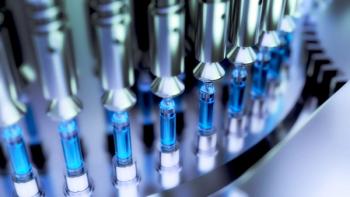
Automatic visual inspection machines and artificial intelligence highlight inspection deficits for parenteral containers and units.

Different methods give different answers when calculating limits for impurities. The prediction interval method may be the best option.
MilliporeSigma’s newly launched Millicell DCI Digital Cell Imager quickly and objectively assesses common cell culture parameters and growth trends for more consistent cell cultures.
SGS’s new Antwerp, Belgium, clinical research site will house both clinical trial patients and good manufacturing practice drug manufacturing, and its Glasgow, UK, biosafety testing site now has increased testing capacity.

The ever-increasing interest in photochemistry has inspired the development of innovative, modular flow photochemistry reactors.
SGS is investing in a new E&L lab in Navi Mumbai, India, that will provide testing services.
AION Labs will be a first-of-its-kind AI/pharma and computational biology innovation lab aimed at spearheading the adoption of AI technologies and computational science.