
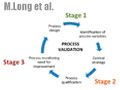

Pharmaceutical Technology Europe
The increased trend of outsourcing coupled with a relatively strong economy has seen the fine chemicals market grow at a very high level when compared to historical data.

Accurately targeted immunotherapies through reliable neoantigen recognition enable personalized medicine development.

Activation and expansion are essential for success in both autologous and allogeneic therapies.

Continuous manufacturing and a quality-by-design development approach are a natural fit.

Pharmaceutical Technology Europe
The increased trend of outsourcing coupled with a relatively strong economy has seen the fine chemicals market grow at a very high level when compared to historical data.

Excipients are the hidden champions of drug development-no API works consistently without the right excipient. Pharmaceutical excipients, however, require stringent quality management. This article discusses how the supplier of pharmaceutical raw materials should take a central role in ensuring excipient quality.
As contract manufacturers and fine-chemical suppliers gather for CPhI/ICSE, effective strategies for technology differentiation are key in an increasingly competitive environment.

A Q&A with Joe Cascone, director of potent pharmaceutical development at Metrics, moderated by Patricia Van Arnum. Discussion of the key considerations made in facility design, equipment selection, and operations to achieve desired levels of containment.
Pharmaceutical Technology Europe
Highly potent APIs (HPAPIs) represent a growing area of interest for the pharma industry. Mark Griffiths, CEO of Carbogen Amcis AG, explains why.
Pharmaceutical Technology Europe
We're all familiar with traditional pills and medicines, but how about medicated chewing gum? Marc Ribe of Cafosa Gum explains how APIs can be incorporated into a novel dosage form that can aid patient compliance.
Clarifying GMPs for excipients used as actives.
A Q&A with Brian Johnson, senior director of supply chain security at Pfizer, moderated by Patricia Van Arnum. Part of a special Ingredients issue.
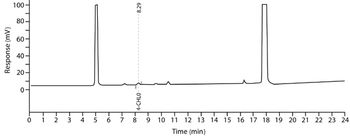
The authors provide an overview of methods for the quantitative determination of genotoxic impurities (GTIs) in active pharmaceutical ingredients.
Pharmaceutical Technology Europe
Recently, there have been many innovations in the latest techniques and technologies in API purification. In particular, the trend to single-use systems has had a significant impact on processes.

A perspective from Pfizer on the lessons from small-molecule manufacturing that can be applied to biomanufacturing.

The author examines sample-preparations methods used in inductively coupled plasma–optimal emission spectroscopy for four test metals.
Last week, Ben Venue Laboratories decided to exit the contract-manufacturing business during the next several years, thus ending more than 70 years of service in this field. To ensure the supply of medically necessary products, the company will work with its customers to develop and execute long-term transition plans.

The authors present a method for controlling the release of therapeutics by applying a plasma polymer layer to the surface of porous materials.

O-arylation and O-alkylation, a one-pot protein synthesis, a combined approach in continued and chemocatalysis, and green-chemistry applications are the target of some recent advances in API synthesis.
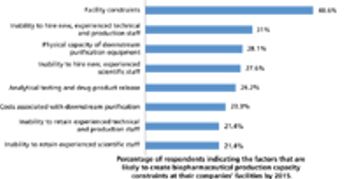
China rises to the top as a destination for international outsourcing.

New studies reveal the promise and feasibility of transdermal vaccine delivery.

Quality management requires more effort in a complex supply chain.

A path to personalized medicines creates a new paradigm for development and manufacturing.
Pfizer's Experience with QbD. This article is part of a special issue on Outsourcing.
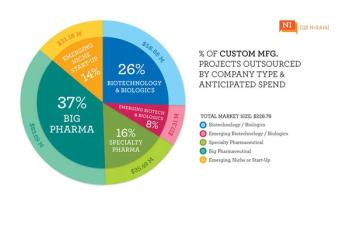
The article examines the drivers of customer perception of contract service providers of pharmaceutical development and manufacturing.
The authors share their approach and experience working in complex, multicompany environments for in-licensed products to develop successful chemistry, manufacturing, and controls packages for managing outsourcing partnerships.

An Industry Roundtable Moderated by Patricia Van Arnum and Rich Whitworh. Contract service and technology providers share their perspectives on the influence of quality by design in the expectations between sponsor companies and outsourcing providers.

Avantor reviews its experience with the Rx-360 shared audit pilot program, which is aimed at protecting the pharmaceutical supply chain. This article is part of a special issue on Outsourcing.
Equipment and Processing Report
Even though manufacturers are responsible for ensuring the quality of combination products, some companies may not be certain about what quality system to apply to their production.