
Modern methods and modeling offer a better way to understand solubility issues and solve today’s complex formulation challenges.
Accurately targeted immunotherapies through reliable neoantigen recognition enable personalized medicine development.
Activation and expansion are essential for success in both autologous and allogeneic therapies.
Continuous manufacturing and a quality-by-design development approach are a natural fit.

Modern methods and modeling offer a better way to understand solubility issues and solve today’s complex formulation challenges.
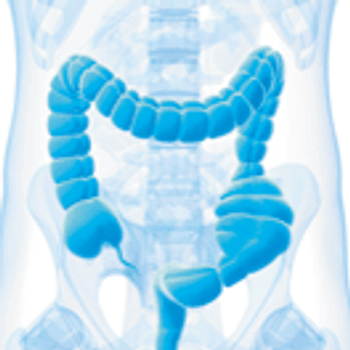
Prodrugs and drug-delivery systems controlled by time, pH, and osmosis, are being used to prevent drug degradation in the stomach and large intestine and ensure drug release in the colon.

With the French pricing and reimbursement policies becoming increasingly stringent, pharmaceutical manufacturers must adapt their drug development and commercial strategies if they want to secure premium pricing for their new products.
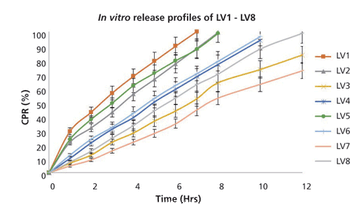
Delivery systems that allow drugs to be administered as liquids, but to form gel within the eye, promise to improve efficacy and patient compliance.

The new facility expands the company’s commercial manufacturing capability at its Bend, Ore. site.

An ISPE guidance document, four years in the making, brings risk-based thinking, statistics, and Lean Six Sigma to cleaning validation.
PharmTech Multimedia
Barry Holtz, Principal, at Holtz Biopharma Consulting, and Klyo Collaborative, spoke with Pharmaceutical Technology about collaborative success strategies for biopharm companies.
GSK will invest in an additional downstream isolation facility for amoxicillin production in Singapore.
The new column features Natrix’s signature macroporous hydrogel.
PTSM: Pharmaceutical Technology Sourcing and Management
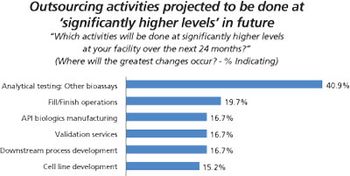
More biopharma companies choose outside service providers for assay testing.
PTSM: Pharmaceutical Technology Sourcing and Management
Novasep's new antibody drug conjugate facility at its site in Le Mans, France will be commissioned in 2016.
BioSC Lab is the first in a line of next-generation chromatography equipment for protein purification in batch and continuous modes.
PTSM: Pharmaceutical Technology Sourcing and Management
Reach Separations has announced plans to double its laboratory space at its Nottingham facility as a result of increased demand for its specialist purification services.
Monoclonal antibodies can facilitate the entry of radiopharmaceuticals into cells, David Scheinberg said at BIO 2015.
The International Conference on Harmonization finalizes Q&A document on APIs.
GSK announces it will invest $95 million to launch a US-based non-profit research institute, Altius, to research technologies and approaches in understanding gene control.
Equipment and Processing Report
Presenters at IVT's Microbiology Week discussed best practices and recent guidance publications for microbial control in sterile and non-sterile pharmaceutical processes.
Experts at Eppendorf discuss common challenges in cell culture and share insights on possible solutions.
The University of Pennsylvania announces that it will collaborate with WuXi AppTech to research and develop gene vectors derived from recombinant viruses.
The agency creates initiative to stimulate pediatric drug development.
BPTF seeks changes in performance goals and fee payment schedule in GDUFA renegotiations.
The product, marketed as Sirdupla in the United Kingdom, is the generic version of GSK’s beta agonist and corticosteroid combination treatment for asthma.
The agency issues draft guidance on the development of drugs to treat Duchenne muscular dystrophy.
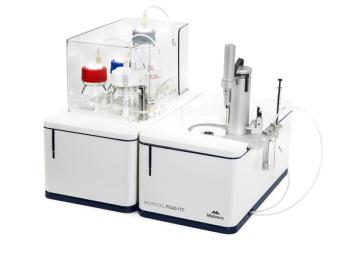
At this year’s ACHEMA, Malvern brings to the exhibition floor, its expertise and tools for measuring particle size and shape, zeta potential, molecular weight, and rheological properties for the characterization of dispersed systems.
Talks will explore key trends and issues in the pharmaceutical space and address the “latest industry buzz.”