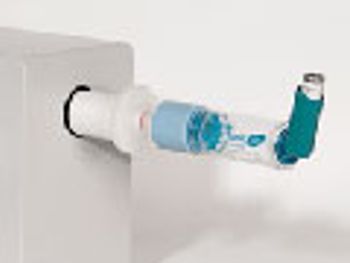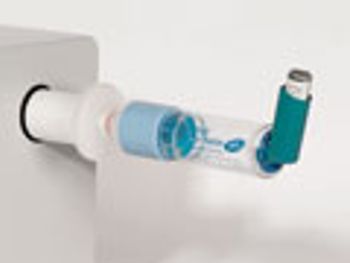




The challenge of developing orally inhaled nasal drug products (OINDPs) is complicated by the interplay between drug-delivery devices and formulation.

The challenge of developing orally inhaled nasal drug products (OINDPs) is complicated by the interplay between drug-delivery devices and formulation.

An introduction to the upcoming Interphex panel--Lessons Leaned: Successes and Challenges in Implementing Quality by Design.? Moderator: Jennifer Markarian, manufacturing editor, Pharmaceutical Technology. Panelists: John Lepore, senior director of Chemical Process Development and Commercialization for Global Pharmaceutical Commercialization at Merck and Co. Chris Moreton, FinnBrit Consulting Jonathon Thompson, senior manager of Compliance Services Consulting at Invensys Operations Management

The parties partner for evidence-based formulations for emerging markets

Access to simpler and more direct methodologies for the incorporation of fluorinated substituents remains an unmet need in pharmaceutical synthesis. An analysis of recent trends in fluorination chemistry.

Continuous flow chemistry offers potential for greater control, improved safety and environmental profiles, and efficient chemical transformations.

Contract API manufacturers proceed with select investment in capacity and service additions.

This article summarizes the development and modernization of the United States Pharmacopeia-National Formulary (USP-NF) fixed-oil excipient monographs. This article contains bonus online-exclusive material.

A Q&A with Tony Hitchcock, head of manufacturing at Cobra Biologics.

The European Union authorities are stepping up their efforts to incorporate quality-by-design principles into their regulations and guidelines.

Keith Bader, senior director of technology at Hyde Engineering + Consulting discusses his presentation ?Establishing a design space: cleaning process development and validation,? which will be presented at Interphex 2013

The 2013 Excipient Information Package (EIP) User Guide is now available for free download from the International Pharmaceutical Excipients Council (IPEC)-Americas.

Collaboration provides pharmaceutical industry customers with access to enzyme expertise and assets resulting in cost-effective, green processing at all phases of development, from preclinical to commercial manufacturing scale.

Dow Chemical and Bend Research are developing and commercializing new materials for spray-dried dispersions that address technology gaps in manufacturability and delivery.

Roche and BioLamina have entered into a research and development agreement to jointly develop new cell culture systems for various applications, including stem cell research. The collaboration will assess laminin-based in-vitro cell culture matrices that can offer physiological microenvironments for living cells.

As the strategic value of emerging markets increase, pharmaceutical companies increase their R&D and manufacturing investments.

The authors present topics discussed and conclusions that resulted from the PDA QbD workshop.

FDA's requirements for API manufacturers in regards to ICH Q7.

Engineering nanoparticles with optimal properties for use in cancer therapies.

Visual mapping can provide a particle-size distribution estimate.

Growth is seen in outsourcing of insect- and plant-cell-based bioproduction expression systems.

Pharmaceutical Technology brought together a panel of industry experts for a special forum to discuss solubilizing polymers and the related formulation strategies for poorly soluble drugs.

Capsugel’s acquisition of Encap Drug Delivery expands its lipid expertise and adds an FDA-inspected commercial manufacturing facility.

The tableting science anti-research (TSAR) project seeks to understand why certain formulations stick to tablet tooling.

Factors for assessing excipient variability, the associated challenges developers need to address to design and manufacture solid oral drug products, and solutions for such challenges are examined.

The use of various documents and guides by the International Pharmaceutical Excipients Council can facilitate the flow of information among excipient manufacturers, distributors, and users.