
Paul Sheskey of Dow Chemical provides an update on foam granulation technology.
Paul Sheskey of Dow Chemical provides an update on foam granulation technology.
Pharmaceutical Technology Europe
The adequate absorption and transport of drugs in the body is part of optimal therapy. Drug administration perorally is easy, common and traditional, but occasionally alternative routes are required.
Process designs and control strategies can be improved by adopting a risk-based approach to product quality. The author describes how this approach can be applied to spray-drying operations.
Traditional tablet presses do not measure tablets' tensile strength, yet this characteristic strongly influences tablet quality. The author describes a compression technique that accounts for tensile strength and produces tablets with consistent weight and disintegration time.
ePT--the Electronic Newsletter of Pharmaceutical Technology
Also, Genzyme to build R&D center in Beijing, Noven Pharmaceuticals appoints Peter C. Brandt president and CEO, more...
ePT--the Electronic Newsletter of Pharmaceutical Technology
Problems associated with contamination of heparin products continue after worldwide recalls in March in the United States, Italy, France, and Denmark.
ePT--the Electronic Newsletter of Pharmaceutical Technology
Also, GSK expands in Ireland, executive appointments at ProGenTech, more...
ePT--the Electronic Newsletter of Pharmaceutical Technology
MannKind suspended discussions with potential partners for the commercialization of its "Technosphere Insulin" product.
ePT--the Electronic Newsletter of Pharmaceutical Technology
Also, Alcon plans to open Singapore facility, Pharmacopeia president and CEO retired, more...
ePT--the Electronic Newsletter of Pharmaceutical Technology
Also, Jubilant Organosys to acquire DRAXIS Health, PPD's Paul Covington to retire, more...
ePT--the Electronic Newsletter of Pharmaceutical Technology
Also, VaxGen and Raven terminate merger agreement, Darren Head appointed CEO of Cytovance, more...
PTSM: Pharmaceutical Technology Sourcing and Management
The former formulation-development business of MDS Pharma Services seeks to build its niche in early-phase drug development.
A reference book omits important information and ignores advanced testing procedures.

The FDA itself issues a cry for help. Is anybody listening?
Companies continue to develop inhaled insulin and other drugs, despite the problems that Pfizer's "Exubera" experienced.
What makes a drug ripe for respiratory delivery?
Pharmaceutical Technology Europe
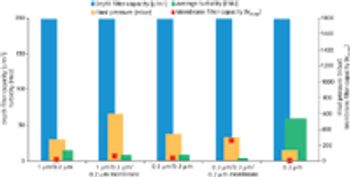
Monoclonal antibodies and recombinant proteins have increased their importance and gained success as therapeutic agents in the treatment of various diseases.

Pharmaceutical Technology Europe
As the US biopharmaceutical industry and regulators debate new requirements for biosimilars, industry leaders are turning to analytical science to define intellectual property and business development strategies. Emerging techniques are providing previously unseen protein characterization details, giving both innovator and generics companies new weapons in the battle for future market share.
Pharmaceutical Technology Europe
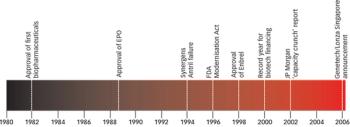
Biopharmaceuticals are the most rapidly growing segment of the pharmaceuticals market. Developing and marketing biopharmaceuticals are huge roles in almost every major pharmaceutical company's strategy. However, they are extremely complex molecules and are highly sensitive to the manufacturing processes used to produce them. These processes require exquisite control of living production systems, making, without a doubt, biopharmaceuticals one of the most challenging products of any type to manufacture.
Pharmaceutical Technology Europe
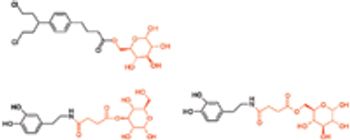
The blood–brain barrier (BBB) forms an interface between the circulating blood and the brain, and functions as a tremendously effective barrier for the delivery of potential neurotherapeutics into the brain parenchyma. Conversely, the BBB possesses various carrier-mediated transport systems for the uptake of small molecules, such as essential nutrients and vitamins. These transporters have become an attractive target for drug/prodrug design in an attempt to ferry drug molecules across the BBB. Central nervous system (CNS) drug delivery is often limited by poor brain penetration of the potential drug candidate. As a result of its unique barrier properties, the BBB poses a huge challenge for the delivery of potential neurotherapeutics into the brain parenchyma.1 It is estimated that only 2% of small-molecule drugs and ,0.1% of novel protein and peptide pharmaceuticals developed for CNS diseases reach therapeutic concentrations in the brain.2,3 Many of the pharmacologically active drugs tend to fail..
Pharmaceutical Technology Europe
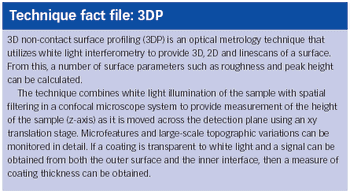
Our company is involved in developing and manufacturing APIs that can be utilized with drug-eluting stents (DES). Despite ensuring constancy in pharmaceutical composition, we are experiencing issues with variations in drug release during in vitro studies. We are working closely with a stent manufacturer to develop the system, but could surface analysis techniques investigate the problem further?
Pharmaceutical Technology Europe
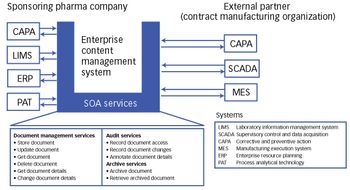
As a skipping stone creates ripples in a lake, SOA can help create benefits that quickly ripple through many other areas of the organization and partners.
Pharmaceutical Technology Europe
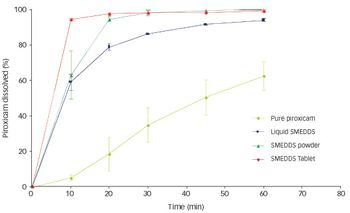
Spraying techniques can be used to produce powder form formulations. The concept works by the adsorption/absorption of a liquid SELF onto a neutral carrier…
A microelectronic system based on radio-frequency (RF) cell ablation addresses limitations of other transdermal drug-delivery methods. This system expands the transdermal spectrum to include the delivery of water-soluble molecules, peptides, proteins, and other macromolecules.
Investigators are exploiting the tremendous structural diversity of polypeptides and their biophysical properties to develop novel drug carriers. Peptide-based materials hold out much promise for tailor-made targeting, penetration, and release of contents in a host of biological microenvironments.