

Pharmaceutical Technology Europe
The UK, with its high quality educational capabilities in bioscience, has an opportunity to become the global hub of bioscience training, but must act quickly to secure this position.
Pharmaceutical Technology Europe
The UK, with its high quality educational capabilities in bioscience, has an opportunity to become the global hub of bioscience training, but must act quickly to secure this position.
The combination of supercritical fluid chromatography with chiral separation media offers several analytival advantages over traditional liquid chromatography techniques.
Pharmaceutical Technology Europe
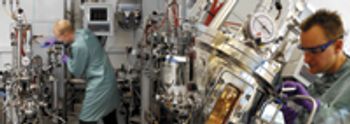
The scale-up of manufacturing processes to clinical production can be complicated and expensive, with many issues to consider. This article describes some of the common and less obvious pitfalls encountered by biopharmaceutical companies when scaling up protein production processes, and how to avoid them.
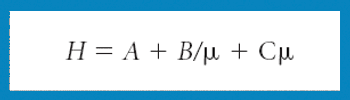
Ultrahigh pressure liquid chromatography maximizes efficiency, but, as defined by the resolution equation, the stationary phase is still a crucial consideration when attempting to resolve mixtures of compounds.
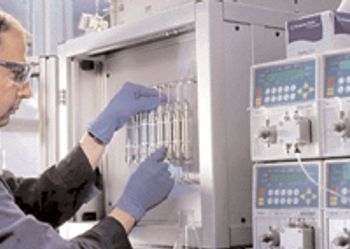
High performance liquid chromatography has become an efficient technique at the production scale, and simulated moving bed chromatography provides several benefits during processing.
Pharmaceutical Technology Europe
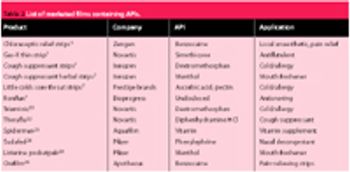
The authors consider the advantages of using rapidly dissolving films to accurately and effectively deliver pharmaceutical ingredients, with an emphasis on the importance of controlling moisture content and drug loading during formulation development.

ePT--the Electronic Newsletter of Pharmaceutical Technology
Company and People Notes: Evotec and Renovis enter agreement, Amgen to lay off 675 workers, more.
ePT--the Electronic Newsletter of Pharmaceutical Technology
Company and People Notes: Catalent expands Bolton, UK, warehouse; Biotica appoints Edward E. Hodgkin as CEO and director; more.
ePT--the Electronic Newsletter of Pharmaceutical Technology
Company and People Notes: Baxter and Halozyme Expand Relationship, Crucell Names COO, More.
PTSM: Pharmaceutical Technology Sourcing and Management
Aptuit expands its drug-development capabilities with the formation of Aptuit Laurus to take advantage of the growing pharmaceutical outsourcing market in India.
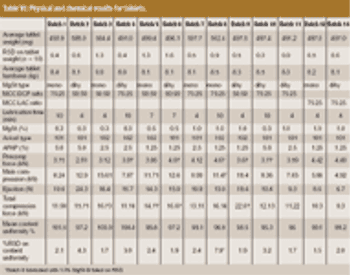
The influence of magnesium stearate (MgSt) on powder lubrication and finished solid-dose properties presents big challenges to drug manufacturers.
Pharmaceutical Technology Europe
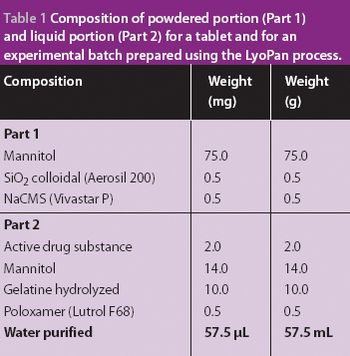
A new economical method for producing fast-melting lamina-like dosage forms.
Pharmaceutical Technology Europe
In biomanufacturing, multiple sensors provide a wealth of data that could be used to enhance process understanding and assist in performance improvement. This article looks at how to move from a data-rich environment to one where the data are translated to useful information that leads to knowledge and, ultimately, process improvements.
Pharmaceutical Technology Europe
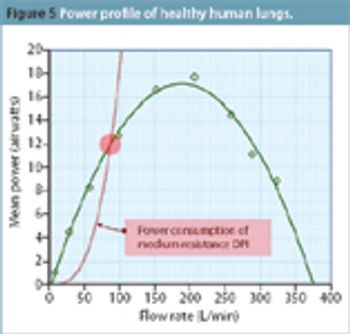
This article investigates how the industry can test inhalers in a way that is most representative of typical use.
Pharmaceutical Technology Europe
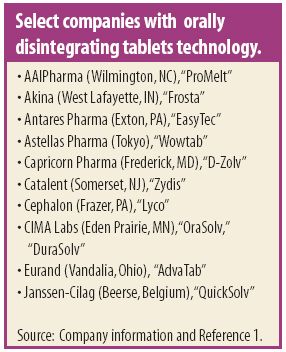
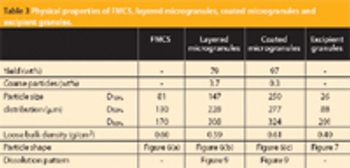
This article describes how rapidly disintegrating tablets containing a large quantity of an intensely bitter drug were successfully developed with a suitable level of masking, tablet hardness, disintegration property, dissolution profile and mouth feel.
Pharmaceutical Technology Europe
Getting from a cell culture to a purified biotech product is a demanding exercise involving many operations. Increasing productivity in the upstream part of biotech production is placing new demands on the purification process, which may lead to adopting new technologies.
Pharmaceutical Technology Europe
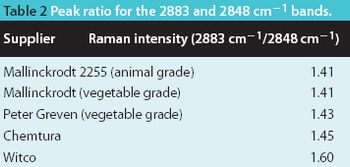
A new Raman spectroscopic method to detect magnesium stearate in powder blends and tablets is described. High-volume pharmaceutical manufacturing requires the use of lubricants to facilitate tablet ejection from compressing machines. However, lubricants may also bring a number of undesired problems that have been widely documented in pharmaceutical scientific literature. New analytical methods are needed to understand lubrication and provide process knowledge in support of FDA's process analytical technology initiative. The detection of magnesium stearate in lactose, mannitol, corn starch and other commercially important excipients is reported. The Raman spectroscopic method has a detection limit of about 0.1% (w/w) based on the 2848 cm-1 band that corresponds to the symmetric stretch of the methylene group in magnesium stearate.
Pharmaceutical Technology Europe
The authors evaluate the scalability of foam-granulation technology using continuous foam addition in high-shear granulation equipment at the laboratory, pilot and manufacturing scales. Immediate- and controlled-release model formulations were used. Continuous and batch addition of foam were compared for the controlled-release model formulation at the manufacturing scale, and physical testing was performed on the granules and finished tablets.
Irish researchers have developed a method that could be used to deliver controlled amounts of drugs to diseased tissues while minimizing side effects by shining light on the target.
ePT--the Electronic Newsletter of Pharmaceutical Technology
Microbix Biosystems has established a team of experts to help manufacturers boost their production of influenza vaccine.
A spate of drugs are scheduled to come off patent, offering vast potential and competition.
The book comprehensively reviews the basics of drug absorption and methods for delivery enhancement through various routes of administration.
PTSM: Pharmaceutical Technology Sourcing and Management
The company begins production at a new $100-million manufacturing facility for prefilled injection systems, plans further investment in packaging facilities, and targets both early-phase development and commercial manufacture.
ePT--the Electronic Newsletter of Pharmaceutical Technology
Merck & Co. acquires NovaCardia, Sanofi Pasteur completes vaccine-manufacturing facility, more
ePT--the Electronic Newsletter of Pharmaceutical Technology
Novartis Vaccines plans to produce approximately 40 million doses of its ?Fluvirin? vaccine for distribution in the United States during the 2007?2008 flu season.