




The standardization of upstream and downstream bioprocessing is growing, but several kinks need to be ironed out.

The standardization of upstream and downstream bioprocessing is growing, but several kinks need to be ironed out.

Pharma announces plans for the year ahead at annual JPMorgan Global Healthcare conference.

Pharmaceutical Technology Europe
We bring industry experts together to discuss the importance of self-administration and what injection technologies are best suited to this cause.

Pfizer and GlaxoSmithKline have announced separate agreements with the GAVI Alliance to supply pneumococcal vaccines to developing countries. Pneumococcal disease can lead to pneumonia, meningitis, and sepsis, and is one of leading causes of death in children under the age of five in developing countries.
Pfizer and GlaxoSmithKline have announced separate agreements with the GAVI Alliance to supply pneumococcal vaccines to developing countries.
Last week, the US Department of Health and Human Services and Novartis Vaccines and Diagnostics dedicated a manufacturing plant that can create influenza vaccine using cultured animal cells instead of the conventional expression system of fertilized eggs.
EMA released two concept papers for consultation that address the need to revise existing guidelines on biosimilar medicines and influenza vaccines.

Single-use components in the fill–finish line provides increased flexibility to multiproduct manufacturers.

Manufacturers fund research and reduce prices to tackle diseases.

Pharmaceutical Technology Europe
In a quick-fire interview, Dr Stephen Taylor, Vice President & Commercial Director at Fujifilm Diosynth Biotechnologies, looks at some of the challenges facing biologics outsourcing.
President Obama released his plan for deficit reduction on Sept. 19, 2011, and included in the 80-page report are several provisions that would affect US drug makers if enacted.
As contract manufacturers and fine-chemical suppliers gather for CPhI/ICSE, effective strategies for technology differentiation are key in an increasingly competitive environment.

New studies reveal the promise and feasibility of transdermal vaccine delivery.

USP promotes horizontal standards for biologics' quality attributes.
FDA Approves the Influenza Vaccine Formulation for the 2011-2012 Flu Season.

The author describes recent developments to help overcome the downstream processing bottleneck. This article is part of a special issue on Sterile Manufacturing and Bioprocessing.
The global market for biosimilars is set to grow from $243 million in 2010 to $3.7 billion in 2015, according to research from Datamonitor, an independent industry analyst company.
Novartis has completed the acquisition of a majority stake in Zhejiang Tianyuan Bio-Pharmaceutical Co., Ltd. — one of the largest privately held vaccines companies in China.
Novartis acquired a majority stake in Zhejiang Tianyuan Bio-Pharmaceutical, one of the largest privately held vaccine companies in China. The acquisition gives Novartis an expanded presence in the Chinese vaccine market and will facilitate the introduction of Novartis's vaccines into the country.
Japan has suspended the use of two pediatric vaccines made by Pfizer and sanofi following the deaths of four children in three days.

World AIDS Day 2010 reminds us that prevention and hope can help fight the disease.
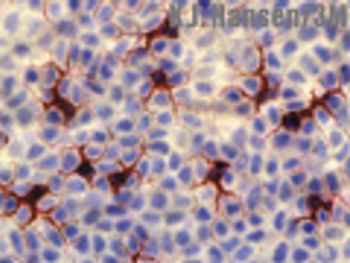
The author reviews advances in technology that may soon allow transdermal delivery of two of the fastest growing drug classes on the pharmaceutical market. This article is part of a special Drug Delivery issue.

Drugmakers hatch new manufacturing paradigms in the wake of the 2009 H1N1 influenza pandemic.
A look at MVI's malaria work in developing countries.

Novartis' Matthew Stober discusses vaccine manufacturing, including egg- and cell-based systems.