


Representatives of contract service organizations that specialize in parenteral drug development and manufacturing describe the evolving trends.
Representatives of contract service organizations that specialize in parenteral drug development and manufacturing describe the evolving trends.
Nitrogen dioxide can sterilize and depyrogenate an aseptic fill area in a blow-fill-seal process.

Equipment and Processing Report
New advanced aseptic manufacturing technologies are available for filling liquid pharmaceuticals, including biologics.
Funding boosts life-sciences manufacturing in West Michigan.
The effect of absorbed vapor-phase hydrogen peroxide on a lyophilized product Protein Z, was studied by spiking experiments with different amounts of hydrogen peroxide.
Application of single-use technology in a parenteral facility for syringe filling.
Equipment and Processing Report
Catalent's Advasept platform uses blow-fill-seal technology to aseptically manufacture, fill, and seal a polymeric primary container for injectable drugs.
The ionHP biodecontamination hydrogen peroxide-based sterilization technology is designed for use in aseptic enclosures.
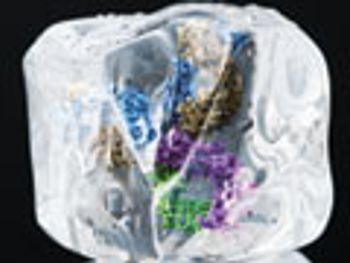
Common challenges and key considerations when developing a freeze-drying cycle for protein pharmaceuticals.
Dalton Pharma completes its $2.5 million expansion in Toronto for sterile and aseptic filling capabilities.
A new process analytical technology based on impedance spectroscopy has potential applications for characterizing product attributes during the freeze-drying process.
Changes in the working procedures and disposable fluid flow paths resulted in a measurable decrease in product waste in a low-volume, high-value fill-finish line.

Progress in delivery science, manufacturing technologies, and commercialization are playing critical roles in advancing the development of complex parenteral drug formulations for new drug substances having a variety of formulation challenges
The Parenteral Drug Association has established a task force to develop a peer- and regulatory agency-reviewed Technical Report that will serve as a science-based industry reference document.
Recipharm has invested EUR 32 million ($43 million) in its Wasserburg, Germany site to expand lyophilization capacity.
Aesica expands aseptic capabilities at its Nottingham, UK site with the acquisition of new pre-filled syringes manufacturing equipment.
After realizing benefits from the adoption of a single-use filling line for one specific product, Patheon took the leap and installed a single-use filling line in a new facility.
A recent market analysis offers a promising outlook for contract fill-finish and lyophilization services.
CentuRecon enables dry formulations of therapeutic proteins to quickly be prepared for injection at high concentration.
Equipment and Processing Report
RABS is a flexible barrier system that maximizes product control but minimizes operator interaction when best practices are followed.
Susan Schniepp, vice-president of quality and regulatory affairs at Allergy Laboratories and co-chair of the program planning committee for the 2013 PDA/FDA Joint Regulatory Conference, discusses quality systems and related considerations in parenteral drug manufacturing.
New cartridges designed specifically for use on high-speed filling lines increase efficiency.
Report outlines recommended practices for control and evaluation of operations.
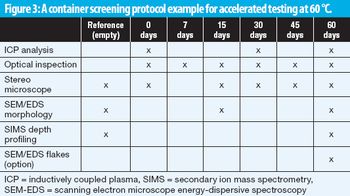
A screening method aligned with USP 1660 guidance predicts glass delamination in primary packaging for parenterals.
The benefits of single-use systems are being realized for downstream unit operations, including aseptic filling.