

Lonza’s new complex will occupy 2000 m2 of the facility with six levels of manufacturing space and will provide room for future small-molecule technologies expansion.
The evolution of therapeutic modalities drives the adoption of single-use technologies.
Despite its understandable hesitancy, the pharma industry is facing a need for more widespread adoption of cloud-based solutions.

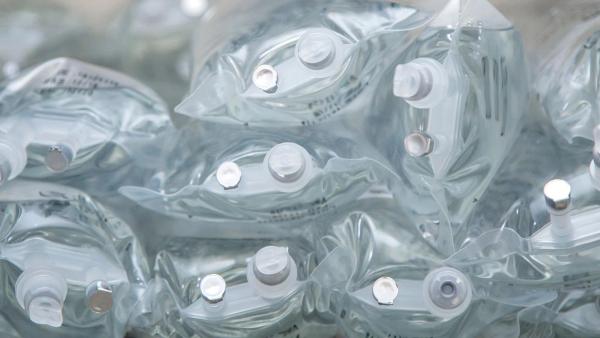
Given the criticality of fill/finish processes, it is clear that automation is the next technological step.

Lonza’s new complex will occupy 2000 m2 of the facility with six levels of manufacturing space and will provide room for future small-molecule technologies expansion.
DCAT’s annual bio/pharmaceutical development and manufacturing business event, DCAT Week, will take place virtually from July 12–16, 2021, with the in-person even postponed to March 20–24, 2022 in New York City.
The decision comes from the US CDC Advisory Committee on Immunization Practices following the evaluation of data showing a rare adverse event involving blood clots in combination with low platelet counts within approximately one to two weeks following vaccination.
Executives that participated in the CPhI post-pandemic survey are predicting a push for repatriation of manufacturing globally.
Lipid production at Evonik’s Hanau, Germany, site was set up in eight weeks and met high-quality requirements, accelerating delivery time, which was originally set for mid-2021.
Design for a new BMS multi-product cell therapy manufacturing site in Leiden is underway, with construction to start later in 2021.
The collaboration will evaluate Nanoform’s fast dissolution nanoparticles in Aprecia’s ZipDose 3DP technology platform for buccal and oral drug delivery.
Vertex and CRISPR have amended their collaboration agreement to include the development, manufacture, and commercialization of CTX001, an investigational CRISPR/Cas9-based gene editing therapy for sickle cell disease and transfusion-dependent beta-thalassemia.
Post-inspection report reveals nine sanitary and process problems at Bayview, Md., facility.
The new facility, which will be Evotec’s first in Europe, will aim to offer capacity, flexibility, and quality for biotherapeutic development and manufacturing while utilizing technology that employs small, automated, highly intensified, and continuous bioprocessing operations inside autonomous cleanrooms.
CalAmp's new sensor for cold-chain applications provides visibility for shipping vaccines.
The additional doses are a result of the European Commission’s expanded advance purchase agreement, which brings the total number of doses delivered to the EU to 600 million.

Material properties play a role in container closure integrity under frozen or cryogenic storage temperatures.
CordenPharma’s expansion will include the addition of new production lines which will be merged into the lipid manufacturing process in April 2021.

Drug product security requires anti-counterfeiting techniques such as authentication throughout the supply chain.
Sartorius has expanded in the United Kingdom with the relocation to a new facility in Havant, Hampshire, for downstream processing equipment.
The agency will use technology for “voluntary remote interactive evaluations” for pre- and post-approval and other types of inspections.
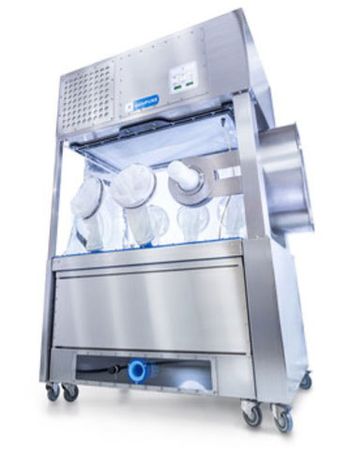
ILC Dover’s soloPure flexible aseptic isolator creates a closed environment for sterile filling.
The new Abzena facility will initially include four modular suites with up to two 2000-L bioreactors, followed by the addition of two more 2000 L suites.
The ATMPS and Ori Biotech collaboration aims to improve visibility and reporting of cell and gene therapy manufacturing through a pre-integrated data solution.
Catalent’s new mammalian cell culture suites in Madison, Wis. use single-use bioreactor systems for CGMP clinical and commercial manufacturing.
In collaboration with the Singapore Economic Development Board, the new site will supply the Asian region and will include multiple fully digitalized modules for the production of three to four vaccines simultaneously
The China National Medical Products Administration has given the company the green light to begin manufacturing commercial supply of its approved anti-PD-1 antibody, tislelizumab, at its biologics facility in Guangzhou, China.
The UK's National Horizons Centre has been confirmed as a National Training Centre that will deliver on-site advanced therapies and vaccine manufacturing specific training.
The company has introduced Opto Assure, a series of assays that provide yield and product quality data at an earlier stage in cell-line development.