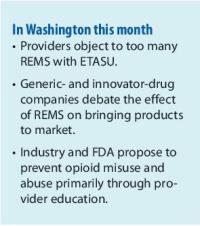


Pending legislation may give FTC the authority to regulate all Hatch-Waxman settlements.
Contract service providers must step up their game to stay competitive in increasingly complex bio/pharma market.

A look at the newest innovations offers a deeper understanding of affinity ligands and their role in the future of downstream processing.

Pending legislation may give FTC the authority to regulate all Hatch-Waxman settlements.

New data provide insight into pharma-industry professionals' daily lives.

Changing demands in drug development lead to new service combinations and models.

Pharmaceutical Technology Europe
When embarking on a new outsourcing project, there are a few initial steps that must be taken to ensure a project runs smoothly from the start.

Bristol-Myers Squibb's fit-for-purpose mode for clinical-trial materials for early-stage development seeks to achieve a better way in resource allocation. This article is part of a special issue on API Development, Formulation, Synthesis and Manufacturing.
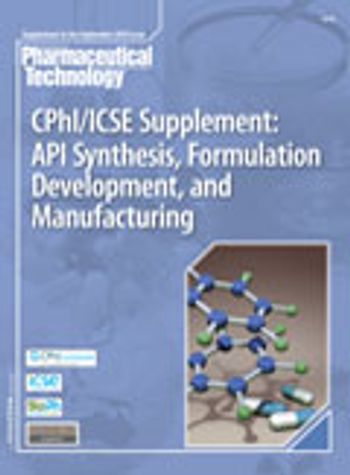
The current trend in the pharmaceutical industry for the manufacture of small-molecule therapeutic agents is moving toward continuous flow processes. This article is part of a special issue on APIs.

Pharmaceutical Technology Europe
In an increasingly competitive landscape, outsourcing providers are under mounting pressure to get their name out there and secure new and repeat business.
The author presents recent developments in simulated moving-bed chromatography in production of active pharmaceutical ingredients and intermediates. This article is part of a special issue on APIs.
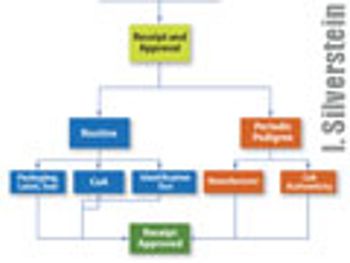
The author explains the background behind the excipient pedigree and how to implement its use.

Pharmaceutical Technology Europe
The economic crisis has affected outsourcing providers in several ways.

Pharmaceutical Technology Europe
India has evolved from a low-cost region to an area with extensive technical capability and high quality standards.

Pharmaceutical Technology Europe
Every biopharmaceutical is unique and products are defined as much by their manufacturing process as their analytical characterisation. Because of this, the development of biologics has many inherent complexities over small molecule projects.

Pharmaceutical Technology Europe
The main advantage of outsourcing highly potent API (HPAPI) manufacture is that it eliminates the need to invest in expensive containment infrastructure, which can also be complex to engineer, install and maintain.
Pharmaceutical Technology Europe
When assessing the competencies of an outsourcing service provider, sponsor companies must pay a great deal of attention to the cGMP compliance level of the provider.
Pharmaceutical Technology Europe
How to find the right partner in Asia–Pacific is a very complex question and there is no uniform answer.
Pharmaceutical Technology Europe
Outsourcing early drug development can be viewed from a tactical or strategic perspective. These perspectives are often driven by the size of the company and provide different advantages.

Pharmaceutical Technology Europe
Contract manufacturers must view their relationships with clients as a partnership, which lasts beyond the fulfillment of a particular project, and not simply as a single transaction.
ePT--the Electronic Newsletter of Pharmaceutical Technology
Week of Aug. 23, 2010: Company and People Notes: Quark and Novartis Form Agreement; Hospira CEO Retires; And More.
ePT--the Electronic Newsletter of Pharmaceutical Technology
Eli Lilly Ends Semagacestat Program; Selecta Appoints CEO; And More.
ePT--the Electronic Newsletter of Pharmaceutical Technology
Sen. Michael Bennet (D-CO) introduced a bill earlier this month, the Drug Safety and Accountability Act of 2010, which is designed to improve regulatory oversight of drug-manufacturing facilities and improve related quality standards and monitoring.
ePT--the Electronic Newsletter of Pharmaceutical Technology
Penwest and Endo to Merge; Watson Makes Senior Appointments; And More.
ePT--the Electronic Newsletter of Pharmaceutical Technology
FDA Approves Flu Vaccines; Caraco Names COO; And More.
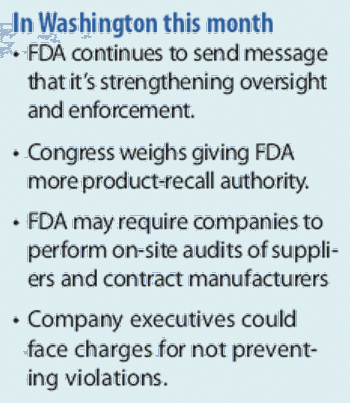
Fallout escalates from McNeil recall and Genzyme shortages as regulators review oversight.
Industry's focus on cost cutting has led to a dangerous gap in training and knowledge.

Manufacturers and regulators on both sides of the ocean move to ensure the safety of heparin and other globally distributed drug products.