
Cultural and language discrepancies during an audit can be resolved using what many call a “playbook,” says Siegfried Schmitt, PhD, vice-president, technical, Parexel Consulting.
Cultural and language discrepancies during an audit can be resolved using what many call a “playbook,” says Siegfried Schmitt, PhD, vice-president, technical, Parexel Consulting.

Today’s inspection systems catch tinier flaws, manage data, and increasingly rely on artificial intelligence to further boost performance.

Industry practice has changed radically over the past five decades. Can laws published in the 1960s still ensure pharmaceutical quality and safety today?
The US Senate and the US Pharmacopeial Convention debate the necessity of monographs for biologics.

Using Lean, Six Sigma, and other Op Ex practices is helping one contract development and manufacturing organization (CDMO) increase efficiency and optimization.
FDA sent a warning letter to Spectrum Laboratory Products, Inc. after an inspection found CGMP and misbranding violations.
The company is voluntarily recalling all unexpired products that are intended to be sterile because of a lack of sterility assurance.
Vida International received an FDA warning letter after an inspection found quality control violations.
The two countries have been included into the mutual recognition agreement between the European Union and the US FDA that recognizes facility inspections conducted in different territories.
Kingston Pharma LLC received a warning letter after an FDA inspection found violations of current good manufacturing practices including inadequate quality control.
A US District Judge in the Southern District of Florida held that the US Stem Cell Clinic of Weston, FL and US Stem Cell of Sunrise, FL adulterated and misbranded a stem cell drug product made from a patient’s adipose tissue.
Although continuous approaches offer significant benefits for some products and processes, batch manufacturing is not going away any time soon.
The US Pharmacopeial Convention released new and revised standards for compounding nonsterile medicines, sterile medicines, and radiopharmaceutical drugs.
CDER’s KASA program seeks manufacturer data on drug attributes and risks to inform oversight.
A good working relationship between sponsor and contractor will become invaluable when an OOS occurs, says Susan J. Schniepp, executive vice-president of post-approval pharma and distinguished fellow, Regulatory Compliance Associates.

Quality and compliance depend on the right approaches to training, standard operating procedures, and validation. More tools are available to help ensure success.

Protecting the integrity of raw data is crucial to regulatory compliance and to proving that manufacturing and quality operations are being run and managed properly.
The company is voluntarily recalling Amikacin Sulfate Injection, USP, 1g/4 mL (250mg/mL), and Prochlorperazine Edisylate Injection, USP, 10mg/2mL (5mg/mL), to the consumer level because microbial growth was detected.
Violations found by FDA included a failure to test product for API identity and strength, failure to validate outsourced materials, and a lack of written cleaning procedures.
Inspectors found a lack of control over computer systems and a failure to follow equipment cleaning and maintenance procedures.
TraceLink will participate in the agency’s Pilot Project Program under the Drug Supply Chain Security Act.
The company is recalling the lots because of possible peanut flour contamination.
The agency is warning these manufacturers that they are putting consumers at risk with substandard manufacturing practices.
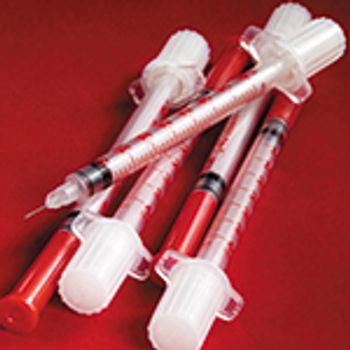
Leachable silicone oil may have an effect on large-molecule APIs, making it important to establish a robust analytical method to detect and quantify the substance.

Quality cannot be verified through testing, especially at the limit of detection, and no test method can confirm the absence of a microbe or particle.