
The agency sent a warning letter to Raritan Pharmaceuticals, Inc. after an inspection found quality testing and misbranding violations.
The agency sent a warning letter to Raritan Pharmaceuticals, Inc. after an inspection found quality testing and misbranding violations.
Fagron Sterile Services has voluntarily recalled three lots of Succinylcholine Chloride 20mg/mL 5mL syringe to the hospital/clinic level.
The agency recommended approval of treatments for hepatitis C, cancer, multiple sclerosis, and arthritis.
FDA Commissioner Scott Gottlieb announced the agency will hold a public meeting on drug competition as part of its Drug Competition Action Plan.
The company has voluntarily recalled Clindamycin Injection USP ADD-Vantage Vials to the hospital/retail level because of a lack of sterility assurance.
The company is voluntarily recalling all unexpired lots of nitroglycerin products produced at its Houston location for potency issues.
The agency’s management board discussed plans for the relocation of EMA at its June 2017 meeting.
The company recalled a variety of products due to the potential of microbial contamination.
Congressional measures lack the support to move forward.
A consent decree of permanent injunction was entered between the United States and the two companies due to unapproved, mislabeled, and adulterated drugs.
The company has extended its voluntarily recall of one lot of paliperidone extended-release tablets to the consumer level due to dissolution test failure.
The agency sent a warning letter to A-S Medication Solutions LLC after it found the company didn’t comply with drug listing file requirements.
FDA Commissioner Scott Gottlieb announced the July meeting as part of his commitment to address opioid abuse.
FDA sent a warning letter to drug compounder DCA, Inc. dba Beacon Prescriptions for failing to ensure sanitary conditions.
The company is voluntarily recalling one lot of Eliquis after a patient discovered that a bottle labeled as Eliquis 5 mg was found to contain Eliquis 2.5 mg tablets.
The three regulatory agencies have agreed to data requirements for development of new antibiotics.
In its June meeting, the agency’s Pharmacovigilance Risk Assessment Committee discussed medicine safety reviews.
FDA asked Endo Pharmaceuticals to remove Opana ER from the market, citing the potential for abuse.
Yusef Manufacturing Laboratories, LLC received an FDA warning letter citing CGMP violations at its Clearfield, UT facility.
The author shares his opinion on the challenges presented by the Internet of Things and what companies need to consider when choosing suitable architectures to manage serialization data.
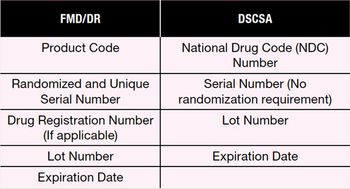
The author discusses upcoming serialization and transaction data collection regulations including the US Drug Supply Chain Security Act, the European Union Falsified Medicines Directive, and the EU Delegated Regulation.
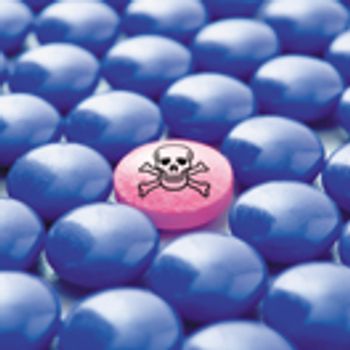
Serialization and complementary authentication technologies are needed in order to meet DSCSA and FMD regulations.
The impact of Brexit on the European drug approval regulatory framework presents challenges for EMA.
The company recalled the tablets due to a packaging error.
The agency published an action plan to nurture innovation and drug development by SMEs.