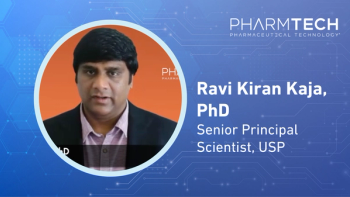
Ravi Kiran Kaja, PhD, explains how USP’s industry-wide initiative aims to build confidence in trace-level extractables and leachables results.
Panelists at INTERPHEX 2026 talked about the move to hybrid modeling for process development and the barriers to the adoption of artificial intelligence in pharmaceutical manufacturing.
At
A primary focus of the discussion was the move toward hybrid modeling. The experts detailed the use of neural ordinary differential equations (neural ODEs), which combine machine learning with mechanistic understanding to predict bioreactor performance. This approach allows scientists to forecast day 12 titers with high accuracy as early as the beginning of a run by analyzing glucose profiles and environmental conditions.
The use of modeling to bridge gaps between experimental and theoretical work, specifically aiming to predict critical quality attribute (CQA) failures, was highlighted. For high-value products, where batch failure is not an option, these models serve as a tool to translate laboratory insights to commercial-scale manufacturing. At AstraZeneca, the focus includes using digital twins to reduce the volume of analytical assays required, thereby streamlining the development lifecycle.
Despite the promise of AI, the panel unanimously identified data foundations as the most significant barrier to progress. While advanced ML models exist, the lack of structured metadata and the prevalence of data silos—spanning PDFs, Excel files, and SharePoint—hinder scalability.
To combat this, the panelists proposed two distinct strategies:
The transition to AI-driven manufacturing requires a cultural shift, as well as a technical one. The panel discussed the higher bar of trust applied to AI systems compared to humans; while a human error might be overlooked, a single AI hallucination can trigger skepticism. Building trust requires the following:
The return on investment for these technologies extends beyond simple cost-cutting. Panelists highlighted that AI could lower the cognitive load on scientists by automating bookkeeping and data parsing, allowing them to focus on the high-level research they were trained for.
Furthermore, with a reported 20% year-over-year increase in data integrity observations across the industry, AI is increasingly viewed as a defensive necessity. By “hardening” data through automated pipelines and AI-driven scripts, companies can support increasingly complex pipelines with existing staff levels while maintaining rigorous compliance.
The path forward for the adoption of AI in pharma processes may involve moving away from manual data management toward integrated, automated systems that empower human expertise with predictive, machine-led insights.
Visit