
Conference Coverage
about 2 hours ago
Pfizer's 8-Month Path from Candidate to IND: AAPS PharmSci 360 2026about 3 hours ago
AAPS PharmSci 360 2026: Roller-Compacted FormulationsTrending on Pharm Tech
Pharma Leaders Weigh in On AI's Measurable Results In 2026
Ask the Expert: Choosing Ingredient Suppliers
Manufacturing Intelligence: How AI Poisoning Hides in Plain Sight
Why BMS, Roche, and LGM Pharma Outsourced Key Capabilities
Formulation and Evaluation of a Sustainable Analgesic Cream Utilizing Renewable Bio-Based Ingredients and Green Chemistry Design Principles
Latest




Shorts


Drug Digest

Drug Digest: How Advanced Analytics Partnerships Enhance the Biopharma Value Chain
In this episode of Drug Digest, experts from Sanofi, GxP Frame, and Open Biopharma explain how AI is transforming drug discovery, manufacturing, and workforce strategy and how strategic partnerships play a role.
Drug Digest: Adaptive Trial Design and Regulatory Shifts in Biopharma Development
In this Drug Digest episode, Abzena’s vice president of Regulatory Strategy, Jeff Mocny, and Cellares’ director of Regulatory Affairs, Anna McMahon, examine how evolving regulatory and quality expectations are reshaping biopharmaceutical development and manufacturing.
Drug Digest: Outsourcing Partnerships Fuel Global Biopharma Discovery and Scale-Up
Strategic outsourcing utilizes external expertise to accelerate the biopharma pipeline, integrating specialized workflows that drive efficiency from discovery through early clinical trials.

Drug Digest: Closing the Gap in Modern Process Control and Automation for QC/QA
Biopharma quality control is being revolutionized by advanced analytics and digital transformation through a synergy that boosts quality and scalability.
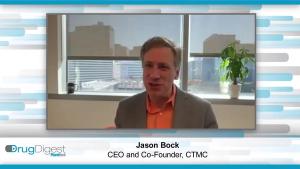
Drug Digest: Strategic Alliances and Technology Integration in the Evolving Biopharma Landscape
In this episode of Drug Digest, the discussion centers around the optimization of biopharmaceutical manufacturing and supply chain efficiency through the mastering of AI capabilities, data integration, and critical validation challenges.
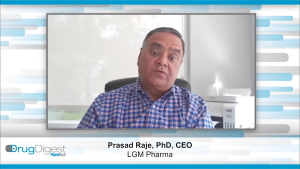
Drug Digest: Small Molecules, APIs, and Excipients—Trends, Challenges, and Opportunities
In this exclusive Drug Digest video, Steve Barr from SK pharmteco and Prasad Raje from LGM Pharma explore how supply chain pressures, sustainability, and AI adoption are reshaping small molecule development and excipient use in pharma.
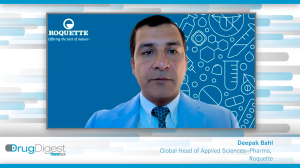
Drug Digest: Speed, Flexibility Top Large-Molecule Manufacturing Trends
In this exclusive Drug Digest video, Deepak Bahl from Roquette and Jagruti Patel from Lonza look at strategies for accelerating early-stage development while reducing risk, approaches to speeding up timelines for complex formats without sacrificing quality, and maintaining a flexible CMC process that ensures quality.
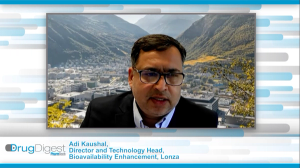
Drug Digest: Patient Preference Drives Solid Dosage Trends
In this exclusive Drug Digest video, Adi Kaushal from Lonza summarizes the current state of the oral solid dosage market, identifies the main challenges to drug developers, explains how CDMOs are leveraging expert techniques to improve OSD bioavailability, and looks into the future of advancements in drug delivery.
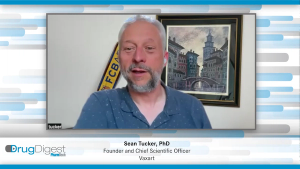
Drug Digest: Keeping Pace with Progressive Technologies in Biopharma Development
This episode of Drug Digest will discuss where the significant bottlenecks are in the development and manufacturing of new molecules resulting from progressive technologies, such as AI and ML, and how best to approach these challenges.
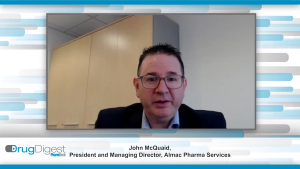
Drug Digest: Strategic Partnerships
In this exclusive Drug Digest video interview John McQuaid from Almac Pharma Services and Sridevi Khambhampaty from Shilpa Biologics delve into the evolution of the bio/pharma outsourcing market and look at how service-providers’ strategies have adapted to meet demand.
Videos





Introducing the "PharmTech AI Pulse Check" Expert Video Series
PharmTech AI Pulse Check debuts: pharma experts tackle GxP 'slop,' multi-agent validation risk, OCR document mining, personalized mRNA cancer therapy.
Manufacturing Intelligence: What FDA's NAM Rule Means for CMC Teams
Richard Jaenisch weighs how FDA's new NAM rule could reshape preclinical testing and what CMC teams should do now, on Manufacturing Intelligence.
Regulatory Actions Impacting Biologics
Three regulatory actions are converging to move biologics, gene therapy, and the ATMP platform forward quickly

Ask the Expert: Post-Approval Changes
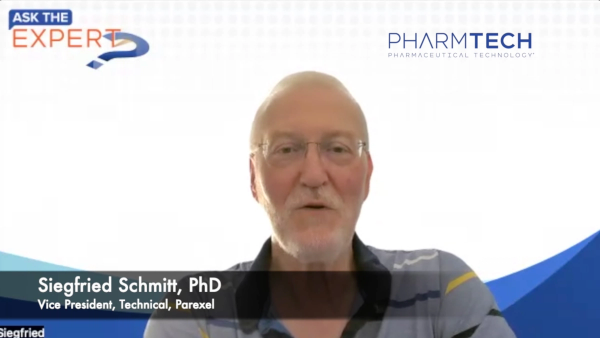
Siegfried Schmitt, PhD, vice president, Technical at Parexel, and Susan J. Schniepp, distinguished fellow at Nelson Labs, discuss how companies should approach post-approval changes to their CMC regulatory filings.
Regulatory Roundup—September 2026
The FDA opened an expedited IND pilot, tightened scrutiny of foreign trial data, and finalized a rule recognizing non-animal testing methods.
All News

Mahmood Majeed, ZS, explains why measurable AI outcomes in pharma supply chain and manufacturing jumped from 29% to 53%, and how GMP limits and GxP validation shape adoption.

BMS-Tempus, Roche-Zymeworks, and LGM-Sannova deals show what AI data, trispecifics, and nitrosamine testing mean for CMC, QA, and development teams.

Univar Solutions scientists developed a lidocaine cream built on starch, sorbitol, coconut oil, and beeswax that matched a commercial benchmark on viscosity, assay, and hydration.
Nate Edwards of Arya Consulting moderates a discussion with Elisabeth Gardiner of Tevard Biosciences and Donny Xu of the RTW Institute about the regulatory and manufacturing hurdles facing rare disease drug developers.
FDA grants ravulizumab accelerated approval in IgA nephropathy after a 43.4% proteinuria cut, signaling new IV biologic demand for drug manufacturers.
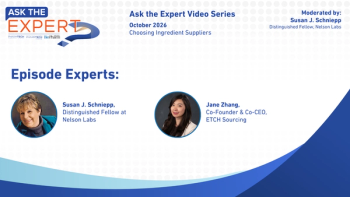
Jane Zhang of ETCH Sourcing explains why geopolitics, transparency, and partnership now weigh as heavily as cost and quality when companies choose suppliers, in this episode of Ask the Expert, moderated by Susan J. Schniepp of Nelson Labs.
FDA approves GSK's bepirovirsen for chronic hepatitis B after a 19% functional cure rate, raising oligonucleotide scale-up stakes for manufacturers.
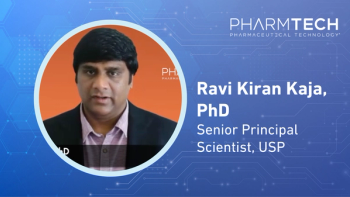
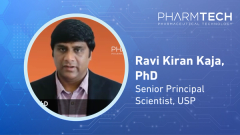
Ravi Kiran Kaja, PhD, USP, explains what harmonization of extractables and leachables standards looks like in practice.

Jaenisch, Muraru, and Pandey discuss new skills for QC and regulatory teams, plus patient trust, as new approach methodologies reshape pharma.
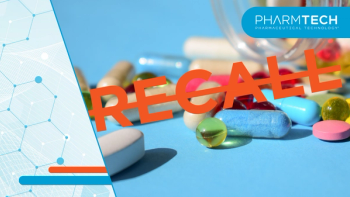
Nine duloxetine recalls since 2024 show why generic drug manufacturers need route-level nitrosamine risk assessment, not end-product testing alone.

OpenAI acquired Orchestra Bio to pair AI agents that track drug development timelines with its Rosalind life sciences tools, raising oversight questions for pharma teams.
Ravi Kiran Kaja, PhD, explains how USP’s industry-wide initiative aims to build confidence in trace-level extractables and leachables results.
FDA final guidance defines when companion app output counts as drug labeling and when device-connected or standalone apps belong in prescribing information.

Science, circularity, regulation, and technology are reshaping how the industry develops packaging for medicines.
Panelists on PharmTech AI Pulse Check debate SURPASS, a new digital-twin trial program, regulatory acceptance, and the data-cleanup burden it will create.

Roche-Hansoh, Merck KGaA-Silence, and Lilly-METiS deals show how ADCs, siRNA, and lipid nanoparticles reshape demands on CMC and manufacturing teams.

Germany is home to several prominent pharma companies and more than 1000 innovative biotechs.
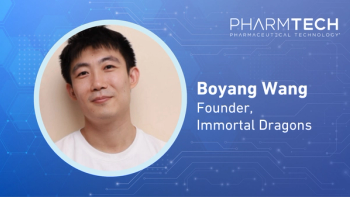
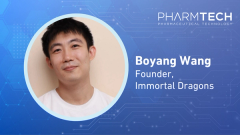
Boyang Wang of Immortal Dragons explains how FDA's Expedited IND Pilot and QRIs could compress sequential first-in-human steps as China's Decree 818 raises the pace.
The deadline to comment on FDA's generative AI paper is Oct 19, 2026. We explain why professionals in pharma manufacturing should weigh in.

The FDA expanded Anktiva to BCG-unresponsive papillary-only NMIBC using existing CIS trial data, a precedent with implications for development timelines and supply planning.

AI accountability, faster FDA pathways, rare disease CMC review, and next-gen GLP-1 formulation lead this week’s PharmTech roundup.
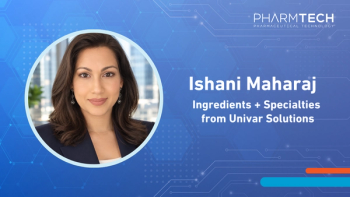
Ishani Maharaj of Ingredients + Specialties from Univar Solutions explains how to stabilize GLP-1 multi-agonists, weigh delivery formats, and qualify novel excipients and suppliers.

MASH and cardiomyopathy AI collaboration: AstraZeneca pays insitro $40M upfront for target discovery, then leads clinical development and CMC planning.
Boyang Wang, Immortal Dragons, discusses how the FDA’s Expedited IND Pilot must prove efficiency as sponsors chase the fastest route to valid first-in-human data.
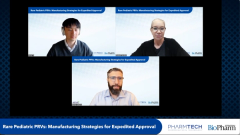
Nate Edwards of Arya Consulting moderates a discussion with Elisabeth Gardiner of Tevard Biosciences and Donny Xu of the RTW Institute about rare disease treatment development and navigating the FDA’s Rare Pediatric Disease Priority Review Voucher Program.
The FDA’s Rare Disease Framework Initiative brings risk-based CMC review and pre-approval inspections into scope for sponsors, CDMOs, and quality teams.

NVIDIA’s $250M, five-year compute donation funds UK agentic AI safety research, with implications for how GMP teams validate and govern autonomous AI.
Jaenisch, Muraru, and Pandey join PharmTech's Cole to discuss FDA's generative AI paper, ARPA-H's SURPASS trials, and AI accountability.

Richard Jaenisch explains what FDA's real-world use case database means for CMC and quality teams navigating NAMs.
Boyang Wang, Immortal Dragons, explains how FDA’s Expedited IND Pilot and research partners could speed serial steps to first-in-human trials compared to China’s 818 Decree.

This article examines how modern automation platforms create the digital foundation required for Pharma 4.0 by integrating manufacturing systems, centralized data management, Industrial Internet of Things connectivity, electronic batch production records, and AI-driven analytics.
PharmTech AI Pulse Check panelists explain why attribution, audit trails, and sign-off matter more than AI watermark detection for GxP quality teams.
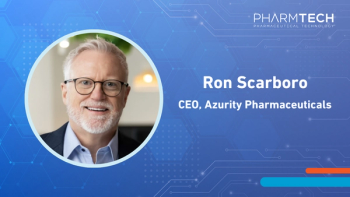
Ron Scarboro, Azurity Pharmaceuticals, explains how cross-functional development, disciplined reformulation, and post-approval metrics can help proven medicines work in everyday use.