
FDA priority review of Jemperli for biomarker-defined rectal cancer signals capacity, supply chain, and global filing shifts for manufacturers.
Content Associate
PharmTech
FDA priority review of Jemperli for biomarker-defined rectal cancer signals capacity, supply chain, and global filing shifts for manufacturers.

McKesson will acquire Precision Medicine Group for $2.25B, integrating clinical research and commercialization services within its oncology segment.
REGENXBIO's RGX-121 faces an FDA clinical hold after asymptomatic spine MRI findings, highlighting long-term imaging surveillance for CNS gene therapies.
The FDA grants accelerated approval to Ultragenyx's Genglycos, the first gene therapy for GSDIa, raising manufacturing and post-market monitoring questions.
The FDA approves first therapy shown to reduce new bone lesions and flare-ups in fibrodysplasia ossificans progressiva (FOP), based on a 63-patient trial using CT-scan efficacy endpoints.
The Trump administration nominates Heidi Overton for FDA commissioner amid leadership instability, raising questions for drug developers on review timelines and oversight.
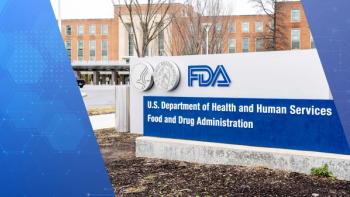
FDA grants Priority Review to Teva's ecopipam new drug application, backed by phase 3 data. Ecopipam is a first-in-class D1 receptor therapy for pediatric Tourette syndrome.
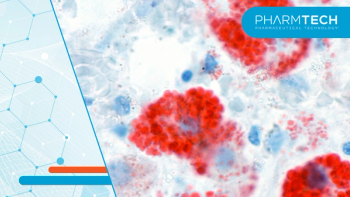
LEO Pharma acquires dersimelagon from Tanabe Pharma for up to $435M, adding a late-stage oral rare dermatology asset under FDA review.

This episode of PharmTech Explained discusses how China's biotech surge is reshaping US drug licensing, manufacturing control, and FDA data trust, the key shifts pharma professionals must track.
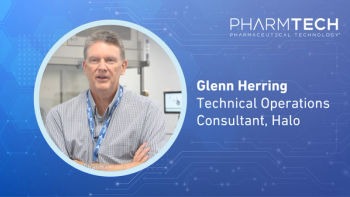
Glenn Herring, Halo Pharma, discusses its new sterile fill-finish platform: Groninger/SKAN tech, GMP design, and 2026 qualification timeline.

FDA approves TAUKLARIFY, a tau PET imaging agent for Alzheimer's, adding a biomarker tool that could shape trial design for drug developers.
Lee Karras, CEO, Halo discusses the company's new sterile fill-finish platform, Apotex partnership, and injectable onshoring strategy.
Richard Jaenisch, Open Biopharma breaks down AI's real limits in drug discovery, agent security risks, and what workforce readiness looks like by 2028.
Sentynl and Mereo's alvelestat deal for AATD-LD signals early manufacturing collaboration ahead of phase 3, shifting care from IV to oral therapy.
Glenn Herring, Halo Pharma, details the CDMO's new sterile fill-finish platform, Groninger/SKAN tech, GMP/Annex 1 design, and 2026 qualification timeline.
Lee Karras CEO, Halo Pharma ties the move to US injectable capacity along with an introduction to Halo’s new sterile fill-finish platform before GMP qualification.
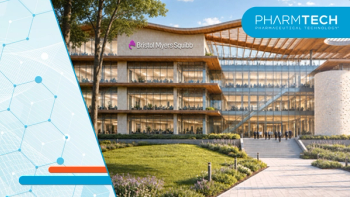
BMS's Investing $2.3B into its Houston campus signals a shift toward flexible, multi-modal manufacturing.

The FDA approved the first orexin receptor agonist for narcolepsy type 1, which validates a new mechanism-driven approach shaping CNS drug development and regulatory pathways.

Pathos AI's $2.09 billion license for Alphamab's TNBC drug JSKN016 signals rising cross-border oncology deals and manufacturing coordination demands.

Pharma's 2026 predictions revisited: AI tools have arrived, but organizational readiness, data governance, and regulatory gaps now limit real-world impact.
Pharma's 2026 predictions revisited: AI tools have arrived, but organizational readiness, data governance, and regulatory gaps now limit real-world impact.
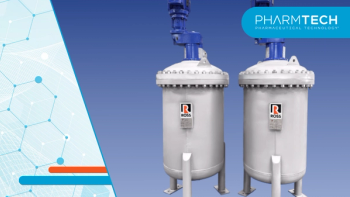
New 250-gallon retention mixers rated to 200 psi help pharma manufacturers maintain product uniformity and cut transfer risk.
FDA revises draft guidance for 17 generic peptide products, including semaglutide and tirzepatide, updating testing standards ahead of a September comment deadline.
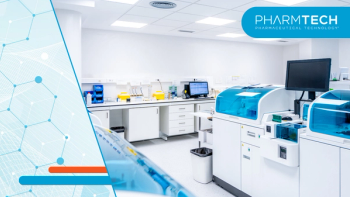
GSK invests £400M ($455 million) in a new Cambridge Biomedical Campus R&D hub, closing Stevenage by 2029 and expanding Ware's manufacturing scale-up capacity.
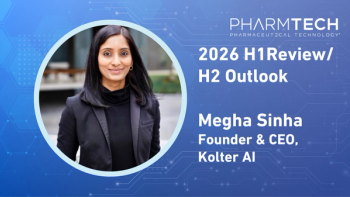
Megha Sinha, Kolter AI explains how Pharma has automated drug discovery and manufacturing AI, but not regulatory execution.

FDA advisers vote to allow pharmacy compounding of unapproved peptides BPC-157, KPV, TB-500, MOTs-C despite thin safety data and industry ties.
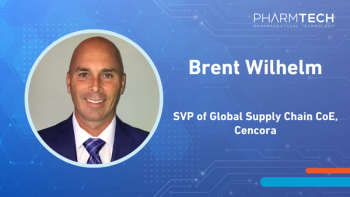
Brent Wilhelm of Cencora talks about real-time demand data, last-mile carrier risk, and a $1 billion investment in cold chain pharma resilience.
Megha Sinha, Kolter AI, discusses how pharma's AI bottleneck shifted from technology to readiness as execution across 60 markets stays manual.
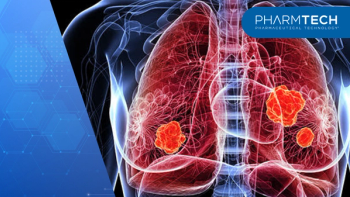
The FDA approval of Jideytro (zidesamtinib) for previously treated ROS1-positive NSCLC has implications for drug developers.
Brent Wilhelm, Cencora, comments on cold chain pharma growth, a $1B supply chain investment, and a 2027 hub built to curb drug shortages.