
PTSM: Pharmaceutical Technology Sourcing and Management
PaizaBio will add aseptic injectable production capacity in Hangzhou, China.
PTSM: Pharmaceutical Technology Sourcing and Management
PaizaBio will add aseptic injectable production capacity in Hangzhou, China.
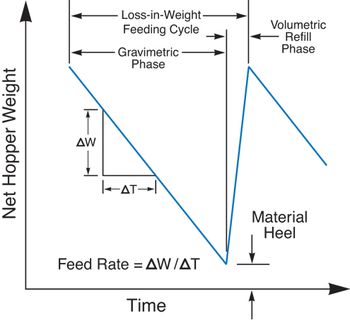
Designing loss-in-weight feeders for accurate and consistent refill is crucial to a continuous solid-dosage process.
Susan Schniepp, distinguished fellow at Regulatory Compliance Associates, discusses the assessment of risk in the processing of intravenous injectable drugs.
The editors seek drug development experts to contribute technical articles for 2017.
Tapemark, a full-service CDMO specializing in transdermal, oral thin film, and topical drug-delivery technologies, is exhibiting at CPhI.
Could grading finished-drug manufacturers on their quality and efficiency lead to greater transparency, improve quality and reduce drug shortages?
The agency appealed two interim orders to suspend the release of documents requested by third parties.
Ravi Limaye gives an overview of the biosimilar industry and projects for 2020.
Gil Roth gives an overview and outlook for the CDMO industry in 2016.
Alan Sheppard, Principal, Global Generics at IMS Health and CPhI expert panel member, discusses generic medicine opportunities in the 2016 CPhI Annual Industry Report.
Three-dimensional (3D) printing, which is a type of additive manufacturing (AM), enables fabrication of specialty drugs and medical devices, said Emil Ciurczak, Doramaxx Consulting and CPhI expert panel member, in the 2016 CPhI Annual Industry Report.
The CDMO has acquired a new building to expand its high-containment manufacturing and development operations.
Sharp will present alongside Tracelink, Systech, Covectra, and Domino during CPhI Worldwide.
PTSM: Pharmaceutical Technology Sourcing and Management
Mettler Toledo launched the Rainin BenchSmart 96, a new liquid handling platform.
PTSM: Pharmaceutical Technology Sourcing and Management
STERIS launched the Reliance 300XLS Laboratory Glassware Washer, adding to the company’s line of glassware and plasticware washing systems.
PTSM: Pharmaceutical Technology Sourcing and Management
Onset expanded its product line for pharmaceutical cold-chain management with the launch two new products.
The most recent PharmSource report says bio/pharma companies have spent more than $150 billion for new plant equipment in the past five years.
PTSM: Pharmaceutical Technology Sourcing and Management
BASF’s new production facility in Shanghai will produce PVP K30 powder, a polymer used as a base for pharma excipients.
The agency approves Amjevita (adalimumab-atto) for the treatment of inflammatory diseases.
FDA and EMA set up new working group on the development of treatments for rare diseases.
PTSM: Pharmaceutical Technology Sourcing and Management
Sharp Packaging Services adds Biotechnology Center of Excellence to its to its Allentown, PA campus.
Pfizer announced its decision to remain one company after debating the possibility of splitting Pfizer Innovative Health and Pfizer Essential Health into two, separate publicly traded companies.
HHS entered into a $43.18 million contract with Sanofi Pasteur for the development of a Zika vaccine candidate.
Wells Pharmacy Network is voluntarily recalling all of its products due to sterility concerns.
Hebei Yuxing Bio-Engineering Co. Ltd. was cited for data integrity violations.
PTSM: Pharmaceutical Technology Sourcing and Management
The company will add a new clinical services facility at Central Park on Bridgend Industrial Estate.
NICE estimates asfotase alfa will cost £367,000 per patient per year.
The agency published the guidance to help generic-drug facilities comply with the GDUFA self-identification requirement.
R-Pharm facility in Yaroslavl, Russia, is designed to produce biological drugs with GE Healthcare's FlexFactory manufacturing platform.
Dow and Colorcon extend and broaden the scope of the Controlled Release Alliance.