
AstraZeneca Acquires Chinese Generic-Drug Company; Takeda Makes Management Changes; and More.
AstraZeneca Acquires Chinese Generic-Drug Company; Takeda Makes Management Changes; and More.
On Dec. 21, 2011, Ranbaxy Laboratories signed a consent decree with FDA and pledged that it would strengthen procedures and policies to ensure data integrity and to comply with current good manufacturing practices. The agreement is subject to approval by the US District Court for the District of Maryland.
Last week, Baxter International and Momenta Pharmaceuticals entered into a global collaboration to develop and commercialize follow-on biologic products. The two companies expect to close the transaction during the first quarter of 2012, subject to customary closing conditions.
EMA has unveiled its work program for 2012, which forecasts a slight increase in marketing authorization applications for new medicines compared with 2011. In addition, EMA said that it will, where needed, strengthen the quality, regulatory, and scientific consistency of its assessment process.
The Generic Pharmaceutical Association has proposed a multistakeholder initiative to minimize current and future critical drug shortages. The announcement follows a series of Congressional, executive, and industry response to address the recent problem of drug shortages.
Boehringer Ingelheim Expands Manufacturing Presence in China; Amgen CEO Kevin W. Sharer Announces Retirement Plans; and More.
The Government Accountability Office issued a report recommending that FDA's ability to respond to drug shortages be strengthened. The report was released in conjunction with a Senate hearing before the Committee on Health, Education, Labor, and Pensions on Dec. 15, 2011, on the subject of drug shortages.
Last week, the US Department of Health and Human Services and Novartis Vaccines and Diagnostics dedicated a manufacturing plant that can create influenza vaccine using cultured animal cells instead of the conventional expression system of fertilized eggs.
Equipment and Processing Report
We have several tablet formulations that are dwell-sensitive-they require more time under compression than other formulations. Given increasing demand, we do not have the luxury of slowing the tablet presses down in an effort to increase that dwell time. How can we maximize dwell time and maintain or increase output in our tablet presses?

Equipment and Processing Report
PharmTech's monthly newsletter, Equipment and Processing Report, reviews the Editor's Picks for the December 2011 edition from Banner Engineering and Eriez.
Equipment and Processing Report
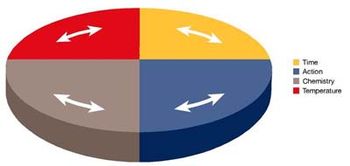
Sterilization or sanitization is usually applied to kill bacteria in a system. Equipment is cleaned to remove residues from the previous batch of product, and subsequently flushed to remove the cleaning liquids. To ensure that sterilization and cleaning are efficient and safe, it is not enough to develop the appropriate procedures. Selecting the right manufacturing equipment further improves cost efficiency, as well as patient safety.
Equipment and Processing Report
Risk assessment is not a new concept to the pharmaceutical industry, but lately the phrase has become a mantra. A systemic, science-based way to manage risk is becoming essential to meeting the spirit and letter of FDA requirements.
After reviewing the "shortcomings in quality assurance" that were recently identified at Ben Venue Laboratories's Bedford, Ohio, facility, EMA issued several recommendations, including product recalls for Ecalta and Liminity.
AstraZeneca entered into an agreement to acquire Guangdong BeiKang Pharmaceutical, a privately owned generic-drug manufacturing company based in China, for an undisclosed amount. Upon completion of the acquisition, AstraZeneca will be responsible for the manufacture and commercialization of these medicines.
In a Warning Letter, FDA cited "significant violations" of CGMP regulations, including several repeat observations, at three Novartis facilities located in Colorado, North Carolina, and Canada.
The FDA and EMA are moving from "confidence-building to reliance upon" each other in a step-up in cooperation on GMP inspections; the latest move following successful completion of pilot projects this summer.
Baxter International Agrees to Acquire Synovis Life Technologies; Pfizer Elects President and CEO Ian Read as Chairman of Board of Directors; and More.
Merck Establishes New MSD R&D Asia Headquarters; Astellas Adds Two Senior Executives at Agensys; and More.
Samsung and Biogen Idec agreed to invest $300 million to establish a joint venture to develop, manufacture, and market biosimilars. The deal is Samsung's latest effort to strengthen its position in biosimilars.
On Dec. 6, 2011, FDA announced that a public meeting will be held on Dec. 16, 2011 to discuss recommendations for a user fee program for biosimilar biological products for fiscal years 2013–2017.
Last week, the Pharmaceutical Research and Manufacturers of America Foundation awarded Johns Hopkins University and the University of Washington each a $250,000 grant to establish a three-year graduate certificate program. The program is formally known as the PhRMA Foundation Center of Excellence for a Comparative-Effectiveness Research Educational Program. The funds are the foundation's first grants to educational institutions.
The United Kingdom's life-sciences industry this week welcomed a new, multimillion-pound strategy that aims to both support the industry and encourage innovation in the unsettled economic climate.
In an initiative that could signal a new era in private–public partnerships, AstraZeneca will make 22 compounds available for free to medical researchers next year for projects funded by the United Kingdom's Medical Research Council.
Cultivating a productive investment environment will require partnerships with a range of stakeholders.
Cleanliness is crucial, even if zapping and trapping is necessary to reduce product contamination.
As the excipient supply chain becomes more complex, industry must up the ante to comply with new standards and regulations.

Contract organizations must have highly organized teams and plans to accommodate today's audits.

Political leaders need to consider the impact of the biopharmaceutical industry on the economy.

Packaging is indeed headed to be a lead sector in the Asian pharmaceutical environment, but certain challenges must first be overcome.
Employee training-at all levels-is crucial for moving forward with a successful risk- and quality-based manufacturing strategy.