



Recent regulatory initiatives designed to secure the global pharmaceutical supply chain will directly impact the global supply chain and API manufacturers.
Recent regulatory initiatives designed to secure the global pharmaceutical supply chain will directly impact the global supply chain and API manufacturers.

Emerging markets are an engine for growth in the custom-manufacturing and pharma markets.

CMC Biologics and OnoSynergy form an agreement from cell-line development.
BioWa and Lonza have entered into a licensing agreement with MedImmune for cell line technology.
PIC/S reviews deficiencies found during inspections of API manufacturing facilities, harmonizes GMP standards, and provides training for inspectors worldwide.

A review of this year's crop of the new molecular entities and new biologics license applications approved by FDA thus far in 2013.
Merck Millipore has introduced a new solubility/bioavailability enhancement excipient, Parteck SLC, which has a unique pore structure that enables higher loading of amorphous APIs, thereby, improving dissolution rates and increasing drug solubility.

Fine-chemical companies, contract manufacturers, and researchers advance chemocatalysis and biocatalysis.

Data from BioPlan Associates’ 10th Annual Report and Survey of Biopharmaceutical Manufacturing Capacity and Production suggest that the interest in disposable devices has begun to extend to biopharma operations beyond basic single-use bags and connectors.

Regulators hope new standards will stop illegal drug imports, but manufacturers fear they may stifle innovation.
Recent news and developments from CPhI of excipient producers, CDMOs, and CMOs are highlighted.
Excipients market will be shaped by greater supply-chain concerns, quality-by-design programs,and overall drug-safety issues.

With the enforcement of the European Directive 2011/62/EU relating to medicinal products for human use regarding falsified medicinal products, new requirements are introduced for active substances. The new regulation requires among other things, documentation of the supply chain traceability.
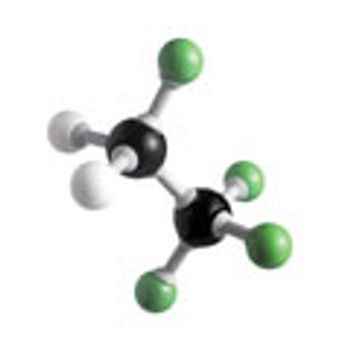
Fluorinated molecules play an important role as pharmaceutical compounds. Recent advances seek to overcome the challenges of selective and late-stage insertion of fluorine into small molecules.
Cedarburg Hauser Pharmaceuticals has upgraded its API plant in Wisconsin.
Pfizer advances its pipeline of antibody-based therapies using a host cell line that combines engineered glycosylation technology and enhanced gene-expression.
FDA updates guidance to reflect advances in technology.
New partnership aims to eliminate months from the typical transition time required to move chemistry from the laboratory into commercial applications.
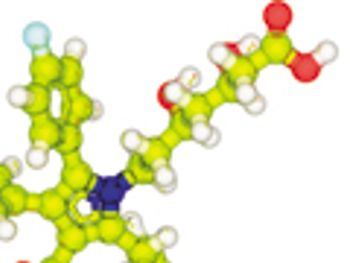
Developments involve stereoretentive cross-coupling, enantioselective alcohol silylation, strategies for amplifying signals in circular dichroism spectroscopy, and a synthetic route for the natural product ingenol.

Industry experts share their views on the outsourcing model and the current and future direction of contract chemical API manufacturing.
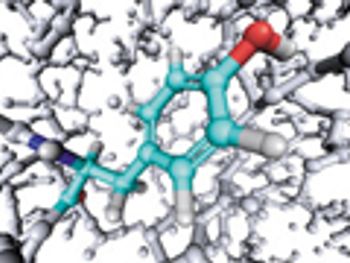
Commercial-scale amide formation and an improved process route for a tetracycline derivative are some recent developments in API synthesis.

Industry experts share perspectives on risk assessment and mitigation in excipient manufacture and the excipient supply chain.
A simple, rapid analytical method for the determination of palladium in pharmaceutical production samples will speed up development and optimization of reactions involving palladium catalysts.
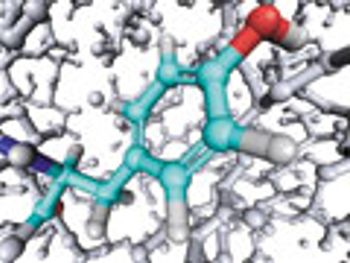
Stapled peptides offer promise to enable cell permeability, binding to therapeutic targets, and modulation of biological pathways.

Industry groups offered perspectives on the strengths and weaknesses of the European Falsified Medicines Directive.