



Chime Biologics, Leads Biolabs, and BeiGene have formed a three-way collaboration to advance the development and global manufacturing of Leads Biolabs’ lead mAb candidate, LBL-007.
Chime Biologics, Leads Biolabs, and BeiGene have formed a three-way collaboration to advance the development and global manufacturing of Leads Biolabs’ lead mAb candidate, LBL-007.

Sample dilution, sensitivity, excipient interference, and containment are key issues that must be addressed.

Aenova has opened a new building for the production of highly potent APIs in Germany.

The new excipients manufacturing facility is expected to be completed in 2025.

invoX Pharma has made a second tranche of investment in pHion Therapeutics to support further development of next-generation mRNA vaccines.

Nanotech-based delivery technologies are receiving significant attention.

An increase in applications for gene therapies is putting stress on FDA’s resources.
The start of production of US engineering batches of NXC-201, a CAR-T cell therapy candidate in early clinical development, is the first step in transferring Nexcella’s existing manufacturing process to the United States.
Sandoz’s marketing authorization applications for a proposed biosimilar to denosumab are supported by a comprehensive analytical and clinical data package.
With $73 million in financing from investment firms, Myeloid Therapeutics plans to accelerate its lead clinical candidate into Phase I/II development for treating solid tumors.

Sania Therapeutics has emerged from stealth mode and launched its technology platforms for enabling the development of novel therapeutics to treat neural circuit dysfunction.
Under the collaboration, BiOneCure Therapeutics and Nanjing Leads Biolabs intend to develop a range of innovative antibody-drug conjugates for treating solid tumors.
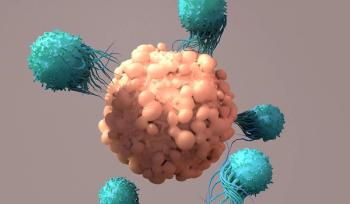
The development of CAR-T therapies for solid tumor cancers presents a myriad of challenges.

Process control is essential for using continuous hot-melt extrusion to enhance solubility.

Lipids aren’t the only important ingredients influencing stability and in vivo performance.
The recent success of mRNA vaccines has opened the door for further and future development of nucleic acid-based therapies.
Actions combatting the next pandemic must be diverse, reliable, and sustainable.

Unique solutions are required to protect inherently unstable messenger RNA.

This article reviews a range of techniques available for separative analysis of mRNA therapeutics, their associated impurities, and delivery vehicles.

Considerable efforts have been made over the years to resolve the key issues of stability and delivery of RNA-based therapeutics.
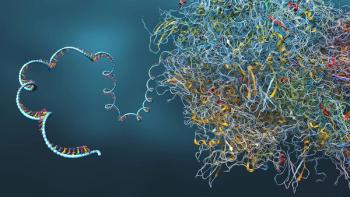
The complexity of the RNA production process creates challenges.
FDA has granted fast track designation to Caribou Biosciences for its allogeneic CAR-T cell therapy for relapsed or refractory multiple myeloma.

Despite the advantages intensified processes can offer developers, there are still some obstacles to overcome before broader application of new technologies will be implemented.

Impurities and batch-to-batch variability present the biggest challenges.
PharmaBlock has opened a new R&D facility in Pennsylvania, expanding its capacity to deliver GMP projects.