
A research team at the Keck Graduate Institute will work to adapt its decade-long low-cost vaccine R&D for developing countries into a COVID-19 vaccine.
A research team at the Keck Graduate Institute will work to adapt its decade-long low-cost vaccine R&D for developing countries into a COVID-19 vaccine.
FDA has approved AstraZeneca’s Saphnelo, a type I interferon receptor antibody for treating systemic lupus erythematosus.
FDA has accepted Genetech’s BLA for faricimab, a bispecific antibody in development for treating wet age-related macular degeneration and diabetic macular edema.
The European Commission has entered into a supply agreement with GlaxoSmithKline and Vir Biotechnology for up to 220,000 doses of sotrovimab, an investigational mAb for treating COVID-19.

Data sharing facilitates traceability, transparency, and accuracy while driving efficiencies and boosting quality of active pharmaceutical ingredients.
Byondis and Glycotope have formed an agreement to discover and develop antibodies that target specific glyco-epitopes.
The GMP facility is designed to maximize bioprocessing efficiency of newborn stem cells and manufacturing at scale.
The new lab near Continuus Pharmaceutical’s current facilities in Massachusetts will expand the company’s process development capabilities to high-potency drugs.
UltraBurst has a high disintegration speed, which is for all market segments, from prescriptions to nutraceuticals.
GlaxoSmithKline and Alector have partnered to co-develop two mAbs for a range of neurodegenerative diseases, including Parkinson’s and Alzheimer’s disease.
The ever-increasing complexity of biotherapeutic molecules presents unique analytical challenges for developers.
The future pipeline of complex novel biotherapeutics will require new approaches to analytical assessment.
Advances in technology are accelerating the development and manufacture of subunit vaccines, an established class of vaccines.
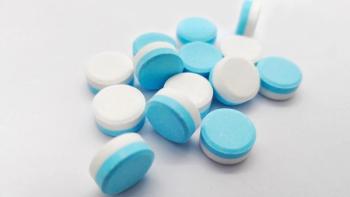
Bi-layer tablets are an under-utilized option that can be employed to help reduce treatment burden, but their formulation is more complex than for conventional monolayer products.
Selexis and KBI Biopharma will use integrated services to advance Immatics’ TCR bispecifics drug development program to the IND stage.
Corbus Pharmaceuticals has licensed two integrin-targeting mAbs, expanding its therapeutics pipeline into inflammatory, fibrotic, and metabolic diseases as well as cancer.
AbbVie has exercised its right to acquire TeneoOne, along with its lead immunotherapeutic asset for the potential treatment of multiple myeloma.
FDA has granted breakthrough therapy designation to donanemab, Eli Lilly and Co.’s investigational antibody treatment for Alzheimer’s disease.
The companies have entered into an agreement to develop processes for a novel immunotherapy protein.
GlaxoSmithKline and iTeos Therapeutics enter into a development and commercialization collaboration worth up to $2.08 billion for a new therapeutic anti-cancer mAb candidate.
CPI has revealed an agreement with DFE Pharma, making it the latest partner of the Medicines Manufacturing Innovation Centre (MMIC) collaboration.
FDA has granted fast track designation to a GLP-1/glucagon dual agonist in development by Boehringer Ingelheim and Zealand Pharma for the treatment of NASH.
FDA has granted Janssen breakthrough therapy designation for teclistamab, an investigational bispecific antibody under development for treating relapsed or refractory multiple myeloma.
FDA has granted accelerated approval to Biogen for Aduhelm (aducanumab), a new mAb treatment for Alzheimer’ disease.

The emergence of new biotherapeutics is both the driver and result of innovative drug development technologies.