
The new antibody, Citryll’s CIT-013, could offer new treatment options for various human diseases including lupus, vasculitis, pulmonary fibrosis, and organ damage due to sepsis.
Accurately targeted immunotherapies through reliable neoantigen recognition enable personalized medicine development.
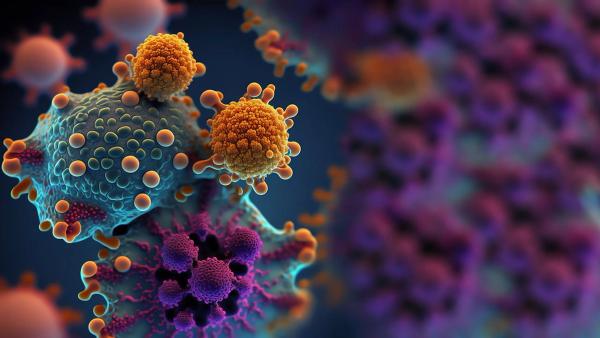
Activation and expansion are essential for success in both autologous and allogeneic therapies.
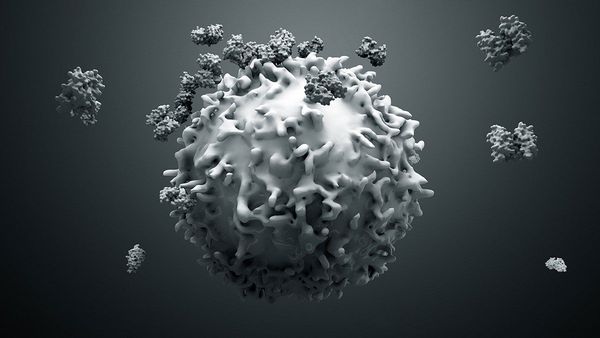
Continuous manufacturing and a quality-by-design development approach are a natural fit.

The new antibody, Citryll’s CIT-013, could offer new treatment options for various human diseases including lupus, vasculitis, pulmonary fibrosis, and organ damage due to sepsis.
FDA announced it is developing a series of guidance documents to promote methodological patient-focused drug development.
A new report by GlobalData projects 2.9% growth by 2028 for the hemophilia A and B market across the eight major world markets.
The new facility will handle clinical supply management, primary and secondary packaging, complex labeling services, clinical storage, distribution, and drug returns and destruction and will include stability chambers.
The drug will improve the treatment and prevention of invasive fungal infections.
The drug displayed improvement in progression-free survival and increased the time patients lived without disease progression or death by a median of 18.9 months.
In a Phase III trial for advanced small-cell lung cancer, the investigational antibody drug conjugate, Rova-T (rovalpituzumab tesirine), did not demonstrate a survival benefit for patients taking it.
The company has received breakthrough therapy designation for its prophylactic respiratory syncytial virus vaccine candidate for treating adults aged 60 years or older.
Vertex will use the acquisition to develop cell-based treatments for type 1 diabetes.
Novartis revealed results from two new clinical trials indicating that Entresto (sacubitril/valsartan) significantly improves measures of cardiac structure and function in heart failure with reduced ejection fraction.
Findings from a real-world data analysis have been released from the Bristol-Myers Squibb-Pfizer Alliance, demonstrating that Eliquis is associated with lower rate of major bleeding compared with vitamin K antagonist, dabigatran or rivaroxaban.
AbbVie has closed the Phase III trial that was evaluating Rova-T as no survival benefit for patients receiving treatment for advanced small-cell lung cancer (SCLC) was found during the interim analysis.
A District Court for the US District of Delaware has ruled in favor of Sanofi and Regeneron in the patent case targeting proprotein convertase subtilisin/kexin type 9 (PCSK9).
The new facility, located in Ness Ziona, Israel, will support clinical phage manufacturing and can be expanded in the future to support commercial-scale manufacturing.
A global agreement with Polpharma Biologics gives Sandoz commercialization rights to a proposed biosimilar natalizumab for relapsing-remitting multiple sclerosis.
In this interview, the main uses and benefits of NIR spectroscopy in tableting are discussed.
Regulatory bodies are taking a more stringent approach to excipient quality, but unlike guidance on GMP for APIs, those for excipients offer a framework only, meaning the onus lies with the manufacturer or supplier.
The editors welcome technical article contributions from the bio/pharma industry.

Innovation in manufacturing technologies must occur to ensure the availability of gene therapies and cell therapies.

Research compared the properties of corticosteroids processed by wet and dry milling for use in inhalation formulations.

Front-end focus and new approaches are speeding scale-up and reducing costs, while scale-down and scale-out become increasingly important.
AstraZeneca has confirmed that its triple combination therapy, Breztri Aerosphere, has met its primary endpoint in a Phase III clinical trial (ETHOS).
Medical researchers from the Centenary Institute and the University of Sydney in Australia have managed to successfully develop and test a new vaccine targeting tuberculosis.
GSK will handle the development, regulatory, commercialization activities, and costs of the drug, while Ionis will obtain license fees and milestone payments of up to $262 million, including a $25 million license fee.
A ruling in Oklahoma that Johnson & Johnson’s marketing efforts created a public nuisance may establish a precedent of other jurisdictions.