Formulation and Drug Delivery

Latest News


There are currently several hundred biotech-based drugs in clinical trials, representing around a quarter of all drugs in development - a proportion that looks set to increase.

Biotechnology stocks dropped 14% in 2006, giving up more than half of the value they'd picked up during a "stellar" 2005, according to G. Steven Burrill, CEO of Burrill & Company (www.burrillandco.com), the venture and merhant banking company. "Overall, it wasn't a great year for biotech," said Burrill in a year-end analysis, indicating that the biotechnology industry will finish the year with its collective market capitalization essentially unchanged, at approximately $490 billion. As for the future, biotechnology will continue to fuel a the transformation in healthcare, a tansformation emphasizing earlier disease detection, more targeted treatments, and adjunctive support through enhanced nutrition. We will see further progress on the personalized, predictive, preventative front...with new products targeting the "individualization" of medicine in the marketplace. Other predictions for 2007 include...

Basel, Switzerland (Dec. 5)-Lonza Group Ltd. and Singapore?s Bio*One Capital have formed a joint venture, Lonza Biologics Tuas, to build a large-scale mammalian cell-culture facility in Singapore for as much as $350 million.

Brussels, Belgium (Dec. 5)-The debate over biosimilars in Europe was heightened last week between the European Generics Association and the International Alliance of Patients Organizations, a patient advocacy group that issued a briefing paper on biosimilars to the European Parliament, the legislative arm of the European Union (EU).

Dublin, OH (Nov. 30)-Cardinal Health has announced plans to divest its Pharmaceutical Technologies and Services (PTS) segment, "a business that manufactures or packages 100 billion doses of medication every year for pharmaceutical and biotech firms, employs approximately 10,000 at more than 30 facilities worldwide and generates $1.8 billion in revenue," according to a company statement.

i4-392074-1408680792504.jpg

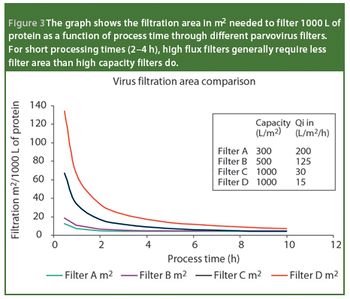
Virus safety of biotech- and plasma-derived therapeutics is ensured through complementary manufacturing and quality control measures that include the control and monitoring of raw materials, the validation and implementation of effective virus clearance technology and the monitoring of final filled product for the presence of virus. Virus filtration, which is considered a robust and effective virus clearance technology, is a common unit operation in the manufacture of biologicals. In this article, we review the points that must be considered when selecting a virus-retentive filter. The areas covered include regulatory considerations; selecting, optimizing and validating a virus filtration step; and process scale implementation - areas that are critical to users of virus filters.

Why do the biotech ventures mange to have such promising drug candidates while pharmaceutical R&D is facing a drug deficit?

i4-392073-1408680796006.jpg

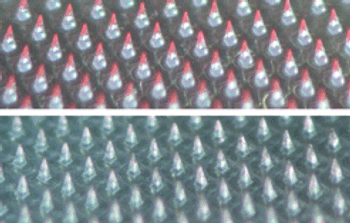
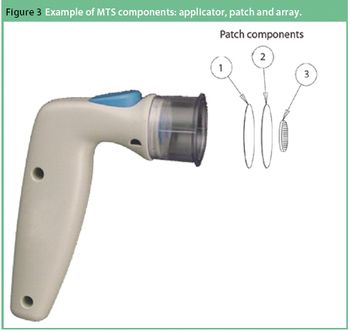
The needle and syringe have long been the standard delivery technology for vaccines. However, a confluence of market factors is driving new interest in alternative delivery systems that hold the potential to meet one or more of the following goals: improved antigen utilization, higher quality immune response, better stability and improved patient acceptance. Of particular interest are microneedle systems, otherwise referred to as microstuctured transdermal systems (MTS), that provide for targeted delivery of the vaccine formulation directly to antigen-presenting cells within the epidermis. This article provides a brief overview of MTS technology with an emphasis on solid-coated MTS for vaccine delivery.

Washington, DC (Nov. 20)-The US Department of Health and Human Services awarded contracts totaling $199.45 million to Sanofi Pasteur, Novartis, and GlaxoSmithKline PLC to manufacture 5.3 million 90-?g doses of influenza vaccine designed to protect against the H5N1 influenza virus strain.

i1-384566-1408686204739.jpg

Yet again, FDA's ability to regulate drugs is under fire. At the core of this latest round of scrutiny is whether the agency has the resources to properly control the safety of new nanotech-based drug products.

i4-390998-1408681411116.jpg

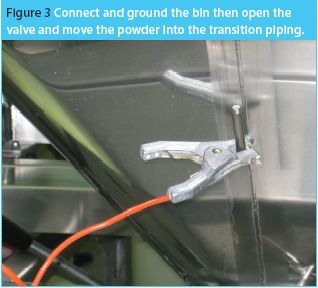
The trend towards developing pharmaceutical products and their manufacturing processes in tandem supports optimized production. Such developments rely on gathering process-relevant information at an early stage and being able to draw on past and current processing experience. Here, we discuss how powder rheometers can make a real difference in building a database of powder properties and removing subjectivity.

i4-390999-1408681407759.jpg

Clean rooms are critical areas in bio/pharma facilities, and it is essential that users are responsible for their care and upkeep, and familiarize themselves with the relevant regulations.

i4-391530-1408681264676.jpg

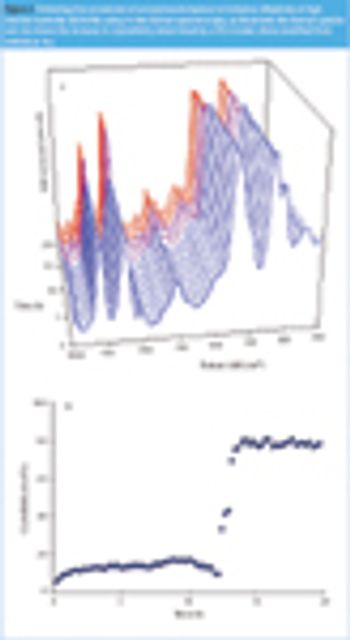
Quality by design and PAT approaches are increasingly being used for the biotech manufacturing of medicines. Complex manufacturing processes can not only be controlled using PAT principles, but optimized with respect to both product quality and economic value. This column describes how the fermentation process is often the first to benefit from this type of implementation.