
The multimillion-dollar deal focuses oncology.
The multimillion-dollar deal focuses oncology.
EMA's revised guideline on biosimilars containing biotechnology-derived proteins is published for public consultation.
Facility will use mammalian cell-culture technology and be ready for operations by 2016.
A multifaceted approach is needed to resolve the myriad of challenges in developing oral formulations of poorly soluble drugs.
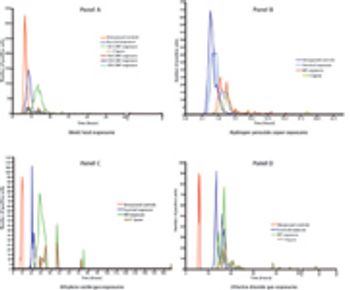
The authors report on the range and distribution of grow-out times for biological indicators exposed to sublethal sterilization processes.

Kurt Nielsen, PhD, chief technology officer and senior vice-president of R&D at Catalent Pharma Solutions, discusses strategies for solubility and bioavailability enhancement of poorly water-soluble drugs.
GSK expands its vaccines platform technology expertise by acquiring Okairos, a Swiss-based company.
The South Wales, UK contained-manufacturing operation was built in less than a year using design-to-manufacture and modular approaches.
Thomson Reuters released a report that provides a view of the challenges facing companies entering the United States biosimilar drug market.
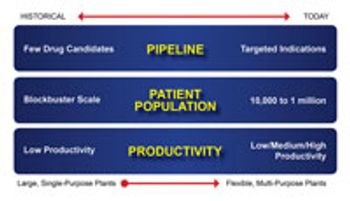
Advances in monoclonal antibody separation technologies are largely driven by the need to increase efficiencies and reduce cost.
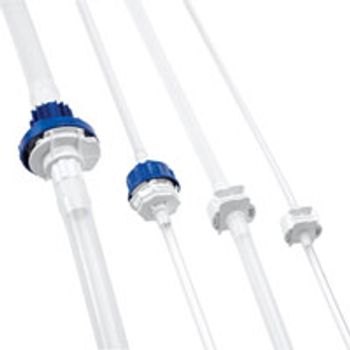
New platform technologies and polymer chemistries may facilitate self-administration, longer-term delivery, and targeted delivery of parenteral drugs.
PTSM: Pharmaceutical Technology Sourcing and Management
The Global Vaccine Action plan maps out a strategy to increase access and R&D for vaccines.
Applications of ZFN technology in biopharmaceutical cell-line engineering.

While there are those who want combination products to be controlled by a centralized pharmaceutical-type approval system, the majority of the medical technology industry wants to retain a decentralized device-focused approach.
The impact of new delivery technologies in designing peptide therapies.
Parenteral drug delivery offers a variety of challenges but also opportunities. The author examines recent developments in nanotechnology-based drug delivery and other advances in injection-based drug delivery.
Pharmaco-Kinesis Corporation (PKC) announced that it is developing the first nanodrug combination of Merck's temozolomide and Celgene's thalidomide (in a 50:50 ratio) for the treatment of gliomas and other cancers. PKC will collaborate with the University of California, San Diego's department of nano-engineering at the Moores cancer centre to develop the nanodroplet formulation.
Despite overall manufacturing rationalization in the pharmaceutical/biopharmaceutical industry, the large pharmaceutical companies continue to invest in biologic-based manufacturing. The author provides an update in recent investment activity among the pharmaceutical majors in biologic-drug substance, vaccine, and parenteral drug manufacturing.

The authors describe a holistic and integrated approach to focus on the linkage of the prefilled syringe with the four phases of product design, development, operation, and control.
Researchers recently developed a drug-delivery system to mitigate problems associated with jet-injection drug delivery, and also improved on the design and operation of microscale actuators as a possible drug-delivery method.
Results of an American Chemical Society Green Chemistry Institute Pharmaceutical Roundtable survey found that there is real interest in continuous processing and the use of flow chemistry, but hurdles remain.
AstraZeneca and BIND Therapeutics have formed a strategic collaboration to develop and commercialise BIND's Accurin, a targeted and programmable cancer nanomedicine, based on a molecularly targeted kinase inhibitor developed and owned by AstraZeneca.
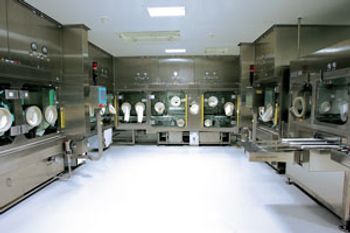
PIERRE FABRE MEDICAMENT PRODUCTION has 22 years experience in isolator technology for aseptic filling of high potent freeze-dried injectable products.
Cipla has launched the first biosimilar of etanercept in India for the treatment of rheumatoid disorders. The product will be marketed under the brand name Etacept. The launch of Etacept marks Cipla's entry into the biologics market, offering a low-cost alternative to Pfizer and Amgen's rheumatic disorder blockbuster Enbrel in India.
Oval Medical Technologies, an autoinjector company based in Cambridge, UK, reported that a variety of highly viscous solutions have been successfully delivered through a 25-gauge thin-wall needle, in less than 7 seconds, using its innovative autoinjector. The technology provides solutions to problems in the industry for drug containment and the end user.