
Pharmaceutical Technology Europe
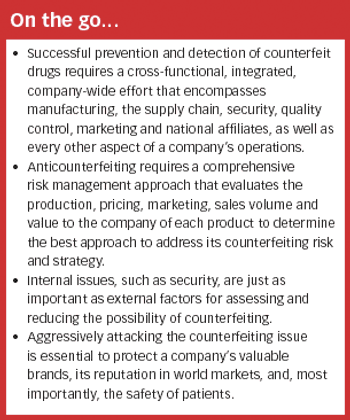
Steps companies can take to help safeguard patients and the pharma supply chain.

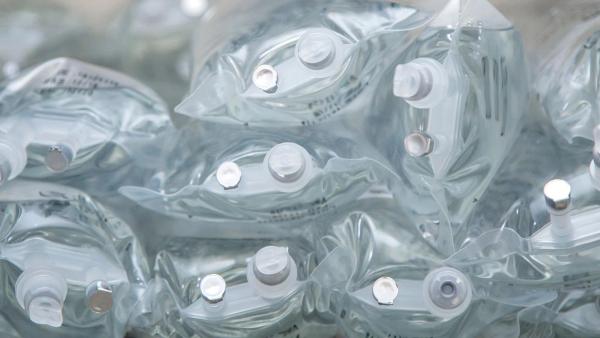
The evolution of therapeutic modalities drives the adoption of single-use technologies.
Despite its understandable hesitancy, the pharma industry is facing a need for more widespread adoption of cloud-based solutions.

Given the criticality of fill/finish processes, it is clear that automation is the next technological step.

Pharmaceutical Technology Europe
Steps companies can take to help safeguard patients and the pharma supply chain.
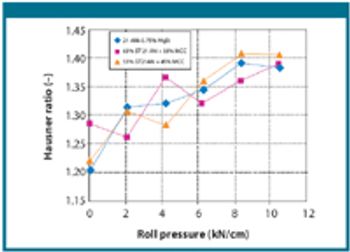
The authors studied the behavior of anhydrous lactose and the combination of anhydrous lactose and the combination of anhydrous lactose with microcrystalline cellulose on a pilot-scale roller compactor.

ePT--the Electronic Newsletter of Pharmaceutical Technology
On March 19, 2009, IMS, the leading provider of market research for the pharmaceutical and healthcare industries, reported that annual sales of prescriptions in the US grew 1.3% from 287.6 billion in 2007 to 291.5 billion in 2008.
ePT--the Electronic Newsletter of Pharmaceutical Technology
Also, Hospira to reduce workforce; WuXi AppTech makes senior appointments; more...
ePT--the Electronic Newsletter of Pharmaceutical Technology
In a case decided on Mar. 20, 2009, the US Court of Appeals for the Federal Circuit invalidated a US Patent and Trademark Office (PTO) Final Rule that governed the number of applications that parties may file to seek continued examinations of patent applications.
ePT--the Electronic Newsletter of Pharmaceutical Technology
President Barack Obama signed the fiscal year 2009 Ombnibus Appropriations Act on Mar. 11, 2009, giving the US Food and Drug Administration $2.6 billion. The funding can be used through the end of the fiscal year, Sept. 30, 2009.
ePT--the Electronic Newsletter of Pharmaceutical Technology
The US Pharmacopeial Convention (USP) and the National Institute for the Control of Pharmaceutical Biological Products (NICPBP), China's agency for overseeing the quality of large- and small-molecule drugs, signed a memorandum of understanding (MOU) to bolster the quality of medicines in China and in the countries that buy Chinese drug products, including the United States.
ePT--the Electronic Newsletter of Pharmaceutical Technology
Also, Genzyme receives warning letter; Mesa Laboratories appoints John J. Sullivan CEO and a member of the board of directors; more...
Equipment and Processing Report
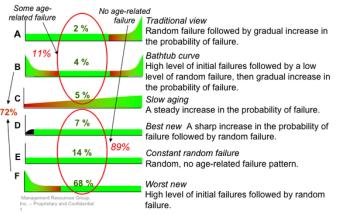
Time-based maintenance programs preserve the equipment but usually not its function, and they do not mitigate equipment failure for the balance of a machine's life cycle.
Equipment and Processing Report
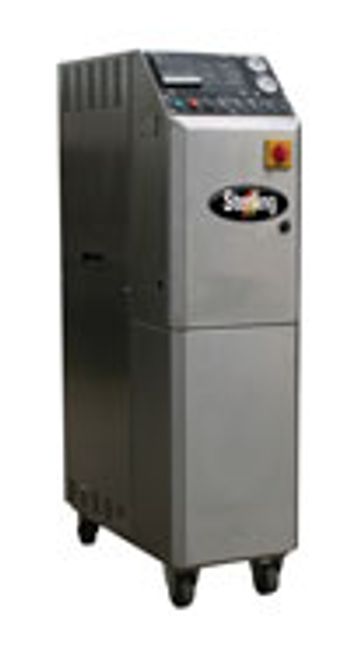
PharmTech's monthly newsletter, Equipment & Processing Report, reviews the Editor's Picks for the February 2009 edition from PortaFab and Sterling.
Equipment and Processing Report
The spotlight on the biopharmaceutical industry is intensifying, as recently evidenced by Pfizer's (New York) ongoing acquisition of Wyeth (Madison, NJ), which was initiated partly to reduce the former's dependence on small-molecule drugs.

2009 Pre-Interphex Showcase: Cleanrooms
ePT--the Electronic Newsletter of Pharmaceutical Technology
Also, Penn Pharma to expand; stem cell research funding ban lifted; Bristol-Myers Squibb made senior appointments; more...
Merck & Co. (Whitehouse Station, NJ) and Schering-Plough (Kenilworth, NJ) completed a definitive merger agreement under which Schering-Plough stockholders will receive $23.61 per share.
ePT--the Electronic Newsletter of Pharmaceutical Technology
President Obama nominated Kansas Governor Kathleen Sebelius as his new Secretary of Health and Human Services (HHS).
ePT--the Electronic Newsletter of Pharmaceutical Technology
President Obama's Fiscal Year 2010 (FY 2010) budget includes support for a regulatory pathway for follow-on biologics.
ePT--the Electronic Newsletter of Pharmaceutical Technology
On March 3, the US Food and Drug Administration released a draft guidance for Industry entitled "Clinical Pharmacology Section of Labeling for Human Prescription Drug and Biological Products: Content and Format."
ePT--the Electronic Newsletter of Pharmaceutical Technology
In a press release dated Feb. 25, 2009, the US Food and Drug Administration charged that Ranbaxy Laboratories's (Gurgaon, Haryana, India) Paonta Sahib facility falsified data and test results in approved and pending drug applications.
ePT--the Electronic Newsletter of Pharmaceutical Technology
Also, Schering-Plough's vaccine unit, Nobilon, formed an agreement with the World Health Organization; Ore Pharmaceuticals named president and CEO; more...
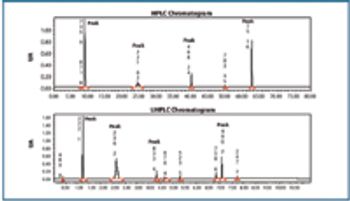
Ultra high performance liquid chromatography is advantageous in a contract laboratory because it is faster, more sensitive, and relies on smaller volumes of organic solvents than HPLC.

USP's Stage 2 heparin monograph revisions address identification, potency, and impurities.
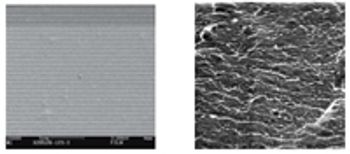
The authors investigate the effects of a polyethylene glycol plasticizer and water on cellulose acetate film properties.

Broader disclosure of drug prices and conflicts of interest are central healthcare reform issues.

Industry has changed, but its basic tenets have not. INTERPHEX's RJ Palermo discusses a 7-step process to keep pharma moving forward.
The source of a problem reveals itself after some investigation, or it may crash down on you.