

Equipment and Processing Report
Near-field communication labels communicate with consumers and support personalized medicine.
Equipment and Processing Report
Near-field communication labels communicate with consumers and support personalized medicine.
Biocorp’s Easylog smart sensor for insulin delivery devices enhances compliance.
Innovations awarded at Pharmapack Europe include improvements for patient compliance and protection from errors, tampering, or misuse.
PTSM: Pharmaceutical Technology Sourcing and Management
The agency prepares a plan to implement new packaging safety features.

PTSM: Pharmaceutical Technology Sourcing and Management
Expanded systems integration, serialization, and supply chain connectivity will enhance productivity and support counterfeit prevention.
Baxter has voluntarily recalled lots of IV solutions due to potential container leakages and particulate matter.
Equipment and Processing Report
Automation and ready-to-fill packaging formats are expected to grow in parenteral fill–finish operations.
The company has voluntarily recalled one lot of magnesium sulfate in water for injection because of incorrect labeling.
Jones Packaging and ThinFilm will collaborate on NFC OpenSense technology for pharmaceutical packaging.
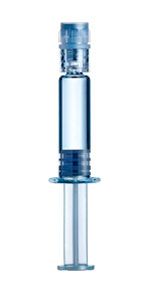
Parenteral packaging of the future will include more automated lines, ready-to-fill packaging formats, and supply-chain transparency.
The revised USP Chapter 1207 gives best practices for obtaining reliable data in container closure integrity testing.
The plant will manufacture Clariant’s moisture-control products to support the growing pharmaceutical packaging market in India.Clariant announced on Dec. 1, 2015 that it is investing CHF 10 million in a new packaging manufacturing plant in Cuddalore, India. The plant will manufacture Clariant’s moisture-control products to support the growing pharmaceutical packaging market in India.
PTSM: Pharmaceutical Technology Sourcing and Management
With the acquisition of Medipac’s tube filling assets for effervescent tablets, Romaco can now offer the complete line configurations for effervescent tablets.
Equipment and Processing Report
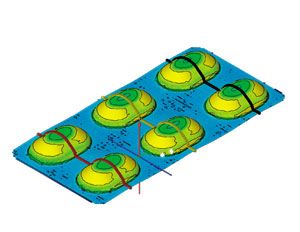
Integrated pharmaceutical blister-packaging equipment systems strengthen serialization and brand protection capabilities.
This investment comes in response to the increasing demand for high quality and safe pharmaceutical packaging. rlc already has two pharma packaging centers in Rüdersdorf near Berlin, Germany and in Poznan, Poland.
The latest revisions to the international pharmacopoeia standards for glass pharmaceutical packaging have emphasized the importance of assessing delamination propensity of pharmaceutical glassware, including bottles, vials, cartridges, and syringes.
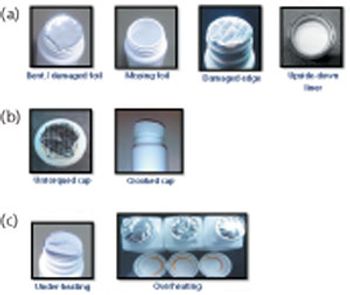
Problems in an induction-sealing process, such as untorqued or crooked caps, can be identified and corrected in real time using dynamic thermal imaging.
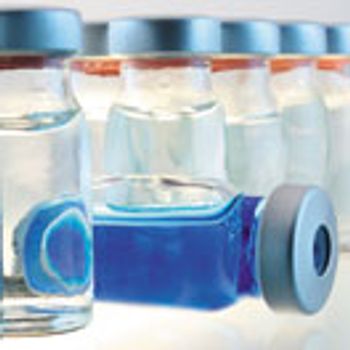
Delamination of glass packaging is a source of particulates in parenteral drugs, but identifying the root cause allowed the design of an improved manufacturing process for glass vials.

Virtual pilot programs examine scenarios that may occur while implementing serialization requirements for the US Drug Supply Chain Security Act.
PTSM: Pharmaceutical Technology Sourcing and Management
Catalent Pharma Solutions announced plans to quadruple the cold-chain capacity at its existing clinical supply storage and distribution facility in Shanghai, China. The expansion comes in response to increasing demand from domestic and multinational pharmaceutical sponsors and contract research organizations (CROs).
The agency provides terms and recommendations for packaging and labeling of injectable medical products.
The joint marketing agreement allows the companies to expand dedicated blister feed system technologies.
Test results of the new multilayer plastic container show that it offers sensitive pharmaceuticals extra protection against moisture vapor and oxygen permeability.
Equipment and Processing Report
The challenge of achieving zero visible defects (i.e., particulates) in parenteral drugs will require a coordinated effort at all stages of the supply chain, particularly in the production and filling of primary containers.
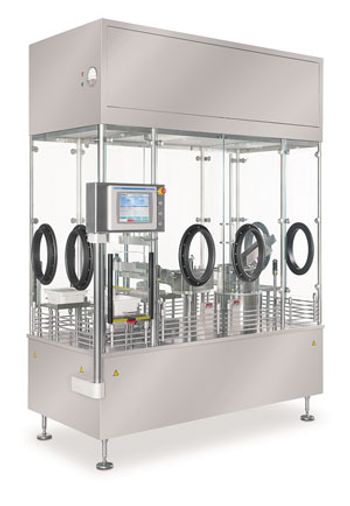
Manufacturers of parenteral drugs face challenges to increase efficiency, control particulates, control extractables and leachables, and eliminate product/package interactions; new containers and packaging equipment offer increased options.