







Quality Systems
Latest News
Advertisement
Latest Videos





Shorts

0:20
Planning for Iteration in New Modality Manufacturing
a month ago
by
Swita Singh, PhD(+1 more)

0:20
How AI is Actually Changing Scientific Work
a month ago
by
Alfred Rumondor, PhD(+1 more)
0:30
How to Properly Leverage FDA Flexibility
2 months ago
by
Swita Singh, PhD(+1 more)

0:19
Essential Quality Tests for Biopharmaceutical Products
2 months ago
by
Robert Dream(+1 more)
0:18
Why Hold Times Are the Biggest Risk in Biopharma
2 months ago
by
Robert Dream(+1 more)
0:33
The FDA's Trust Issue With China
2 months ago
by
Zachary Zubulake
0:18
Could the US Ban Chinese Medical Data?
2 months ago
by
Zachary Zubulake
0:21
The End of US Biotech Dominance?
2 months ago
by
Zachary Zubulake

0:28
Sustainability Is an Investment, Not a Cost
2 months ago
by
Silvia Forroova(+1 more)
0:08
Sustainability in Pharma Is No Longer a Choice
2 months ago
by
Silvia Forroova(+1 more)
Advertisement
More News

The FDA approved the first orexin receptor agonist for narcolepsy type 1, which validates a new mechanism-driven approach shaping CNS drug development and regulatory pathways.

PharmTech spoke with Dr. Hui-Yin (Harry) Li, president and CEO of Wilmington PharmaTech, about steps that should be taken to build a productive relationship between sponsor and contract organizations.

Pharma's 2026 predictions revisited: AI tools have arrived, but organizational readiness, data governance, and regulatory gaps now limit real-world impact.
Modernizing infrastructures, record drug approvals, and harmonization were all positive regulatory advancements in July 2026.

Content on PharmTech.com this week showed that while AI is being utilized in drug discovery, manufacturing execution still lags behind. However, manufacturers are rethinking where and how they build capacity, transfer technology, and monitor quality in real time.

Across development, manufacturing, quality, and outsourcing, the pharma industry is being asked to scale complexity without sacrificing control.
This episode of Pharma Fundamentals provides an introduction to hold times in biopharmaceutical manufacturing and how they differ from hold times in small-molecule drug manufacturing.
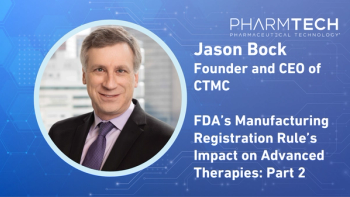
In part 2 of this 2-part interview, Jason Bock, founder and CEO of CTMC provides input on how the FDA's proposed manufacturing registration rule may impact personalized therapies.
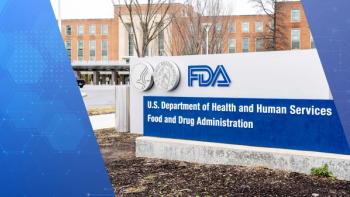
FDA revises draft guidance for 17 generic peptide products, including semaglutide and tirzepatide, updating testing standards ahead of a September comment deadline.
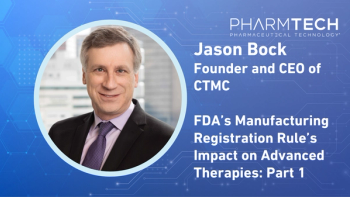
Jason Bock, founder and CEO of CTMC, provides his perspective on the FDA’s proposed rule to streamline registration for single distributed manufacturing establishments, and what the change may mean for personalized medicines.

AI is reshaping discovery, manufacturing, and supply chain routing. Manufacturers are investing in capacity and resilience.

FDA advisers vote to allow pharmacy compounding of unapproved peptides BPC-157, KPV, TB-500, MOTs-C despite thin safety data and industry ties.

Susan J. Schniepp, distinguished fellow with Nelson Labs, and Siegfried Schmitt, PhD, vice president, Technical, at Parexel, explain a company’s regulatory affairs department is subject to inspections by regulators and should, therefore, be prepared.

The use of artificial intelligence is facing harder questions of governance and data quality, and regulators in the United States and the European Union are streamlining pathways to market.

The future of compliant AI is not better content generation. It is better control over what happens next.

FDA finalizes bioequivalence guidance for topical corticosteroids and new meeting rules for OTC monograph drug sponsors, replacing a 1995 standard.

Jeffrey C. Mocny, PhD, of Abzena, and Anna McMahon, MS, of Cellares, discuss how biopharmaceutical risk-based standards accelerate innovation and speed-to-market by leveraging data for better patient outcomes and safety.
FDA proposes a hub-and-spoke manufacturing registration rule and approves three drugs for multiple myeloma, IgA nephropathy, and bladder cancer.

EMA and EISMEA have formalized their cooperation through a work program aimed at helping small biopharma and medtech innovators engage with EU regulatory requirements earlier in development, potentially reducing late-stage manufacturing and quality problems for complex modalities.
A proposed rule by the agency would create a streamlined registration pathway for advanced distributed manufacturing establishments.
FDA approves subcutaneous isatuximab-irfc for multiple myeloma, backed by trial data showing efficacy comparable to IV dosing across three regimens.

Greater accountability and resilience across drug development and manufacturing are key goals for regulators and industry.

Three regulatory actions are converging to move biologics, gene therapy, and the ATMP platform forward quickly, say Susan J. Schniepp, distinguished fellow at Nelson Labs, and Siegfried Schmitt, PhD, vice president, technical, Parexel.

To drive long-term success, CROs need to strengthen their focus on efficiency, automation, data integrity, and compliance to generate higher ROI for clients.
FDA approves a new IgA nephropathy therapy that targets two immune cytokines at once, offering a weekly, self-administered treatment option.
Advertisement
Advertisement
Trending on Pharmaceutical Technology
1
Formulation Strategies for Next-Generation Multiagonists
2
First-in-Human Trial Speed: Why FDA Trails China
3
PharmTech AI Pulse Check: Why Pharma Should Weigh In on FDA's Generative AI Paper
4
MASH and Cardiomyopathy Targets: Why AstraZeneca Chose insitro’s AI
5