





Quality Systems
Latest News
Advertisement
Latest Videos






Shorts
0:24
Reducing R&D Experiments by Orders of Magnitude with AI
a month ago
by
Alfred Rumondor, PhD(+1 more)

0:20
Planning for Iteration in New Modality Manufacturing
a month ago
by
Swita Singh, PhD(+1 more)
0:20
How AI is Actually Changing Scientific Work
a month ago
by
Alfred Rumondor, PhD(+1 more)
0:30
How to Properly Leverage FDA Flexibility
a month ago
by
Swita Singh, PhD(+1 more)
0:19
Essential Quality Tests for Biopharmaceutical Products
a month ago
by
Robert Dream(+1 more)
0:18
Why Hold Times Are the Biggest Risk in Biopharma
a month ago
by
Robert Dream(+1 more)
0:33
The FDA's Trust Issue With China
a month ago
by
Zachary Zubulake
0:18
Could the US Ban Chinese Medical Data?
a month ago
by
Zachary Zubulake
0:21
The End of US Biotech Dominance?
a month ago
by
Zachary Zubulake

0:28
Sustainability Is an Investment, Not a Cost
2 months ago
by
Silvia Forroova(+1 more)
Advertisement
More News

FDA approves Rasonque (daraxonrasib), the first broad RAS-targeted therapy for metastatic pancreatic cancer, validating RAS(ON) inhibition for future drug development.

FDA priority review of Jemperli for biomarker-defined rectal cancer signals capacity, supply chain, and global filing shifts for manufacturers.
REGENXBIO's RGX-121 faces an FDA clinical hold after asymptomatic spine MRI findings, highlighting long-term imaging surveillance for CNS gene therapies.

The FDA grants accelerated approval to Ultragenyx's Genglycos, the first gene therapy for GSDIa, raising manufacturing and post-market monitoring questions.
The FDA approves first therapy shown to reduce new bone lesions and flare-ups in fibrodysplasia ossificans progressiva (FOP), based on a 63-patient trial using CT-scan efficacy endpoints.

The Trump administration nominates Heidi Overton for FDA commissioner amid leadership instability, raising questions for drug developers on review timelines and oversight.
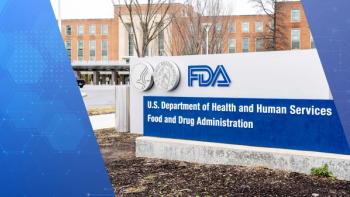
FDA grants Priority Review to Teva's ecopipam new drug application, backed by phase 3 data. Ecopipam is a first-in-class D1 receptor therapy for pediatric Tourette syndrome.

Postmarketing governance must be evidenced across the full life cycle—design, validation, and live monitoring—not documented once and assumed to hold.

LEO Pharma acquires dersimelagon from Tanabe Pharma for up to $435M, adding a late-stage oral rare dermatology asset under FDA review.
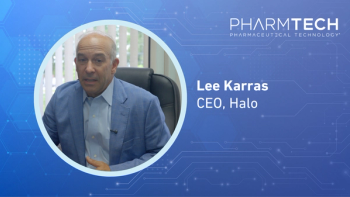
Lee Karras, CEO, Halo discusses the company's new sterile fill-finish platform, Apotex partnership, and injectable onshoring strategy.

EMA’s draft GMP Annex 22 sidelines LLMs in critical manufacturing, fueling a push for risk-based guardrails and human accountability.
Lee Karras CEO, Halo Pharma ties the move to US injectable capacity along with an introduction to Halo’s new sterile fill-finish platform before GMP qualification.

Pharma's AI ROI gap isn't strategy or tech; it's the missing workforce qualification step every other regulated capability requires.

This week’s content included Moderna's mRNA flu approval, CMO governance tips, OSTP’s deregulation push, a $2 billion oncology license, and July's regulatory wrap-up.

The genetically modified oncolytic viral therapy, used in combination with nivolumab, was approved by the agency after data showed 1 in 4 patients responded to treatment.

The FDA approved the first orexin receptor agonist for narcolepsy type 1, which validates a new mechanism-driven approach shaping CNS drug development and regulatory pathways.
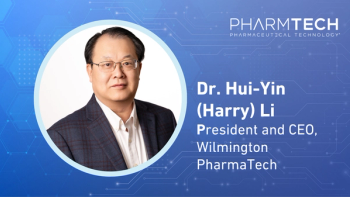
PharmTech spoke with Dr. Hui-Yin (Harry) Li, president and CEO of Wilmington PharmaTech, about steps that should be taken to build a productive relationship between sponsor and contract organizations.

Pharma's 2026 predictions revisited: AI tools have arrived, but organizational readiness, data governance, and regulatory gaps now limit real-world impact.

Modernizing infrastructures, record drug approvals, and harmonization were all positive regulatory advancements in July 2026.
Content on PharmTech.com this week showed that while AI is being utilized in drug discovery, manufacturing execution still lags behind. However, manufacturers are rethinking where and how they build capacity, transfer technology, and monitor quality in real time.

Across development, manufacturing, quality, and outsourcing, the pharma industry is being asked to scale complexity without sacrificing control.
This episode of Pharma Fundamentals provides an introduction to hold times in biopharmaceutical manufacturing and how they differ from hold times in small-molecule drug manufacturing.
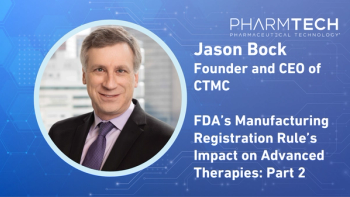
In part 2 of this 2-part interview, Jason Bock, founder and CEO of CTMC provides input on how the FDA's proposed manufacturing registration rule may impact personalized therapies.
FDA revises draft guidance for 17 generic peptide products, including semaglutide and tirzepatide, updating testing standards ahead of a September comment deadline.
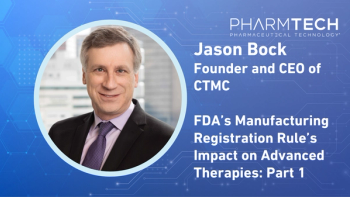
Jason Bock, founder and CEO of CTMC, provides his perspective on the FDA’s proposed rule to streamline registration for single distributed manufacturing establishments, and what the change may mean for personalized medicines.
Advertisement
Advertisement