





Quality Systems
Latest News
Advertisement
Latest Videos




Shorts

0:20
Why Zero Complaints Is a Bad Sign
4 months ago
by
Siegfried Schmitt(+1 more)
0:20
Devices Must Work for Everyone
4 months ago
by
Siegfried Schmitt(+1 more)
0:14
Why Truly 'Novel' Excipients Are So Rare
4 months ago
by
David Schoneker(+1 more)
0:24
Why Most New Excipients Fail to Market
4 months ago
by
David Schoneker(+1 more)

0:23
Why You Can't Test 100% of Medicine
5 months ago
by
Siegfried Schmitt
0:20
Why Your Quality System Is Likely Failing
5 months ago
by
Susan J. Schniepp

0:20
Do You Need to Know the Cause to Recall
5 months ago
by
Siegfried Schmitt

0:21
How Counterfeiters Are Fooling The System
5 months ago
by
Malav Parikh
0:18
The Struggle of Clinical Trials for Rare Diseases
7 months ago
by
Susan Haigney

0:24
The Truth About Competition in Rare Disease Drugs
7 months ago
by
Susan Haigney
Advertisement
More News
PharmTech takes a look back at US and European regulatory news from the month of May 2026.
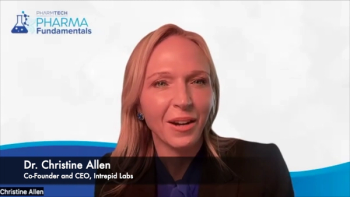
Dr. Christine Allen, Co-Founder and CEO of Intrepid Labs, and Dr. Andrew Lewis, Chief Scientific Officer of Quotient Sciences, explain how AI can be used in drug development to shorten development timelines.
FDA extends AstraZeneca’s camizestrant's review deadline to assess additional data after its advisory committee failed to reach a majority vote in April.

The CMA will improve Europe’s manufacturing resilience and lead to greater diversification and reduced reliance on single external suppliers.

Pharmaceutical serialization must evolve from regulatory compliance into operational intelligence, addressing hidden failures like exception overload, certificate expiry, and 3PL complexity.

Increased regulatory flexibility for rare diseases, a critical shift toward automated, data-driven manufacturing, and strategic acquisitions in genetic medicine were some of the highlights this week.

Quantum chemistry is accelerating drug discovery AI by providing physics-based, reproducible, and scalable data that encodes molecular reality.

Bristol Myers Squibb collaborates with Anthropic to accelerate drug development, manufacturing quality systems, and regulatory documentation via AI integration.

Susan J. Schniepp, distinguished fellow at Nelson Labs, and Siegfried Schmitt, PhD, vice president, Technical at Parexel, provide advice on creating a robust out-of-specification procedure.

Deborah Smook, co-founder and co-owner of TurboFil Packaging Machines, explains some of the challenges involved with prefilled syringe manufacturing.
The FDA replaced acting heads of its drug and biologics centers, deepening leadership instability that raises concerns for pharmaceutical developers.
FDA Commissioner Marty Makary resigns amid agency turmoil, staff exodus, pressure over vaccines, rulings on abortion pills, and vaping rules.

This article evaluates a structured, risk-based framework for the development, execution, and life cycle governance of master production and control records and batch production and control records systems aligned with current good manufacturing practice requirements and internationally harmonized pharmaceutical quality system guidance.

Visual inspection injectable products may be enhanced by the utilization of AI to analyze and link data to identify deviations, trends, or irregularities.

Daniele Ansaldi, technical manager for Automated Inspection Machines at Antares Vision Group North America, outlines some of the challenges of performing visual inspections on prefilled syringes.

This article provides a statistically defensible and GMP-aligned justification for continued IPC reliance on computed net fill weight when equivalence in mean and variance can be demonstrated.

Peter Makowenskyj, senior director of Design Consulting at G-CON, and Beata Sweryda-Krawiec, associate director at Boehringer-Ingelheim, discussed trends influencing the design of pharmaceutical manufacturing facilities during a Quick Fire Learning Lab at INTERPHEX 2026.

Panelists at INTERPHEX 2026 talked about the move to hybrid modeling for process development and the barriers to the adoption of artificial intelligence in pharmaceutical manufacturing.
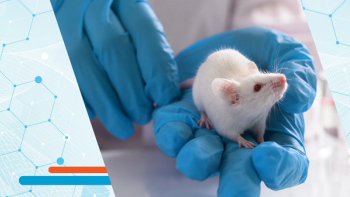
The agency is celebrating the achievement of key first year goals in implementing the Roadmap to Reducing Animal Testing in Preclinical Safety Studies.

Rohan Kumar, laboratory analyst at CS Analytical, discusses how sustainability in pharmaceutical packaging can be improved.

In part 1 of a multi-part series, David Schoneker, president, Black Diamond Regulatory Consulting, explains the difference between a new excipient and a novel excipient and what goes into developing a new excipient.
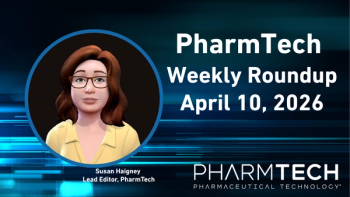
This week, PharmTech discussed proactive, data-driven contamination control, solving manufacturing hurdles, and the market entry of complex generics and biosimilars.

New PRAC safety data link cenobamate to rare severe liver injury, prompting updated monitoring requirements and revised product labeling for prescribers.

This issue of PharmTech brings together perspectives from scientists, engineers, regulatory strategists, and industry veterans to chart where the field is headed.

The FDA approved the first generic dapagliflozin tablets, opening a competitive US market for pharma manufacturers and generic-drug developers.
Advertisement
Advertisement
Trending on Pharmaceutical Technology
1
What Novartis's $3.2 Billion Enzyme Licensing Deal Means for Formulation
2
CAR T-Cell Trial Pause Signals New Manufacturing Risk Review
3
AAPS PharmSci 360: Microstructure Intelligence in Predictive Drug Development, Part 1
4
AAPS PharmSci 360: CMC Strategies, Part 1
5