

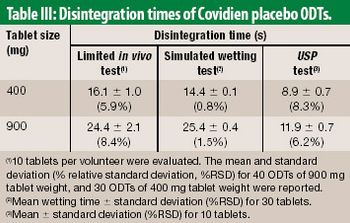
The authors propose an alternative to the USP disintegration test method. The method embraces physiological conditions of the oral cavity, as a screening tool for developing ODT products.

The authors propose an alternative to the USP disintegration test method. The method embraces physiological conditions of the oral cavity, as a screening tool for developing ODT products.
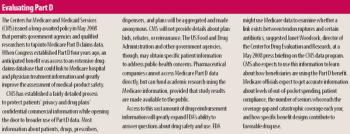
FDA is modernizing adverse-event reporting as part of a revolution in drug-safety assessment.
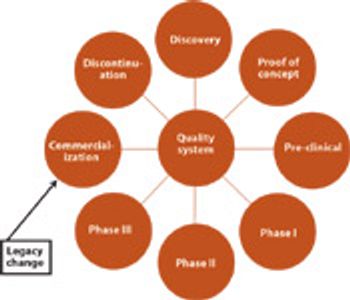
After five years in the making, the official pharmaceutical quality system is here. All three parties to ICH adopted a final version of Q10 and agreed to implement the guideline through their individual regulatory bodies.
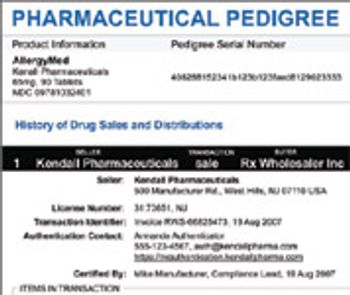
Postponement of California's deadline gives the supply chain time to refine ePedigree solutions.
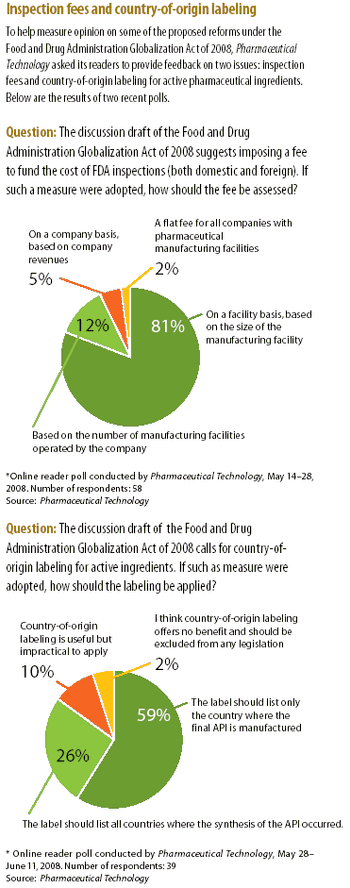
The high-profile case of contaminated heparin from a Chinese supplier has intensified the debate on the effectiveness of FDA's process for inspecting foreign drug-manufacturing facilities. The article examines proposed legislative and regulatory reforms and actions taken by the agency to improve drug-import safety.

ePT--the Electronic Newsletter of Pharmaceutical Technology
The European Medicines Agency recommended strengthening the warnings for oral moxifloxacin medicines and concluded that these drugs should only be prescribed to treat acute bacterial sinusitis, acute exacerbation of chronic bronchitis, and community-acquired pneumonia when other antibiotics cannot be used or have failed.
ePT--the Electronic Newsletter of Pharmaceutical Technology
Also, Cobra Biomanufacturing to extend collaboration and form joint venture with ViroMed, Epix Pharmaceuticals CEO resigns, more...
ePT--the Electronic Newsletter of Pharmaceutical Technology
Senator Sherrod Brown sent a letter to Richard T. Clark, president and chief executive officer of Merck (Whitehouse Station, NJ), to ask for information about the company's reliance on global outsourcing for the manufacture of pharmaceutical ingredients and finished products.
ePT--the Electronic Newsletter of Pharmaceutical Technology
The US Food and Drug Administration issued a final rule on July 18 that exempts early Phase I investigational drugs from certain good manufacturing practice regulations.
ePT--the Electronic Newsletter of Pharmaceutical Technology
Bristol-Myers Squibb (BMS) agreed to reduce the output of ozone-depleting refrigerants at several industrial facilities around the country to resolve violations of the Clean Air Act. The company's modifications will cost approximately $3.65 million.
ePT--the Electronic Newsletter of Pharmaceutical Technology
Also, Roche to end HIV/AIDS research program, WuXi PharmaTech makes appointments, more...
ePT--the Electronic Newsletter of Pharmaceutical Technology
The US Food and Drug Administration published a Draft Guidance for Industry on Providing Regulatory Submissions in Electronic Format in the Federal Register on July 11.
ePT--the Electronic Newsletter of Pharmaceutical Technology
Pfizer has agreed to pay $975,000 in civil penalties to resolve alleged violations of the Clean Air Act at its former manufacturing plant in Groton, Connecticut, according to a release by the US Department of Justice.
ePT--the Electronic Newsletter of Pharmaceutical Technology
The US Food and Drug Administration is seeking volunteers from the pharmaceutical industry to participate in a pilot program involving the submission of quality information for biotechnology products.
ePT--the Electronic Newsletter of Pharmaceutical Technology
The European Pharmacopeia Commission has published the General Information chapter "Potentially Genotoxic Impurities and European Pharmacopoeia Monographs on Substances for Human Use" in the July 2008 edition of PharmEuropa.
ePT--the Electronic Newsletter of Pharmaceutical Technology
The European Pharmacopoeia Commission adopted revised monographs for heparin calcium and heparin sodium to strengthen the level of testing required for quality control.
PTSM: Pharmaceutical Technology Sourcing and Management
Change control in life-sciences organizations is a critical business issue in terms of risk, safety, and performance. The author examines common shortcomings in change control when implementing non-enterprise solutions and the functionality derived from enterprise-level change control.
PTSM: Pharmaceutical Technology Sourcing and Management
A recent US government study shows that follow-on biologics are likely to have a favorable economic impact if proposed legislation authorizing a regulatory pathway in the US is approved.
ePT--the Electronic Newsletter of Pharmaceutical Technology
After a one-year delay in its implementation, the US Pharmacopeia Chapter 467 "Residual Solvents" is now official.
ePT--the Electronic Newsletter of Pharmaceutical Technology
The Congressional Budget Office has released a report that provides a picture of the financial impact from the enaction of S.1695, the Biologics Price Competition and Innovation Act of 2007.
ePT--the Electronic Newsletter of Pharmaceutical Technology
President Bush signed H.R. 2642, the Supplemental Appropriations Act of 2008, which provides $150 million to the US Food and Drug Administration for medical-safety and drug-safety activities.
A new book explains process analytical technology, drug stability, and quality.
The year 2011 may seem far off, but there is much to do to prepare for electronic pedigrees.
The authors describe the factors affecting reconstitution time of dry powder for injection and classifies them as intrinsic and extrinsic parameters.
A growing preference for public-private partnerships is spurring innovation and technology among Dutch pharmaceutical companies.