

Pharmaceutical Technology Europe
New barcoding technologies are helping to aid product traceability and fight counterfeits. Mark Beauchamp of Citizen Systems Europe explains how.
Pharmaceutical Technology Europe
New barcoding technologies are helping to aid product traceability and fight counterfeits. Mark Beauchamp of Citizen Systems Europe explains how.

Pharmaceutical Technology Europe
The European Fine Chemicals Group (EFCG) gave an update of some of its activities at a press conference held at CPhI Worldwide (Spain) last week, and revealed some disturbing facts regarding counterfeit APIs, which the group is particularly concerned about.
ePT--the Electronic Newsletter of Pharmaceutical Technology
The European Fine Chemicals Group (EFCG) gave an update of some of its activities at a press conference held at CPhI Worldwide (Spain) last week, and revealed some disturbing facts regarding counterfeit APIs, which the group is particularly concerned about.
PTSM: Pharmaceutical Technology Sourcing and Management
Thomas LaVake, manager, worldwide environment, health & safety at Johnson & Johnson, provides a perspective on sustainability practices for the pharmaceutical industry.

Pharmaceutical Technology Europe
Jeff Robertson talks about a unique form of micro-tag technology that can be applied to solid dose pharmaceuticals.

Pharmaceutical Technology Europe
Julian Mosquera, Director of LCP Consulting, advises how pharma companies can make their supply chains leaner.
PTSM: Pharmaceutical Technology Sourcing and Management
Thomas LaVake, manager, worldwide environment, health &safety at Johnson & Johnson, provides a perspective of sustainability practices for the pharmaceutical industry.
PTSM: Pharmaceutical Technology Sourcing and Management
Collaborative planning and execution among clinical research, clinical operations, and supply-chain managers are key elements in effectively managing an increasingly complex and global supply chain for clinical trial materials.
ePT--the Electronic Newsletter of Pharmaceutical Technology
The US Food and Drug Administration issued a draft guidance for industry, Incorporation of Physical-Chemical Identifiers into Solid Oral Dosage Form Drug Products for Anticounterfeiting, on July 13.
ePT--the Electronic Newsletter of Pharmaceutical Technology
The UK's Medicines and Healthcare Regulatory Agency (MHRA) has published the outcome of a consultation on measures to strengthen the country's drug supply chain.

Pharmaceutical Technology Europe
During the past decade, big pharmaceutical companies have been making major efforts to restructure their manufacturing networks. In their haste to shed costs and assets, however, some may be adding risk to their product supply chains.
PTSM: Pharmaceutical Technology Sourcing and Management
Consumer-care products, electronics, and select industrial firms comprise AMR Research's Supply Chain Top 25 for 2009, offering an opportunity for the pharmaceutical industry to examine best practices in supply-chain management.
As regulators work to curb counterfeiting, industry finds benefits to gaining granular data about the supply chain. This article contains bonus online-exclusive material.

Pharmaceutical Technology Europe
In 2005, a small delegation (myself included) of the European Fine Chemicals Group (EFCG) met with the deputy head of the cabinet of Commissioner Kyprianou (the then Commissioner responsible for health and consumer protection). Our mission was simple - we were there to raise a red flag.
Pharmaceutical Technology Europe
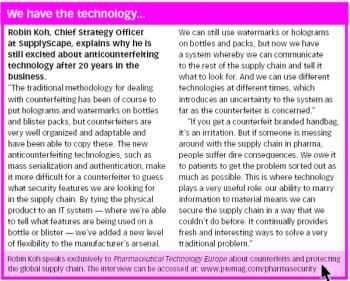
Today, approximately 1.5 million counterfeit medicine packs enter the legal supply chain each year - in other words, one pack in every 20000 is counterfeit.
ePT--the Electronic Newsletter of Pharmaceutical Technology
The European Federation of Pharmaceutical Industries and Associations (EFPIA) announced a pilot program, to launch in Sweden later this year, that will focus on coding and identification solutions.
ePT--the Electronic Newsletter of Pharmaceutical Technology
The United Kingdom's Medicines and Healthcare products Regulatory Agency (MHRA) seized nearly half a million pounds worth of counterfeit medicines on Mar. 26, 2009 in Middlesbrough, England, according to a MHRA press release.
Pharmaceutical Technology Europe
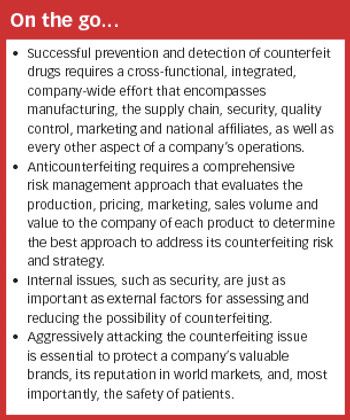
Steps companies can take to help safeguard patients and the pharma supply chain.
Pharmaceutical Technology Europe
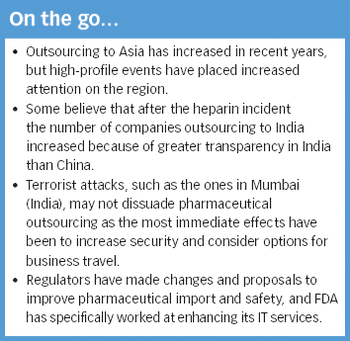
After a year of increased attention on the pharmaceutical supply chain in Asia, what will be the region?s short? and long?term role?
Pharmaceutical Technology Europe
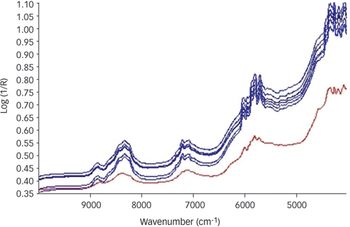
This month's expert examines the most appropriate technique for checking raw material quality. What technique would you recommend for quality checking of raw materials?
ePT--the Electronic Newsletter of Pharmaceutical Technology
Last week, the US Food and Drug Administration issued a draft guidance for industry, Standards for Securing the Drug Supply Chain–Standardized Numerical Identification for Prescription Drug Packages, and launched a pilot program to help protect the pharmaceutical supply chain.
After a year of increased attention on the pharmaceutical supply chain in Asia, what will be the region's short- and long-term role? This article contains bonus online-exclusive material.
Pharmaceutical Technology Europe
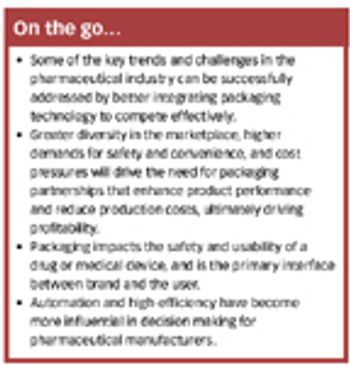
Creating better pharmaceutical and medical products with packaging partnerships.
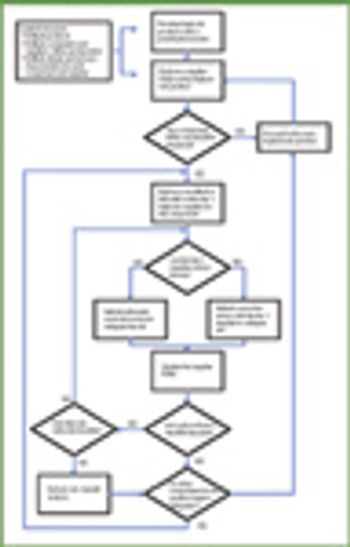
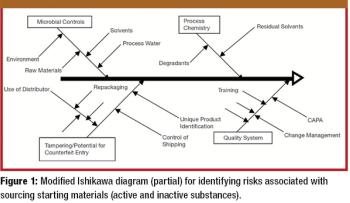
The growth and globalization of the pharmaceutical supply chain make risk assessment more important than ever for pharmaceutical manufacturers. The authors describe a program to identify, prioritize, mitigate, and communicate risks in manufacturer–supplier relationships.
Regulatory bodies around the world are now revising legislation, regarding counterfeit medicines, good manufacturing and distribution practices, and risk management.