
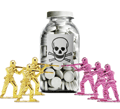

A report from the European Commission shows that fake pharmaceuticals were the top articles detained by European Union customs in 2011.
A report from the European Commission shows that fake pharmaceuticals were the top articles detained by European Union customs in 2011.
European and US associations call for continued vigilance against the threat of counterfeit medicines.
The EDQM (European Directorate for the Quality of Medicines and HealthCare) are looking to recruit a Scientific Programme Officer to join the team for a five year period to organise, manage and monitor a number of projects related to Pharmaceutical Care and Anti-Counterfeiting activities with a particular focus on the implementation of the MEDICRIME Convention
The UK's Medicines and Healthcare products Regulatory Agency has launched a new anticounterfeiting strategy with the aim of curbing the occurrence of falsified medicines in the county's supply chain.

Apple's experience with manufacturing facilities in China present opportunity for future best practice.

Pharmaceutical Technology Europe
Once again, Apple is doing something the rest of the world should be paying attention to, only this time it's about the company's approach to managing the global supply chain-even when things go wrong.
With around 80% of APIs manufactured outside the US, many in developing nations without strong regulatory oversight.
“One of the most daunting challenges facing pharmaceutical companies is securing the long and complex supply chains that are typical in today’s global industry.

Regulatory bodies, standard-setting organizations, and industry seek to tackle the problem of counterfeit drugs and securing the flow of pharma ingredients.
Pharmaceutical Technology Europe
Traditionally more prevalent in less industrialised regions, counterfeit medicines are now more frequently entering the heavily regulated supply chains of EU countries.
Pharmaceutical Technology Europe
Regulatory bodies, standard-setting organizations, and industry seek to tackle the problem of counterfeit drugs and securing the flow of pharma ingredients.

As biopharmaceutical development and commercialization increases, companies are expanding their cold-chain capabilities.
The US Pharmacopeia announced a draft standard containing best practices for ensuring that drugs can be traced to their original manufacturer, are not counterfeited or adulterated, and can be transported to their intended destination without compromising quality.
USP Releases Guidelines on Ensuring the Integrity of the Pharmaceutical Supply Chain.
Pharmaceutical Technology Europe
When a pharmaceutical supply chain is compromised, there can be disastrous consequences, not only for consumers, but also for manufacturers. Without comprehensive security measures, pharmaceuticals are susceptible to counterfeit, diversion, dilution, tampering and deliberate contamination—ultimately compromising patient safety.
On Nov. 17, 2011, a bill that would increase penalties for those convicted of trafficking in counterfeit drugs was introduced in the House of Representatives. The Counterfeit Drug Penalty Enhancement Act of 2011, cosponsored by four US Senators and two US Representatives.
The EMA released a concept paper for consultation on Nov. 8, 2011, that recommends a revision to Annex 16 of the Guide to Good Manufacturing of Medicinal Products to address more complicated global supply chains and new falsified medicines legislation.

Pharma companies and their suppliers are tasked with managing an evermore complex clinical-trial material supply chain.

Pharmaceutical Technology Europe
It is very difficult to measure the problem of counterfeiting accurately from year to year; by definition criminals don?t file tax returns or publish quarterly earnings.
Pharmaceutical Technology Europe
In an age dominated by the internet and uncertainty over the best packaging security methods to employ, counterfeit medicines have the ideal environment to thrive.

Europe establishes new collaborative system to track products.
Deborah Autor testifies before US Senate HELP committee on requested authorities to improve pharma supply chain.
PTSM: Pharmaceutical Technology Sourcing and Management
Xavier University, in partnership with FDA, will hold a conference in October to focus on the changing regulatory, business, and operational issues affecting the global pharmaceutical supply chain.
Thomas P. Layloff describes the advantages of using thin-layer chromatography methods for counterfeit detection. This article contains bonus online material.
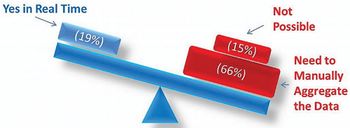
The authors review current industry challenges and trends in managing global supply chains and propose best practices for improving visibility into those networks.