


Lessons from the earthquake in Japan show the vulnerability of the bio/pharma supply chain.
Lessons from the earthquake in Japan show the vulnerability of the bio/pharma supply chain.

PTSM: Pharmaceutical Technology Sourcing and Management
Chemspec USA, which will be held in early May, in Philadelphia, addresses the key issues affecting the manufacturing and supply of fine chemicals.
Pharma's manufacturing and supply chain needs a "radical overhaul" because it is underused, inefficient and ill-equipped to cope with new types of products that will be coming to market in the near future, according to a report from PricewaterhouseCoopers (PwC).

The article examines pharmaceutical market growth, company positioning, and the innovation potential in emerging markets. Read this and other preferred organization articles in this special issue.
Pharmaceutical Technology Europe
With counterfeit medicines increasingly appearing in legitimate supply chains and even in the clinical stages of product development, a recent white paper has outlined practical steps that may help companies address the issue of counterfeits and diverted products.
Pharmaceutical Technology Europe
The threat of counterfeit medicines in the next year will be more severe than ever, according to a survey of 1000 companies conducted in October 2010 by Pharma IQ.

PTSM: Pharmaceutical Technology Sourcing and Management
Pharmaceutical Technology discusses the key issues and trends facing the pharmaceutical supply chain with Bob Kanuga, executive director of the external manufacturing organization with Merck & Co. Inc. and president of the Drug, Chemical and Associated Technologies Association (DCAT).

Holding product and supply-chain security to the highest standards is crucial for the future.
ePT--the Electronic Newsletter of Pharmaceutical Technology
During Oct. 5-12, 2010, more than 40 countries cooperated in an international week of action to combat the online sale of counterfeit and illegal drugs and to raise awareness of their associated health risks.
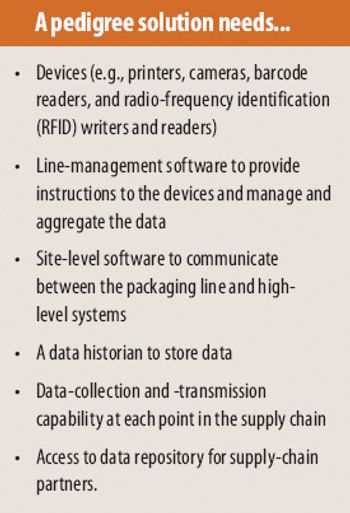
Serialized product codes serve as the foundation of ePedigree records and product traceability.
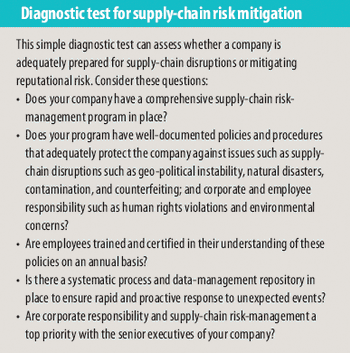
The author describes the importance of risk management and offers strategies for risk-management preparedness in supply chains.
Pharmaceutical Technology Europe
The Council of Europe (CoE) is hoping its 'Medicrime' treaty can help curb the lucrative global trade in fake medicines.
ePT--the Electronic Newsletter of Pharmaceutical Technology
The Council of Europe (CoE) is hoping its Medicrime treaty can help curb the lucrative global trade in fake medicines.
PTSM: Pharmaceutical Technology Sourcing and Management
The US government outlines its strategy against counterfeiting and intellectual-property infringement, including ways to better secure the pharmaceutical supply chain.
Pharmaceutical Technology Europe
With the increasing financial and technical means of counterfeiters, the number of counterfeit pharmaceuticals in the supply chain is growing at an alarming rate.

Pharmaceutical Technology Europe
We decided to dedicate this month's issue of PTE to a topic that affects all of our readers; the threat of counterfeit medicines.
Pharmaceutical Technology Europe
In order to combat the threat of counterfeits in Europe, the EU's current anti-counterfeiting directive is being amended.
Pharmaceutical Technology Europe
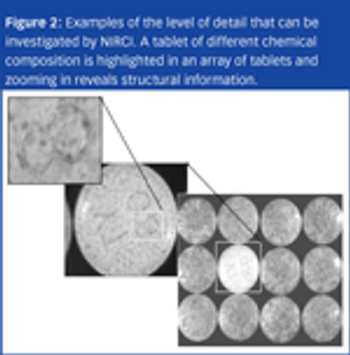
Counterfeit pharmaceuticals are complex products that can vary from their legitimate counterparts both chemically and physically.
ePT--the Electronic Newsletter of Pharmaceutical Technology
The International Federation of Pharmaceutical Manufacturers and Associations (IFPMA) published its "Ten Principles on Counterfeit Medicines" last week to draw public attention to the issue.
New Draft Guidance for Solid Oral Dosage Forms Focuses on Physical Chemical Identifiers. This article is part of PharmTech's supplement "Solid Dosage and Excipients 2010."

Emerging markets remain an important element in the strategies of pharmaceutical companies and their suppliers.
It's time to maintain a thorough traceable excipient trail.
PTSM: Pharmaceutical Technology Sourcing and Management
Gerry Migliaccio, senior vice-president of network performance for Pfizer Global Manufacturing, offers perspectives on building supply-chain integrity in emerging markets.

Pharmaceutical Technology Europe
Governments, regulators and international agencies continue to defend against counterfeiters; in particular, the European Commission has outlined measures that may help to better regulate pharmaceutical distributors.