

FDA approves Teva’s Weltruza, a once-monthly subcutaneous olanzapine for schizophrenia whose copolymer depot eliminates post-injection monitoring.
FDA approves Teva’s Weltruza, a once-monthly subcutaneous olanzapine for schizophrenia whose copolymer depot eliminates post-injection monitoring.

Equivalence test using two one-sided tests are widely used for demonstrating the comparability of treatment effects in different research fields. The method described in the manuscript aims to use simulations in Microsoft Excel to compute power for 2 one-sided tests for two groups with unequal variances.

Richard Jaenisch examines whether FDA's NAM pathway truly shortens drug pipelines or just shifts the evidentiary burden elsewhere.

Susan J. Schniepp, distinguished fellow with Nelson Labs, and Siegfried Schmitt, PhD, vice president, Technical, with Parexel, clear up some of the confusion about what does and does not need to be complied with regarding standards set by international pharmacopoeias.
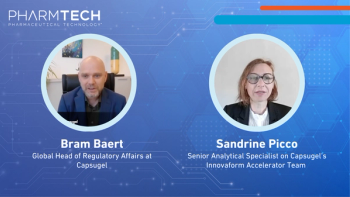
Mitigating nitrosamine risk requires assessing each product individually, says Bram Baert, Global Head of Regulatory Affairs at Capsugel, and Sandrine Picco, Senior Analytical Specialist on Capsugel's Innovaform Accelerator Team, in this interview with PharmTech.
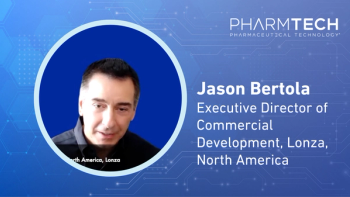
Jason Bertola, executive director of Commercial Development for the Advanced Synthesis Platform at Lonza in North America, explains the demand for spray drying and the hurdles involved with scale up, in an interview with PharmTech.

API-gated journals may skew pharma regulatory research as AI agents favor accessible sources, raising citation integrity and pharmacovigilance risks.

The FDA has approved remibrutinib for symptomatic dermographism, the first such therapy, extending an oral BTK inhibitor label via the Phase III RemIND trial.

The company is showcasing new development solutions and advanced digital technologies including its new OSD Express and Steriles Express solutions for drug development.

Ron Scarboro, Azurity Pharmaceuticals, explains when formulation robustness justifies added cost and which post-approval quality and supply metrics teams can track.

The winners of the CPHI Pharma Awards 2026 include a neurodegeneration platform, a track-and-trace packaging innovation, a enzymatic mRNA manufacturing technology, and a cell-free enzymatic biomanufacturing platform.
Richard Jaenisch explains why NAMs are compressing drug development faster than AI and what FDA's new nonclinical testing rule means for sponsors.
Shadow AI and vendor data retention put GMP records and trade secrets at risk. AI Pulse Check panelists outline what pharma AI policies require.
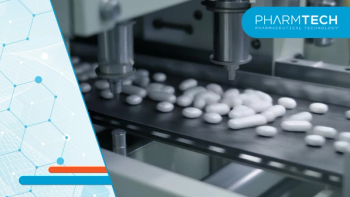
Hovione's $35M CDC Flex line links spray drying to tablets, designed to eliminate scale-up under FDA Q13 guidance.

This week on PharmTech, Merck diversified its pipeline, USP emphasizes supply chain security, AI systems are examined, and speakers preview their presentations at CPHI Milan and AAPS PharmSci 360.
Capsugel's Bram Baert and Sandrine Picco argue that chasing zero nitrite in pharmaceutical excipients is often impractical and costly. They recommend setting scientifically justified, risk-based limits and consistently staying below them.
Ron Scarboro, Azurity Pharmaceuticals, claims drug reformulation that removes patient barriers must preserve efficacy, urging early cross-functional team alignment.
PharmTech AI Pulse Check episode 2 covers AI data governance, API-gated journals, watermarking limits, and why attribution beats detection in GxP.
The FDA opened an expedited IND pilot, tightened scrutiny of foreign trial data, and finalized a rule recognizing non-animal testing methods. In Europe, the EMA advanced pharmaceutical legislation reform, restricted 2 legacy products, and opened an injectable-iron safety review.
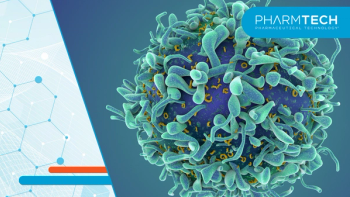
Novartis licenses Abogen's mRNA-encoded T-cell engager for autoimmune disease, raising scale-up questions for mRNA-lipid nanoparticle manufacturing.

Pharma manufacturing spent 90 years learning that producing correct outputs isn't the same as catching your own errors. AI has only learned the first.
Ron Scarboro, Azurity Pharmaceuticals, explains why real-world usability belongs at product definition and how post-launch feedback should guide drug formulation.
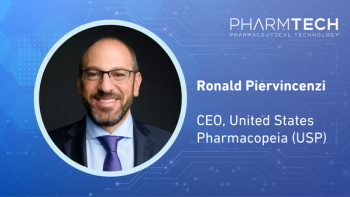
Ronald Piervincenzi, USP, explains why drug supply resilience needs a system approach, from procurement benchmarks to regulatory capacity building.

Gene manufacturing platforms, patient-centric formulations, contract services, packaging innovations, and sterile filling lines are in the spotlight at CPHI Milan 2026.
Ronald Piervincenzi, USP, explains why drug supply resilience needs a system approach, from procurement benchmarks to regulatory capacity building.
Episode 1, Part 3 of PharmTech AI Pulse Check covers why INTerpath-001's AI isn't ChatGPT and names pharma manufacturing's biggest AI governance gaps.

Michael Levy, senior vice president, Digital & Innovation, USP, explains the digital supply chain in a preview of his upcoming CPHI Milan panel presentation, The Next Phase of Pharma Supply Chains.

FDA approves tavapadon, first D1/D5 agonist, validating AbbVie's $8.7B Cerevel deal and an October five-strength oral tablet launch.
Richard Jaenisch weighs how FDA's new NAM rule could reshape preclinical testing and what CMC teams should do now, on Manufacturing Intelligence.
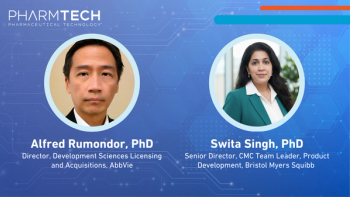
In a preview of their panel discussion at AAPS PharmSci 360 2026, Alfred Rumondor, PhD, AbbVie, and Swita Singh, PhD, Bristol Myers Squibb, discuss the implementation of risk-based approaches for CMC.