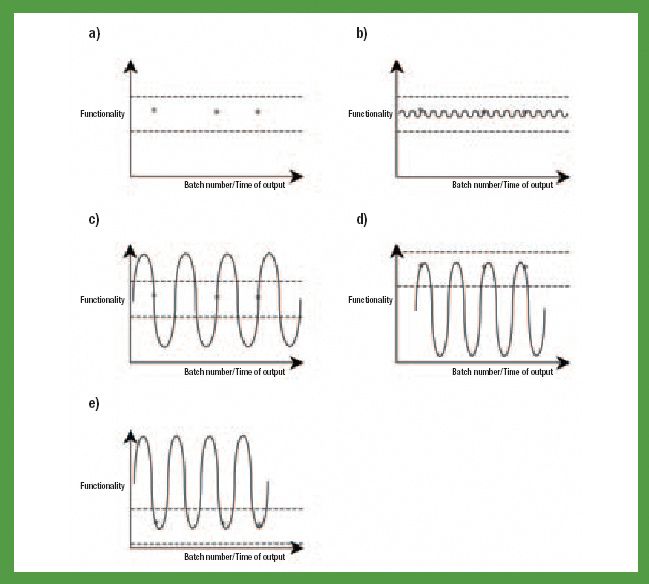
Facing cost pressures and regulatory changes, pharmaceutical companies address the need for increased functionality by looking to excipients.
Accurately targeted immunotherapies through reliable neoantigen recognition enable personalized medicine development.

Activation and expansion are essential for success in both autologous and allogeneic therapies.

Continuous manufacturing and a quality-by-design development approach are a natural fit.

Facing cost pressures and regulatory changes, pharmaceutical companies address the need for increased functionality by looking to excipients.
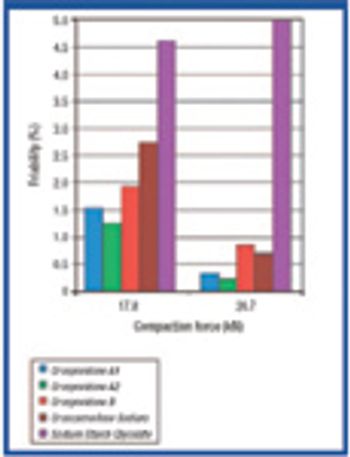
The increasing popularity of orally disintegrating tablets has led to growing interest in the advantages of superdisintegrants. This article presents some practical considerations in selecting these ingredients.
Pharmaceutical Technology Europe
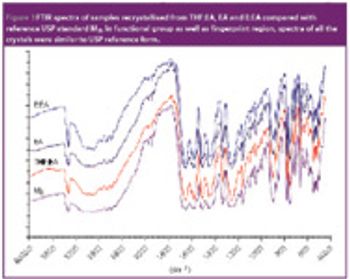
Mefenamic acid has variable bioavailability and tabletting issues because of its hydrophobic nature and poor material characteristics. Recrystallization of mefenamic acid was performed from three different solvent–solvent mixtures under differing conditions. The crystals obtained were screened for the existence of new crystal properties or polymorphic forms, then characterized further.

Evaluating disintegrant properties and consistency in performance is an essential part of tablet formulation.
Pharmaceutical Technology Europe
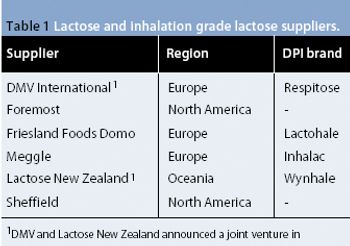
The presence of very low levels of residues (including solvents) in excipients is becoming an important issue for users, and the presence of very low levels of ?non-lactose? species in DPI lactose may pose challenges to suppliers and users.
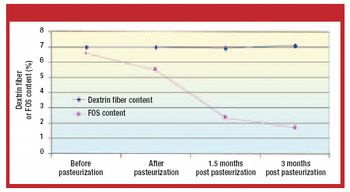
Formulations containing a novel soluble dextrin fiber have been shown to exhibit several advantages in processibility and clinical response over those containing existing fibers.
Pharmaceutical Technology Europe
Developed in the 1950s as a means to survive and compete against the giants of the automotive sector, lean manufacturing helped Toyota evolve from a small-volume producer (with little capital) to become a high-volume manufacturer in a process-rich environment. Toyota achieved this by using developments such as total production maintenance (TPM), just-in-time (JIT), Kanban, value stream mapping and Kaizen events.1 A summary of some of the lean terminology is shown in Table 1.

ePT--the Electronic Newsletter of Pharmaceutical Technology
Specialty Pharmaceutical Company Bentley Pharmaceuticals has entered into an agreement with Cardinal Health for the scale-up of clinical supplies for Bentley's intranasal insulin product candidate.
ePT--the Electronic Newsletter of Pharmaceutical Technology
Arlington, VA (Sept. 12)-At the American Association of Pharmaceutical Scientists meeting here, "e;Real World Applications of PAT and QbD in Drug Process Development and Approval" (Sept. 11-12), chemical engineer and process modeler Michael L. Thompson, PhD, described how Procter & Gamble (West Chester, OH, www.pg.com) applies these mathematical tools to increase product quality and reduce development and trouble-shooting time for consumer and pharmaceutical products.
Washington, DC (Sept. 12)-The Office of New Drug Quality Assessment (ONDQA) in the Center for Drug Evaluation and Research (CDER) has approved one new drug application (NDA) under its CMC Pilot Program and has two more applications are under review. The pilot was established last year to provide an opportunity for FDA and industry to explore strategies for including Quality by Design (QbD) principles and process analytical technology approaches in regulatory submissions, explained ONDQA deputy director Chi-wan Chen at the PDA-FDA Joint Regulatory Conference here
ePT--the Electronic Newsletter of Pharmaceutical Technology
Arthur R. Mlodozeniec, PhD, a member of Pharmaceutical Technology's advisory board and past president of AAPS, died on Sept. 4.
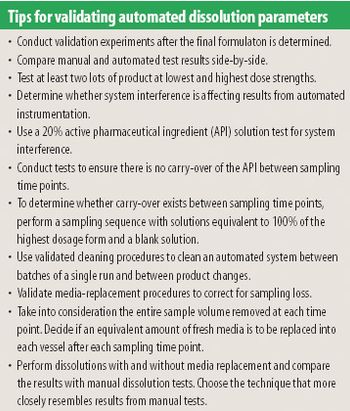
As the pace of product development accelerates, the approach to dissolution-method development must advance beyond a manual method and an assay. A natural progression of the method-development process must include the transfer of the manual method onto automated instrumentation.

I recently embarked on a quest: to investigate industry's use of the words, "generic" and "biosimilar" when describing a biologic molecule. An English major at heart, I was wrapped up in a news story that was partly about science, partly about words.
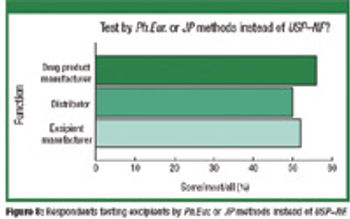
The Product Quality Research Institute (PQRI) conducted an open, publicly available, electronic survey of current excipient-control strategies among pharmaceutical excipient manufacturers, excipient distributors, and drug-product manufacturers (excipient users). Among the major findings are:
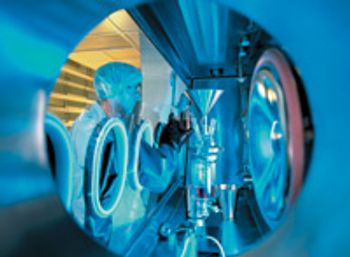
Potent-compound awareness training for operators is important to understand why the containment and controls are in place.
Apparently, the inspector would sneak off to visit his relatives on FDA time, instead of visiting us.
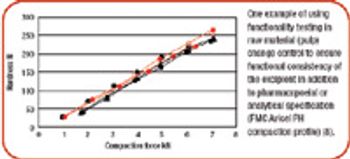
The debate over functionality is not about to be settled anytime soon.
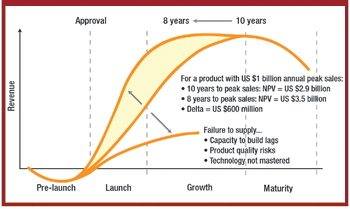
Companies must create a risk-based framework for developing and manufacturing drugs, and acquire the scientific knowledge and technological skills to create more complex products.
ePT--the Electronic Newsletter of Pharmaceutical Technology
Biovail Corporation is demanding that the US Food and Drug Administration (Rockville, MD) enforce the proper criteria for determining bioequivalence of extended-release generic versions of bupropion products.
ePT--the Electronic Newsletter of Pharmaceutical Technology
Washington, DC (Aug. 14)?A new report issued by the Pharmaceutical Research and Manufacturers of America identifies 418 drugs and vaccines developed through biotechnology. All of the biotechnology medicines and vaccines are now in clinical trials or awaiting approval by the US Food and Drug Administration (Rockville, MD).

Quantitative data from the literature show strong relationships among average particle size, powder densification, tensile strength, and hardness.
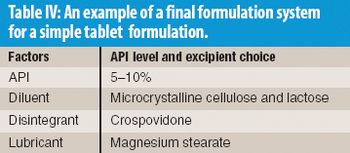
Formulation development can involve several complex technical challenges, but an approach incorporating design of experiments can help address these difficulties.
Thanks to you, we have this month's column. Keep those cards, letters, and e-mails coming.
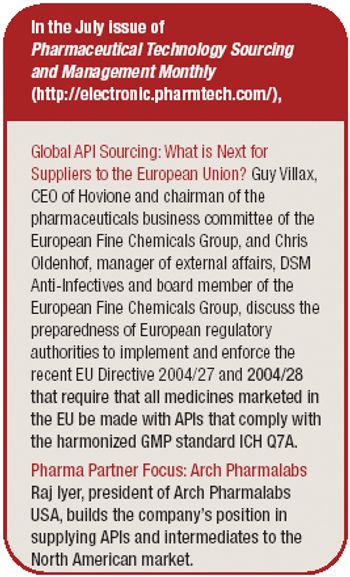
Combinatorial catalysis in asymmetric synthesis and asymmetric biaryl Suzuki coupling highlight recent advances in chiral chemistry. Plus the marriage of green and chiral chemistry.
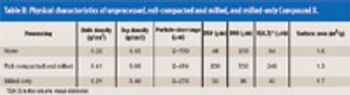
Using a novel automated microfilling system, the authors demonstrate that roller compaction followed by milling is a viable preprocessing technique for high-dose chemical-in-capsule dosage forms. The process results in higher bulk and tapped densities for drug substances compared with milling alone.