
Pump systems must be designed to meet the needs of specific processes, including preventing cross-contamination and damage due to shear forces.
Pump systems must be designed to meet the needs of specific processes, including preventing cross-contamination and damage due to shear forces.
More agile techniques are improving the development of multiparticulate drug-delivery systems.
Alexandre Juillerat, PhD, innovation senior scientist at Cellectis, discusses novel construct UCART123, an investigational agent that is on deck to be the first gene-edited T-cell product in the United States.
The agency recommended approval of a total of eight drugs at its January 2017 meeting, two of which are biosimilars.
ADMA will acquire BPC’s plasma-based fractionation and purification plant in Boca Raton, FL and plans to resolve issues at the facility noted in an FDA warning letter.
Researchers from Cellectis investigate how external signals in the tumor microenvironment could control the cell-surface expression and specificity of engineered CARs.
Merck will pay a one-time fee of $625 million and additional royalties to BMS and Ono Pharmaceutical to settle the patent infringement case related to Keytruda.
Researchers were not able to replicate all of the findings in five highly-cited cancer biology papers.
In a blog post, Robert Califf and Rita Nalubola discuss the agency’s approach to the use of genome-edited products.
FDA released a long-awaited draft guidance to help sponsors seeking to demonstrate interchangeability for biosimilar products.
An FDA guidance on biosimilar naming garnered mixed responses from the Biosimilars Forum, the American College of Rheumatology, and Pfenex.
The membrane-based Protein A purification tool was unveiled at the 2017 PepTalk Conference in San Diego, California.
Language surrounding regenerative medicine and the REGROW Act appeared back into the 21st Century Cures Act right before it passed. What will this mean for the controversial testing and marketing of stem-cell therapies?
The companies will combine expertise on T-cell therapies with two or more binding domains to create novel oncology medications.
The partnership will focus on providing practical information to clients on the development of biologics and vaccines.

FDA plans to advance initiatives for ensuring reliable production of drugs and biologics in 2017.
Analytical technologies play a key role in the characterization and quantitation of oligonucleotide therapeutics.
A pilot project, beginning in 2017, will support the development of biosimilars.
Univercells received a grant from the Bill & Melinda Gates Foundation for the development of a vaccine manufacturing platform.
Oxford Genetics received £1.61 million from Innovate UK to explore computational and synthetic biology approaches for optimized mammalian bioproduction.
GlaxoSmithKline opened a new vaccines R&D center in Rockville, MD creating up to 200 new jobs.
Researchers test the efficacy of a new polymer that is an alternative to PEG for drugs used to treat type 2 diabetes.
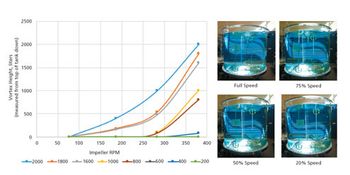
Quantitative and qualitative tools allow better understanding of mixing in a single-use bioprocessing system.
Hot-melt coating was used to develop taste-masked orally disintegrating granules of acetaminophen and caffeine.